







Hong Kong’s Pro-Democracy Movement Faces Its Deepest Crisis Yet
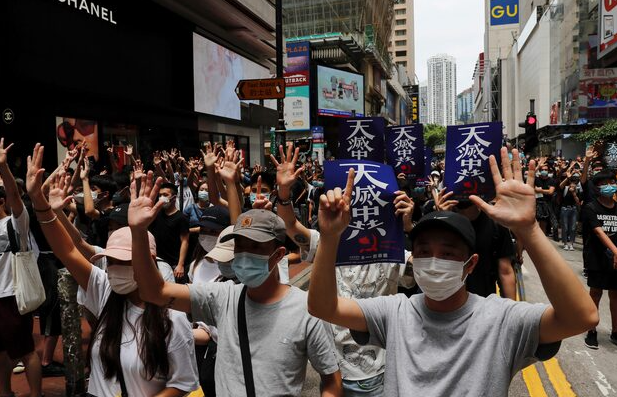
Hong Kong’s pro-democracy movement has suffered one of its most serious blows in decades, as the city’s largest democratic political party disbanded and prominent media tycoon Jimmy Lai was convicted under the national security law, highlighting the rapid shrinking of political and civic space in the territory. The developments mark a symbolic and practical low point for opposition politics in a city once known for its vibrant civil society and open debate.
The Democratic Party, founded in 1994 and long regarded as the backbone of Hong Kong’s democratic camp, voted overwhelmingly to dissolve after more than 30 years of political activity. Party leaders said the decision reflected harsh political realities, including legal risks, dwindling space for participation, and sustained pressure on opposition groups. The party had played a central role in advocating for universal suffrage and civil liberties since the handover from Britain to China in 1997, but in recent years it had been largely sidelined from formal politics.
The party’s dissolution came as democracy advocate and newspaper founder Jimmy Lai was found guilty on national security charges related to collusion with foreign forces and seditious publications. Lai, the founder of the now-closed Apple Daily, is one of the most high-profile figures targeted under the national security law imposed by Beijing in 2020 following mass pro-democracy protests. He has spent years in detention and now faces the possibility of a lengthy prison sentence, drawing widespread international condemnation from governments and human rights organizations.
Critics say the conviction and the collapse of the Democratic Party together illustrate how opposition voices have been systematically dismantled through legal measures, arrests, and institutional pressure. Since 2020, dozens of activists, former lawmakers, journalists, and organizers have been jailed or forced into exile, while independent media outlets and civil society organizations have shut down. Supporters of the pro-democracy movement argue that the promise of “one country, two systems,” which was meant to guarantee Hong Kong a high degree of autonomy and freedoms, has been fundamentally undermined.
Hong Kong and Chinese authorities reject those claims, insisting that the national security law has restored stability after years of unrest and that prosecutions are based on the rule of law rather than political motives. Officials argue that political rights remain intact for those who operate within legal boundaries.
For many residents and observers, however, the combined impact of the Democratic Party’s dissolution and Jimmy Lai’s conviction signals the near-end of organized democratic opposition in Hong Kong. As the city moves forward under tighter political control, questions remain about how much space is left for dissent, independent journalism, and meaningful political participation in a place once regarded as one of Asia’s freest societies.