










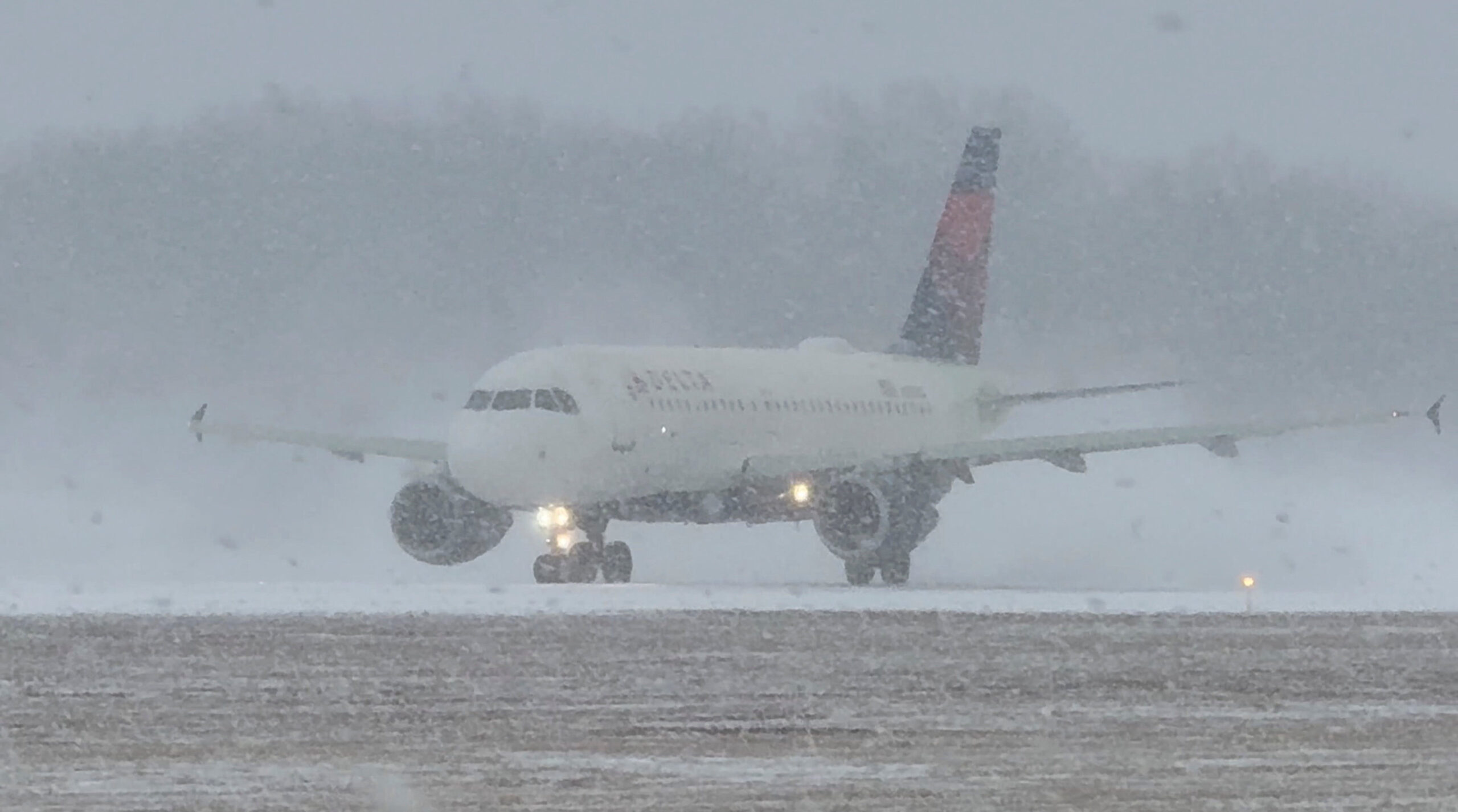
Winter Storm Disrupts U.S. Air Travel: Thousands of Flights Delayed or Canceled
A powerful winter storm sweeping across the United States has caused widespread disruption to air travel, leaving thousands of passengers stranded and major airports struggling to maintain normal operations. The storm, which brought heavy snow, strong winds, and severe weather across the Midwest and East Coast, forced airlines to cancel or delay flights, affecting travelers nationwide.
On Monday, more than 12,500 flights were reported as delayed or canceled, according to the Federal Aviation Administration. Major airports in cities such as Chicago, New York, Atlanta, Houston, Orlando, and Charlotte experienced the worst disruptions, with long lines at ticket counters and security checkpoints adding to passenger frustration. Airlines including American, Delta, Southwest, and United reported that a significant portion of their daily schedules was affected, leaving thousands of travelers scrambling to reschedule or find alternate routes.
The blizzard conditions in the Midwest created hazardous ground travel as well, with icy roads and limited visibility making it difficult for crews and passengers to reach airports safely. Along the East Coast, severe thunderstorms and high winds added to the chaos, grounding flights and forcing further delays. Even passengers whose flights were not directly impacted by the weather experienced disruptions due to cascading effects across connecting flights and delayed aircraft rotations.
Airport staff and airline representatives worked tirelessly to assist travelers, but long waits for customer service and rebooking left many frustrated. Officials advised passengers to check flight status frequently, arrive early, and prepare for extended delays. Security lines were longer than usual due to staffing constraints, exacerbating the travel difficulties.
Airlines have warned that delays may continue as the storm moves eastward, affecting flights scheduled later in the week. Experts say the storm highlights the challenges of managing large-scale disruptions in air travel during severe weather, as well as the ripple effect across national and international routes.
For now, travelers are urged to remain patient and flexible while airports and airlines work to restore normal operations. The storm serves as a reminder of how quickly winter weather can disrupt transportation and the importance of checking schedules and safety updates before heading to the airport.