










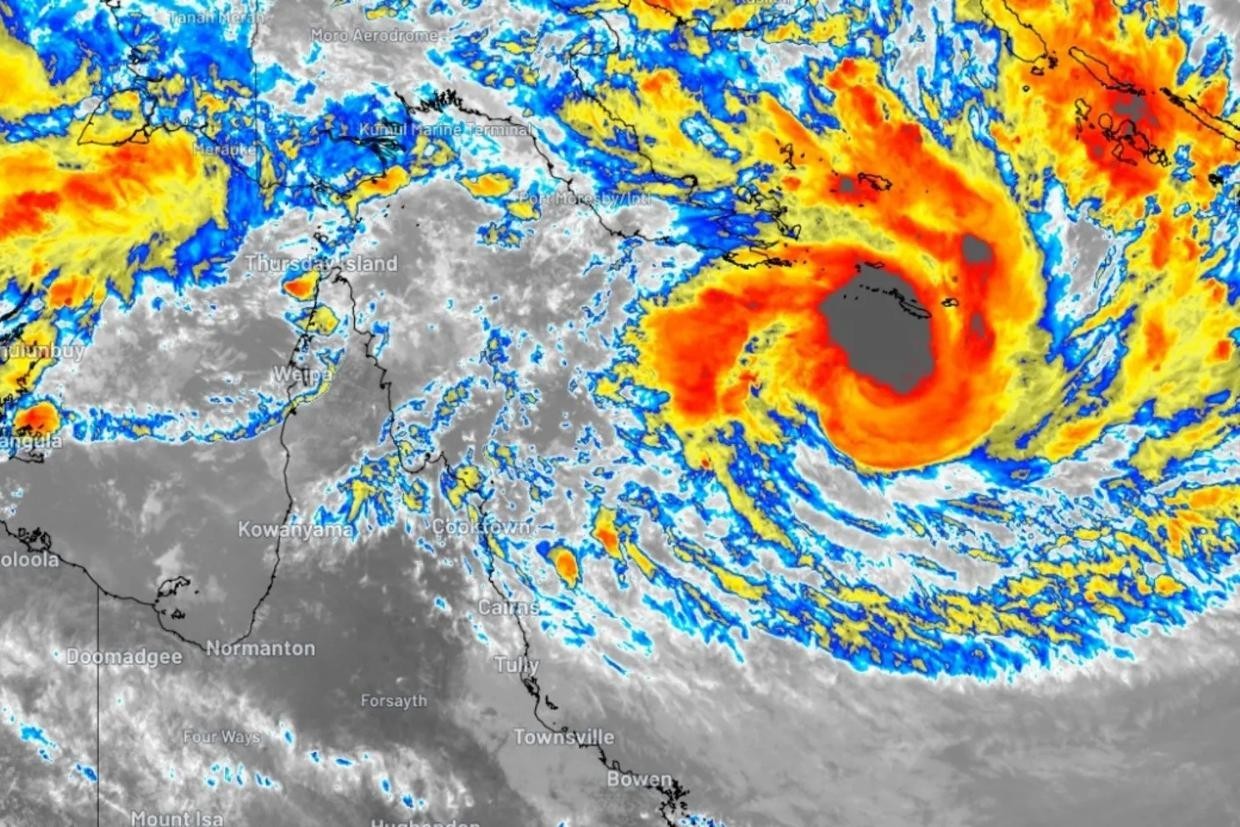
Historic Category 5 Cyclone Narelle Bears Down on Queensland
Severe Tropical Cyclone Narelle has intensified into a Category 5 storm and is heading toward the far northern coast of Queensland, Australia, in what officials are calling a historic and extremely dangerous weather event.
Australia’s Bureau of Meteorology confirmed that Narelle has reached the highest intensity on the tropical cyclone scale, with sustained winds exceeding 250 kilometres per hour near its eye. Authorities warn that the storm could bring catastrophic damage to infrastructure, homes, and power systems, as well as life-threatening flooding in low-lying areas.
Forecasters say Narelle is expected to make landfall near the Cape York Peninsula, producing torrential rain, storm surges, and destructive winds. Emergency services have urged residents to seek safer shelter inland or in designated evacuation centres, while police, medical teams, and disaster response crews have been pre-positioned across the region to assist where needed.
Several communities, including Coen, Port Stewart, and Lizard Island, are already undertaking evacuation measures as officials stress that the situation is urgent. Authorities have urged residents to secure property, gather emergency supplies, and follow official guidance to minimise risks.
The storm has raised alarms due to its intensity and potential impacts, making it one of the most powerful cyclones to affect Queensland in recent decades. In addition to coastal destruction, heavy rainfall is expected to trigger flash floods and river overflows, posing hazards to communities well inland.
The Bureau of Meteorology and state disaster agencies continue to monitor Narelle closely, issuing frequent updates and warnings. Officials emphasize that preparation is critical, as the window for taking protective measures is closing rapidly.
As Cyclone Narelle approaches, the focus remains on safeguarding lives and reducing damage. With its unprecedented strength and destructive potential, the storm serves as a stark reminder of the importance of vigilance and readiness in the face of severe weather events.