








Climate Change Drives Rare Tropical Heron to Wales in First-Ever UK Sighting
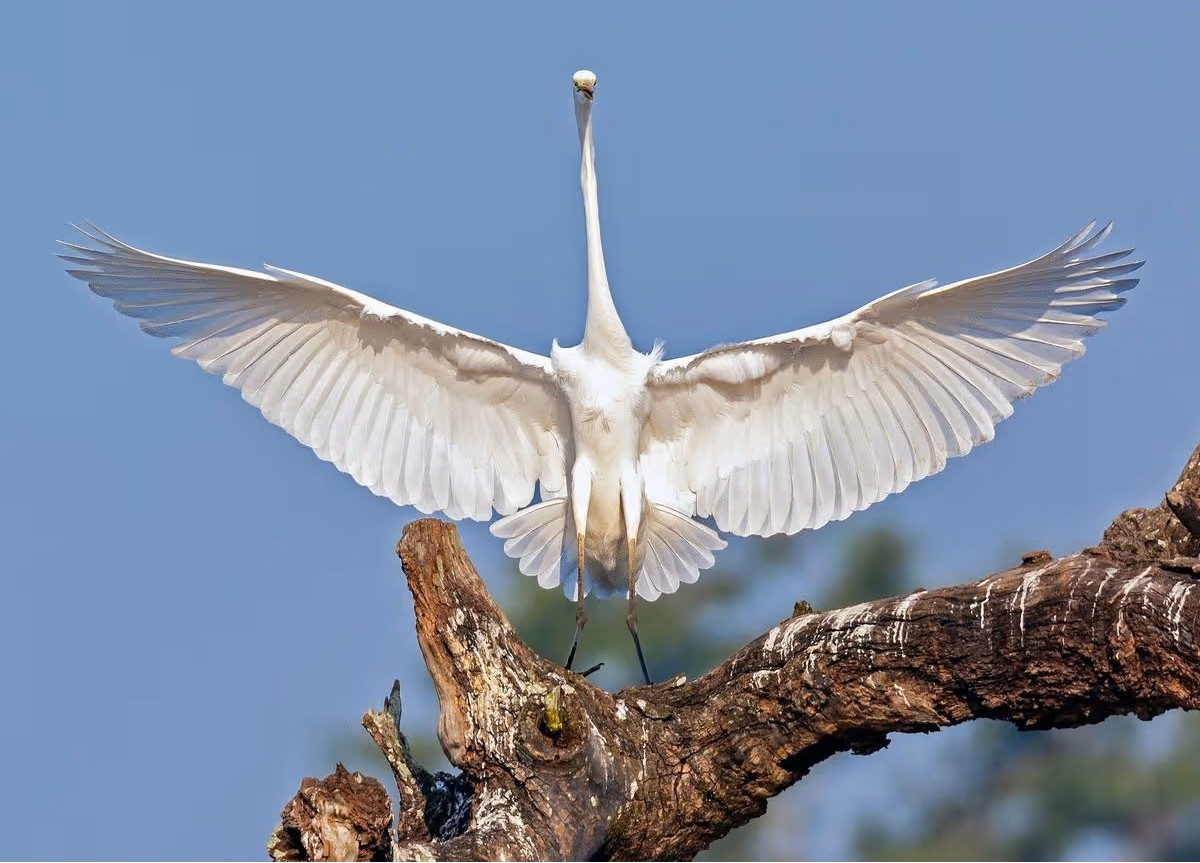
A western reef heron, a tropical bird typically found between West Africa and India, has been spotted in north Wales for the first time ever recorded in the United Kingdom an unusual appearance that experts say reflects the growing impact of climate change on global wildlife patterns.
The bird was first seen in Foryd Bay over the weekend before moving to nearby Caernarfon Harbour, where it was observed feeding among boats. The sighting quickly attracted birdwatchers from across the country, turning the coastal area into an unexpected hotspot for rare wildlife observation.
Experts say the appearance of the species so far north is part of a broader shift in bird migration and distribution patterns linked to rising global temperatures and increasingly mild winters.
Nick Moran, training manager at the British Trust for Ornithology (BTO), said that changing winter conditions are making it easier for traditionally tropical or warm-climate species to survive further north than in the past.
“The fact that they are getting here in the first place, and then surviving, is likely to be because of increasingly mild winters,” Moran explained. “It’s much easier to survive in the winter now than it was 50 years ago because we don’t see shallow water bodies freezing over with any regularity.”
He added that species such as herons and egrets depend on shallow waters for feeding, and the reduced frequency of freezing conditions is helping them expand their range into new regions.
The western reef heron sighting was not the only unusual tropical bird drawing attention in the UK this week. A squacco heron, typically found in southern Europe and North Africa, was also reported in Lincolnshire, where it attracted birdwatchers eager to catch a glimpse of the rare visitor. According to the BTO, such sightings occur only a few times a year in Britain.
Biodiversity experts say these rare appearances are part of a wider ecological shift. Professor Alexander Lees, a reader in biodiversity at Manchester Metropolitan University and chair of the British Ornithologists’ Union records committee, said many formerly tropical species are gradually expanding their ranges northward.
“We are seeing a shift and a readjustment for biodiversity,” he said, noting that climate change is altering long-established habitat boundaries. He pointed to recent examples such as the zitting cisticola, a Mediterranean warbler that has recently been recorded breeding in the UK for the first time.
“This bird historically could not survive here because of harsh winters,” Lees explained. “But those prolonged cold spells are now much rarer, allowing species to expand northward.”
Other unusual sightings in recent years include the black-winged kite in Norfolk, the brown booby in 2019, and the white-rumped swift, which reached Britain after spreading north from North Africa via Spain. In 2022, the Royal Society for the Protection of Birds (RSPB) described increasing sightings of European bee-eaters as a clear signal of the climate and nature emergency affecting the UK.
While western reef herons are now increasingly observed in southern Europe, including Spain and France, experts say their appearance in Britain had been anticipated—but still marks a significant milestone.
The bird spotted in Wales is believed to be an adult, likely arriving from Europe rather than directly from Africa, although its exact route remains unknown. Birdwatchers who observed it described the experience as extraordinary, with one noting the striking contrast of the rare tropical species feeding against the backdrop of Caernarfon Castle.
The western reef heron, similar in size to the little egret but distinguished by its blue-grey plumage, is considered highly distinctive among European birdlife.
Experts caution that while this single sighting does not indicate an immediate influx of the species into the UK, it does reflect a longer-term trend of shifting biodiversity driven by climate change.
As global temperatures continue to rise and winters become milder, scientists expect more tropical and subtropical species to appear further north, reshaping ecosystems and challenging traditional understandings of wildlife distribution.
For birdwatchers, the rare visitor is a remarkable opportunity. For scientists, it is another signal that climate change is not a distant threat but a present force actively reshaping nature across Europe.