





OpenAI CEO Sam Altman Says AI Can Now Rival PhDs—Just Weeks After Claiming It’s Ready for Entry-Level Jobs. So What’s Left for College Grads?
In a bold and provocative statement, OpenAI CEO Sam Altman declared that artificial intelligence is rapidly approaching the intellectual capacity of individuals with PhDs—just weeks after previously asserting that AI systems like GPT-4o are already capable of performing many entry-level jobs. The announcement has reignited anxieties among college students and recent graduates, who now face an increasingly uncertain future in a labor market disrupted by accelerating automation.
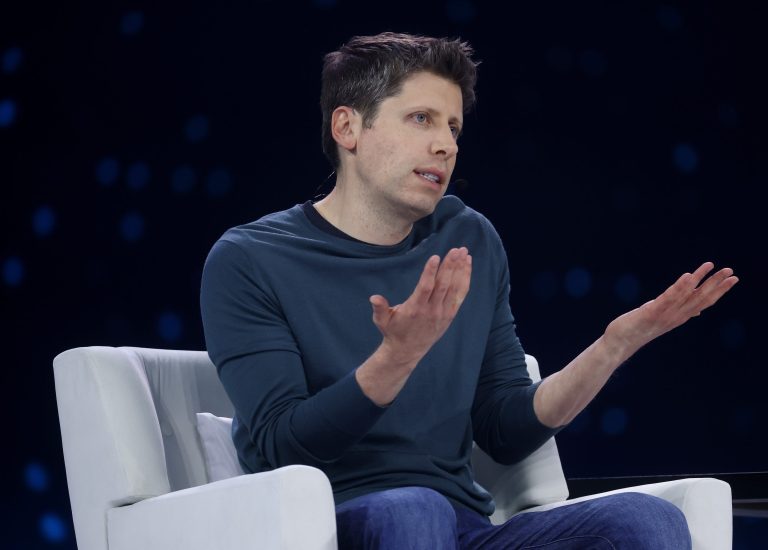
Altman’s remarks came during a global AI summit held in Singapore, where he spoke about the evolving capabilities of frontier models. “We are on the brink of building AI systems that can match, and in many cases exceed, the performance of highly educated specialists,” said Altman. “We’ve seen consistent performance in scientific research, technical writing, coding, data analysis, and even legal reasoning.”
From Intern to Intellectual in a Flash
Just last month, Altman stirred headlines by claiming that GPT-4o and other large language models are already “qualified enough to handle most entry-level positions in corporate environments.” Now, by suggesting that the same models can match PhD-level expertise, Altman appears to be accelerating the conversation around AI’s disruptive role in higher education and professional careers.
“It’s not just about replacing repetitive jobs anymore,” he explained. “These tools are becoming collaborators in advanced research, advisors in policy decisions, and assistants in creative fields. The speed of improvement is exponential.”
What Does This Mean for Graduates?
For current students and recent graduates, these claims are both groundbreaking and unsettling. If AI can simultaneously handle beginner tasks and match expert-level work, the traditional pipeline of earning a degree, gaining experience, and climbing the career ladder could be upended.
Career advisors are warning that the job market is becoming bifurcated—where soft skills, emotional intelligence, and creative strategy might be more valuable than academic credentials. “We’re witnessing a seismic shift,” said Dr. Carla Thompson, a workforce futurist at Stanford University. “Graduates need to position themselves not against AI, but alongside it—using it as a tool to enhance, not replace, their human strengths.”
The Rise of the “AI-Enhanced Employee”
Rather than spelling doom for all graduates, experts suggest that the new paradigm will reward those who can integrate AI tools into their work. Skills such as prompt engineering, critical thinking, ethical decision-making, and cross-functional collaboration are becoming vital. Employers are increasingly seeking candidates who can combine domain knowledge with AI fluency.
Tech companies are also investing heavily in training programs that blend AI literacy with traditional job functions—think marketing strategists who analyze customer behavior using AI, or lawyers who draft documents with the help of intelligent assistants.
Higher Education Under Pressure
Altman’s remarks have also sparked debate about the relevance of higher education. With AI offering instant access to structured knowledge, research summaries, and even thesis-level outputs, universities must rethink how they add value. “The question isn’t whether a degree still matters—it’s how it matters,” said Dr. Ayesha Patel, Dean of Innovation at the University of Chicago. “We must focus on teaching adaptability, lifelong learning, and ethical stewardship of powerful tools like AI.”
In response, many institutions are launching AI-integrated curriculums and experiential learning models designed to prepare students for jobs that don’t yet exist.
What’s Left for Human Workers?
Altman’s comments, though controversial, reflect a deeper truth: the job landscape is evolving faster than any previous generation has witnessed. Yet, all is not lost for graduates.
Jobs rooted in empathy, interpersonal interaction, leadership, and creative storytelling remain difficult for AI to replicate convincingly. Additionally, roles that involve interpreting human needs—like therapists, educators, social workers, and certain entrepreneurial paths—still rely on uniquely human touchpoints.
“The future won’t be AI vs. humans,” Altman concluded. “It will be humans who know how to use AI versus those who don’t.”