






Volkswagen Eyes Robotaxi Domination: Why It Believes Tesla and Waymo Are Vulnerable in the $500 Billion Autonomous Race
“It’s not a winner-takes-all market,” says Volkswagen, as it aggressively positions itself against Tesla and Waymo in the evolving $500 billion robotaxi industry.
In the high-stakes race to dominate the $500 billion global robotaxi market, Tesla and Waymo have long been considered frontrunners. But Volkswagen is now making a bold assertion — the finish line is far from being crossed, and this is not a winner-take-all contest. Backed by a legacy of German engineering, expansive global reach, and a strategic pivot toward autonomous mobility, Volkswagen believes it holds critical advantages that could disrupt the existing pecking order in self-driving transportation.
Why Volkswagen Thinks Tesla and Waymo Are Vulnerable
Volkswagen’s confidence stems from what it sees as major structural and strategic weaknesses in both Tesla’s and Waymo’s approaches.
1. Tesla’s FSD Approach Faces Scalability Risks
Tesla’s Full Self-Driving (FSD) system is heavily reliant on a vision-only approach, powered by cameras and neural nets — a strategy that continues to draw criticism for its safety limitations and regulatory uncertainties. While Elon Musk promotes the capability of Tesla’s AI, many industry experts argue that a lack of redundancy from other sensors like LiDAR or radar could hinder the scalability and safety of Tesla’s robotaxi plans.
Volkswagen CTO Thomas Ulbrich recently noted, “Tesla’s insistence on a pure vision system could backfire. Regulatory bodies may demand more conservative, sensor-diverse systems for public deployment.”
2. Waymo’s Walled Garden Model Limits Reach
While Waymo, a subsidiary of Alphabet, has made impressive strides with its fully driverless robotaxi service in Phoenix and parts of San Francisco, its expansion has been slow and localized. Its use of high-definition mapping and geofencing restricts scalability in markets without extensive infrastructure support.
Volkswagen sees this as a bottleneck. “Waymo is building a highly accurate but highly inflexible model,” a VW executive stated. “That doesn’t work globally — and robotaxis need to scale across continents, not just cities.”
VW’s Counteroffensive: Scalable, Sensor-Rich, and Market-Agnostic
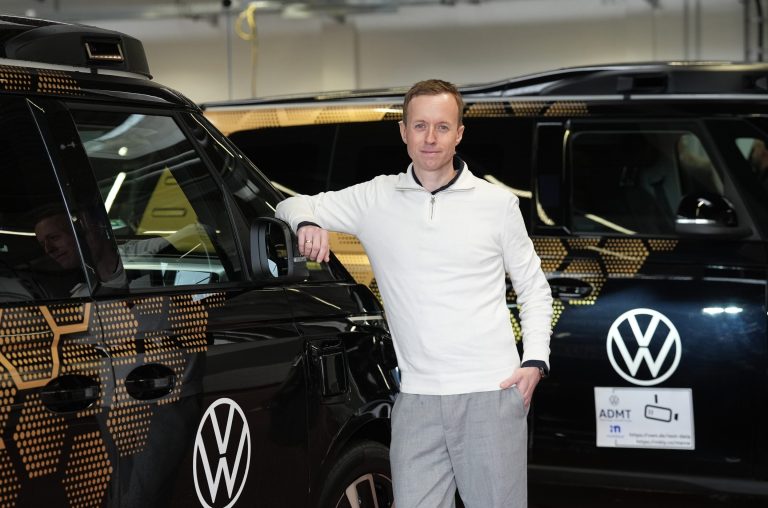
Volkswagen’s robotaxi strategy is centered on partnerships, sensor fusion, and modular platform development. Through its investment in autonomous tech firm Mobileye and the development of its own ID. Buzz AD (autonomous driving) platform, Volkswagen aims to create a global robotaxi network that can operate across urban environments with adaptable configurations for different regions.
Key pillars of VW’s robotaxi plan:
- Sensor Fusion: VW’s system uses LiDAR, radar, and camera data together — maximizing safety and reliability.
- Fleet Ecosystem: Instead of selling individual robotaxis, VW envisions running its own fleet-as-a-service (FaaS) business model, leveraging existing infrastructure in Europe and emerging markets.
- Modular Platform (MEB): The MEB platform allows easy integration of autonomous tech into different vehicle types — including delivery vans and passenger vehicles.
“We’re not here to win just Phoenix or San Francisco,” said Christian Senger, VW’s Head of Autonomous Driving. “We’re here to scale across Berlin, Mumbai, São Paulo, and beyond.”
The $500 Billion Opportunity: More Than One Winner
Volkswagen’s core argument is that the robotaxi market — projected to hit $500 billion by 2030 — is simply too vast and too fragmented for a single winner.
The automotive giant likens the industry to aviation or telecom: no single player dominates all regions. “Different geographies have different needs, regulations, and customer expectations,” said Ulbrich. “We see opportunity where others see limitation.”
Regulation and Public Trust: VW’s Conservative Edge
One often-overlooked advantage Volkswagen holds is its conservative regulatory strategy. While Tesla often clashes with transportation authorities, and Waymo walks a fine line with safety watchdogs, VW has built its brand on safety, compliance, and long-term trust — crucial pillars for public acceptance of autonomous vehicles.
“We are working hand-in-hand with European and Asian regulators,” said Senger. “In markets where trust and safety are paramount, we’re not just another tech company — we’re Volkswagen.”
Final Thoughts: More Players, More Value
As automakers, tech giants, and startups jostle for leadership in the autonomous era, Volkswagen’s entry into the robotaxi race injects fresh competition. And if its bet is right — that Tesla and Waymo are not infallible, and that multiple winners will emerge — then the next decade of mobility could be shaped as much by Wolfsburg as by Silicon Valley.
For now, Volkswagen’s strategy is clear: the road to $500 billion isn’t owned yet — and they’re shifting into high gear.