






NATO Leaders Rush to Appease Trump Ahead of 2025 Summit—but Experts Warn Pouring Billions Into Defense Would Be ‘Crazy’ for Europe
With the pivotal 2025 NATO summit just weeks away, European leaders are walking a diplomatic tightrope: how to fortify the 75-year-old alliance without bowing too deeply to the demands of former U.S. President Donald Trump—who appears increasingly likely to reclaim the White House in November. But while some NATO members are quietly preparing to boost military budgets, foreign policy experts are sounding alarms, calling the strategy economically dangerous and politically misguided.
“Spending billions more on defense out of fear of Trump’s return is not just shortsighted—it’s outright crazy,” said Dr. Elise Mertens, a leading voice in European foreign policy and a senior fellow at the European Institute for Security Policy. “Europe must strengthen its security posture, yes, but it shouldn’t mortgage its future just to appease a single political figure.”
The Trump Shadow Still Looms Over NATO
Trump’s disdain for NATO is no secret. Throughout his presidency, he repeatedly accused European allies of freeloading on American military power, questioned the utility of the alliance, and even threatened to pull the U.S. out altogether. Despite record increases in military budgets across Europe since Russia’s invasion of Ukraine in 2022, Trump has signaled that even more spending will be necessary to earn continued U.S. support.
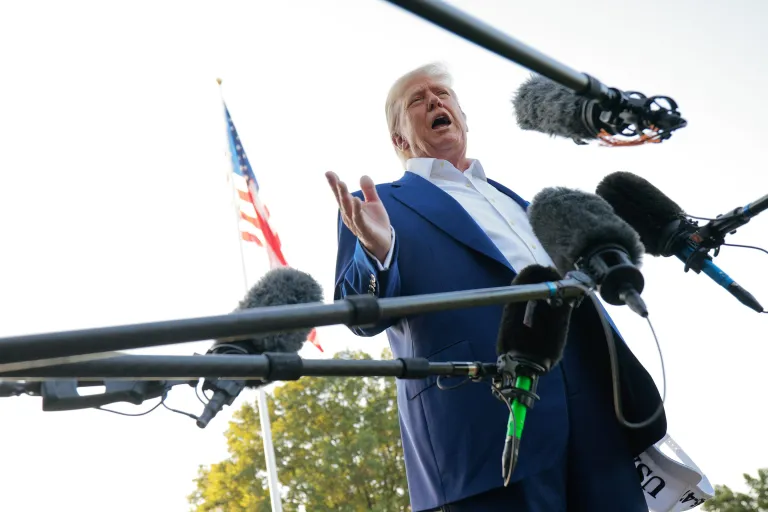
“NATO is ripping off the United States,” Trump said during a recent campaign stop in Ohio. “If they don’t pay their fair share—and even more—we shouldn’t be protecting them.”
Such rhetoric has caused deep unease among NATO diplomats and has forced renewed debate within the alliance: How much is enough to secure American commitment under a possible Trump 2.0 presidency?
Europe Is Already Spending More Than Ever
Contrary to Trump’s claims, European nations have significantly ramped up defense spending in the last few years. According to NATO’s latest annual report, 23 of the alliance’s 32 members are projected to meet or exceed the 2% GDP defense spending guideline in 2025—a dramatic jump from just five countries in 2016.
“Europe has already made historic commitments to defense,” noted Thomas Reiner, a defense economist at the Berlin-based Stiftung Wissenschaft und Politik. “What’s happening now is more about optics than actual need.”
For example, Germany recently passed a landmark $110 billion defense modernization package. Poland has surpassed 4% of its GDP on defense—the highest in NATO—and France and the U.K. continue to invest heavily in global force projection.
“So if this is still considered ‘not enough,’ then the real issue isn’t defense—it’s diplomacy,” Reiner added.
Critics Call It a ‘Trump Tax’ on European Budgets
Behind closed doors, several European leaders reportedly refer to the mounting pressure to increase defense budgets as the “Trump tax”—the cost of maintaining U.S. favor in an increasingly unpredictable geopolitical landscape.
“We’re not building a defense strategy; we’re building a political insurance policy,” said an anonymous senior official in Brussels. “That’s not sustainable governance.”
Many experts argue that pouring additional billions into traditional defense mechanisms like tanks, jets, and naval fleets may not even address the real threats facing NATO today—such as cyber warfare, hybrid attacks, energy blackmail, and disinformation campaigns.
“Throwing money at outdated military models won’t solve 21st-century threats,” Mertens said. “NATO needs to modernize its strategy, not just its hardware.”
Domestic Backlash Could Be Severe
The political calculus is also risky at home. Across Europe, citizens are grappling with cost-of-living crises, housing shortages, and post-pandemic economic fatigue. New military expenditures could come at the cost of vital social programs.
“In many European countries, public support for NATO is conditional on domestic stability,” said Sarah Dupont, a political analyst based in Paris. “Push too far, and you risk igniting populist backlash.”
Indeed, countries like Italy, Spain, and Belgium have pushed back on pressure to meet arbitrary spending benchmarks—arguing instead for a more nuanced, capability-based model that accounts for each country’s unique economic and strategic position.
“Defense isn’t one-size-fits-all,” Dupont said. “And Europe must be careful not to let Trump’s political shadow shape the continent’s long-term future.”
What to Expect at the Washington Summit
The 2025 NATO summit in Washington—marking the alliance’s 76th anniversary—is shaping up to be one of the most consequential in decades. Leaders are expected to finalize updated defense spending pledges, bolster Ukraine support, and launch a digital defense initiative targeting AI-era cyber threats.
However, the most closely watched moment may not be an agreement or policy declaration, but rather the tone and language directed toward the U.S. election—and Trump.
“It’s going to be a tightrope walk,” said Reiner. “Signal too little strength, and you look weak. Signal too much deference to Trump, and you compromise your own sovereignty.”
As Europe navigates a precarious balance between alliance loyalty and fiscal responsibility, the question looms: Should NATO decisions be dictated by strategic needs—or campaign trail threats?
For now, many European citizens and leaders alike are asking whether the price of peace is becoming too politically expensive.