



Filipino Politicians Share Deepfake Videos in Heated Impeachment Battle: “Even If It’s AI… I Agree With the Point
In an unprecedented twist in the Philippines’ increasingly tech-fueled political landscape, lawmakers have begun sharing deepfake videos to sway public opinion and influence political outcomes — particularly around an explosive impeachment controversy. The use of artificial intelligence-generated media, once seen as a novelty, is now at the heart of a fierce battle over truth, power, and perception.
The controversy centers around a series of viral deepfake videos circulating online, featuring AI-generated likenesses of prominent political figures making bold statements — some inflammatory, others oddly persuasive. What’s more troubling is that several sitting politicians have not only shared these videos but have openly acknowledged their inauthenticity while defending their substance.
“Even if it’s AI… I agree with the point being made,” said one senior lawmaker allied with the opposition bloc, after reposting a video showing a deepfaked version of a high-ranking judge criticizing the current administration’s alleged abuses of power. “It’s satire, it’s political expression. People are smart enough to know what’s real.”
Deepfakes Meet Democracy: A New Era of Information Warfare
This growing embrace of deepfakes has alarmed analysts and watchdogs who argue that the Philippine political system — already challenged by misinformation on social media — is now entering even more dangerous territory. Deepfake videos, powered by generative AI, can mimic a person’s face, voice, and speech patterns with chilling realism, blurring the line between fact and fiction for many viewers.
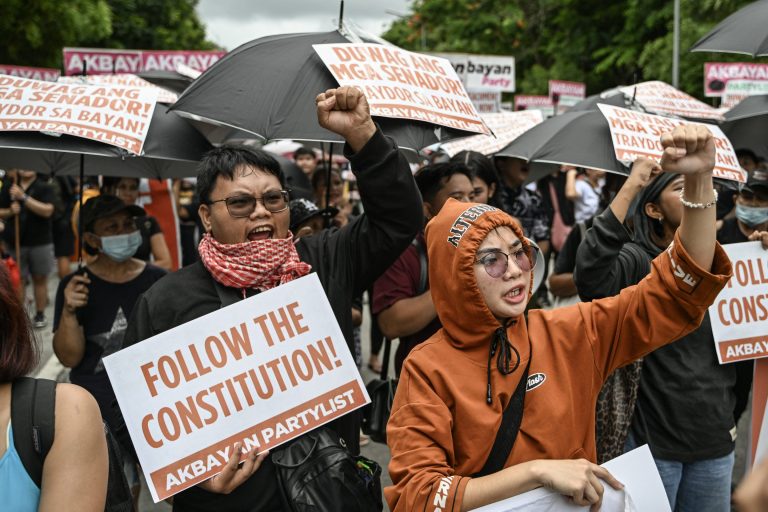
In the context of the impeachment debate — which centers around alleged constitutional violations by a top official — these videos have become potent tools of propaganda. Pro-impeachment forces have used deepfakes to simulate damaging “confessions,” while anti-impeachment camps have released AI videos portraying whistleblowers as politically motivated liars.
The problem? Many viewers aren’t sure what to believe.
“We are watching the death of objective truth unfold in real-time,” warned digital ethics expert Dr. Liza Mercado. “When elected officials endorse AI-generated misinformation — even if they say it’s ‘symbolic’ — they normalize deception. It opens the floodgates.”
Social Media Platforms Under Fire
As the deepfake clips continue to rack up millions of views across Facebook, TikTok, and X (formerly Twitter), pressure is mounting on social media companies to step in. Some platforms have labeled the content as “manipulated media,” but enforcement remains inconsistent, and the content continues to spread rapidly.
The Philippines has one of the world’s highest rates of social media usage, with over 85 million active users — making the impact of AI-generated disinformation especially potent. Critics argue that tech giants have failed to act fast enough, especially in politically volatile situations like this.
“The platforms must take stronger action,” said Rafael Santos, director of the Manila-based watchdog group CyberSafe Democracy. “Labeling is not enough. These videos should be removed when they’re clearly deceptive — especially when shared by public officials who have a duty to uphold truth.”
Political Theater or Ethical Crisis?
Defenders of the use of deepfakes in this context argue that they are simply a modern form of political satire — no different than cartoons or impersonations. In fact, some lawmakers have claimed that AI content is a “creative response” to the government’s tightening grip on traditional media outlets.
But legal experts point out that this is not just about freedom of expression — it’s about integrity and accountability.
“When a politician shares a video they know is fake and claims it represents a valid argument, that’s not free speech. That’s manipulation,” said constitutional lawyer Maria Trinidad-Cruz. “It’s especially dangerous in the context of impeachment, where the stakes are as high as the Constitution itself.”
A Dangerous Precedent
Observers say the current scandal could set a global precedent. While deepfakes have already made waves in the U.S., Europe, and India, the Philippines may be the first democracy where elected leaders are actively using AI-generated falsehoods as official political messaging tools.
With national elections just two years away, the implications are profound. If voters can no longer distinguish between real and fake — and if politicians no longer care — then democratic processes themselves are at risk of being undermined by synthetic media.
Bottom Line:
As the battle over impeachment intensifies in the Philippines, the rising use of deepfakes by politicians marks a troubling milestone in the fusion of technology and political warfare. While some defend AI-generated videos as tools of satire or advocacy, critics warn that truth itself is being eroded — one manipulated video at a time. The question remains: can democracy survive when reality is no longer reliable?