



Ford CEO Jim Farley Says Waymo’s Self-Driving Approach Makes More Sense Than Tesla’s: A New Front in the Autonomous Vehicle Race
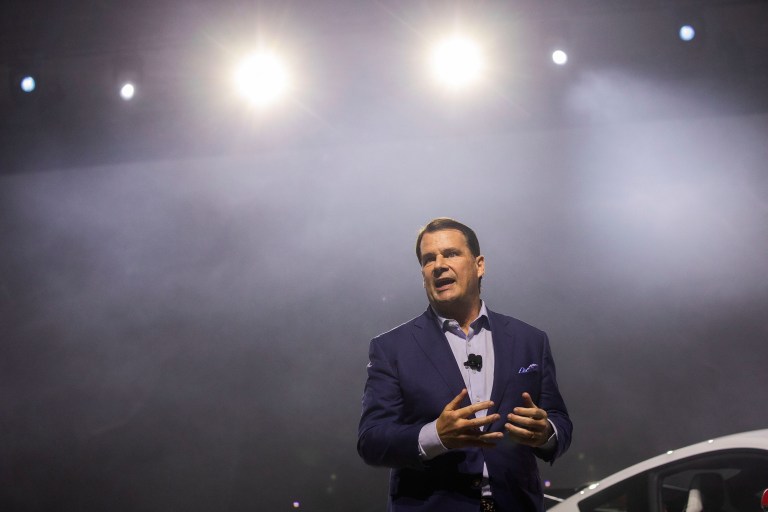
In a fresh twist to the ongoing battle over the future of autonomous vehicles, Ford CEO Jim Farley has openly declared that Waymo’s approach to self-driving technology “makes more sense” than Tesla’s. Farley’s comments—made during recent interviews and industry events—have reignited a fierce debate about which model of autonomy is best positioned for long-term success and public safety.
A Split in the Industry: Cameras vs. Comprehensive Sensor Suites
The autonomous vehicle industry has long been divided over two core philosophies. On one side stands Tesla, led by Elon Musk, which has invested heavily in a camera-only, vision-based system combined with powerful neural networks to drive its Full Self-Driving (FSD) software. Tesla vehicles on the road today are collecting real-world data, with the company constantly rolling out software updates to improve performance—sometimes controversially, while still under beta testing.
On the other side are companies like Waymo, the self-driving subsidiary of Alphabet (Google’s parent company), which take a far more cautious and heavily sensor-dependent route. Waymo cars rely on LiDAR, radar, and high-definition mapping, combined with years of simulation and real-world testing in limited, geo-fenced areas.
According to Farley, it’s this second model that better aligns with safety, reliability, and real-world applicability.
“You can’t just rely on cameras,” Farley said in a recent panel discussion. “There are edge cases that vision-only systems simply can’t handle well. Waymo’s layered system, built on years of meticulous data collection, makes more sense from a safety and scaling standpoint.”
Ford’s Autonomy Philosophy: Conservative, But Strategic
Ford itself has not rushed headlong into full autonomy. The automaker originally invested heavily in Argo AI, an autonomous vehicle startup that it co-backed with Volkswagen. However, after the company was shut down in 2022, Ford pivoted to a more measured approach. Today, the company continues to explore self-driving technologies through advanced driver-assistance systems (ADAS), while also watching the broader market to determine the right time to re-enter the autonomy race more aggressively.
Farley’s support of Waymo’s approach suggests that Ford sees the future of self-driving not as an all-or-nothing sprint, but as a gradual shift requiring extensive validation, infrastructure partnerships, and regulatory cooperation.
“Autonomy is not just a tech problem—it’s a systems integration challenge,” Farley added. “It involves cities, cloud infrastructure, regulations, and a social contract with passengers and drivers.”
Tesla’s High-Risk, High-Reward Path
Tesla’s strategy has undeniably been disruptive. With over a million vehicles already equipped with its FSD beta software, Tesla has amassed enormous amounts of data. But the approach has drawn criticism for its safety risks and for deploying unfinished software on public roads.
Elon Musk has repeatedly claimed that Tesla is close to achieving full autonomy, but timelines have often slipped, and regulatory scrutiny has intensified. The U.S. Department of Justice and NHTSA have launched investigations into Tesla’s autonomous claims, adding pressure to the company’s aggressive tactics.
Despite these concerns, Tesla maintains its vision-based system will ultimately win due to its scalability and lower hardware costs.
Why Farley’s Comments Matter
Farley’s remarks are significant because they underscore a growing divergence among legacy automakers and tech-driven newcomers about how—and when—autonomous driving will go mainstream. His endorsement of Waymo’s slower, sensor-rich model could influence investor confidence, industry partnerships, and public perception.
In an industry still trying to define the roadmap to Level 4 and Level 5 autonomy, having the CEO of one of America’s most iconic automakers weigh in so clearly adds weight to the conversation.
What’s Next for Ford?
While Farley’s statement is a vote of confidence in Waymo, it’s also a signal that Ford is playing the long game. The company is likely to continue investing in smart, semi-autonomous systems like Ford BlueCruise while monitoring the regulatory and technological landscape.
Whether Ford eventually partners with Waymo or another tech company to deploy fully autonomous vehicles remains to be seen, but the message is clear: safety and practicality will define Ford’s path—not hype.
Bottom Line: In an era where some companies promise self-driving dreams overnight, Jim Farley’s preference for Waymo’s methodical strategy over Tesla’s fast-paced ambition reflects Ford’s bet on trust, safety, and long-term scalability. As the race toward autonomous mobility heats up, the divide between cautious realists and bold disruptors has never been clearer.