







Ray Dalio Was So Broke Early in His Career He Had to Borrow $4,000 From His Dad — And Learned 2 Key Lessons That Set Him on the Road to Billionaire Status
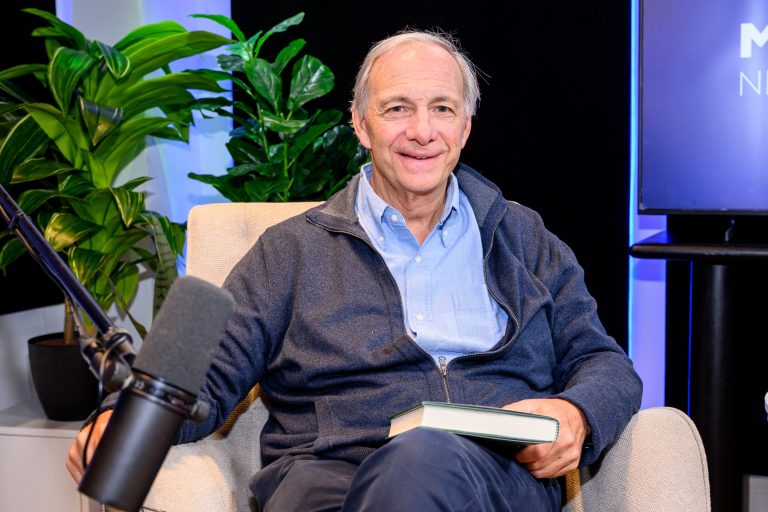
Ray Dalio, founder of Bridgewater Associates and one of the most influential investors in the world, didn’t start his career with wealth or prestige. In fact, early on, he was flat broke—so broke that he had to borrow $4,000 from his father just to stay afloat. That financial low point, and the lessons he took from it, became the foundation of a philosophy that would eventually make him a billionaire.
From Early Ambition to Early Setback
Dalio began his career in the world of finance with high hopes and boundless enthusiasm. He worked on Wall Street, built contacts, and quickly became fascinated by global markets. But enthusiasm wasn’t enough to shield him from early missteps.
In the early 1980s, after founding Bridgewater Associates from his small New York apartment, Dalio made a bold economic prediction: that the U.S. economy was heading toward a depression. He was so confident in his analysis that he positioned himself and his firm accordingly.
The problem? He was wrong.
When the market moved against him, Dalio lost almost everything. His savings vanished, his business was on life support, and his credibility took a hit. At his lowest point, he swallowed his pride and asked his father for a $4,000 loan just to cover basic expenses.
Lesson 1: Embrace Radical Open-Mindedness
That moment was humbling—but it also forced Dalio to re-evaluate how he approached decision-making. Instead of assuming he was always right, he began to adopt what he calls radical open-mindedness. This meant seeking out different perspectives, testing his own beliefs against hard evidence, and encouraging dissent rather than surrounding himself with yes-men.
Dalio realized that the biggest risk in investing—and in life—was being blind to one’s own blind spots. By building a system where ideas could be challenged openly, he reduced the chance of making overconfident, untested predictions that could cost him everything again.
Lesson 2: Turn Pain into Progress
Dalio’s second core takeaway was what he now describes as the “pain plus reflection equals progress” formula. That $4,000 debt was painful. The public failure was even more so. But instead of running from the discomfort, he leaned into it, dissecting exactly what went wrong and using that insight to improve.
He came to believe that every setback contains the seed of future growth—if you’re willing to face it honestly. For Dalio, the key was creating a repeatable process: encounter pain, analyze it without ego, and adapt so the same mistake wouldn’t happen twice.
The Road Back — and Beyond
With those principles in place, Dalio rebuilt Bridgewater Associates brick by brick. He created a company culture centered on radical transparency, where even the most senior leaders could be challenged by interns if the facts supported it. Over the next decades, that approach transformed Bridgewater into the largest hedge fund in the world, managing over $150 billion in assets.
Dalio’s fortune, estimated in the billions, is a testament to the fact that early financial ruin does not dictate your final destination—if you learn the right lessons from it.
Why His Story Resonates with Gen Z and Young Professionals
In an era where career paths are less linear and financial instability is common, Dalio’s journey offers timeless takeaways:
- Be humble enough to question yourself before the market, your boss, or life forces you to.
- Seek feedback and opposing viewpoints to uncover blind spots.
- View setbacks as tuition—the cost of lessons you couldn’t have learned otherwise.
- Build systems, not just goals—so you can sustain success instead of relying on luck or timing.
Final Takeaway
Ray Dalio’s early collapse wasn’t just a detour—it was the defining moment that shaped his philosophy on decision-making, humility, and growth. That borrowed $4,000 wasn’t just a lifeline; it was the spark that ignited a framework for thinking that turned a struggling young investor into one of the wealthiest and most respected figures in global finance.