








Intelligence: Meet Mira Murati — The 36-Year-Old Tech Prodigy Who Rose to Fame at OpenAI and Now Runs a Startup Mark Zuckerberg Can’t Ignore
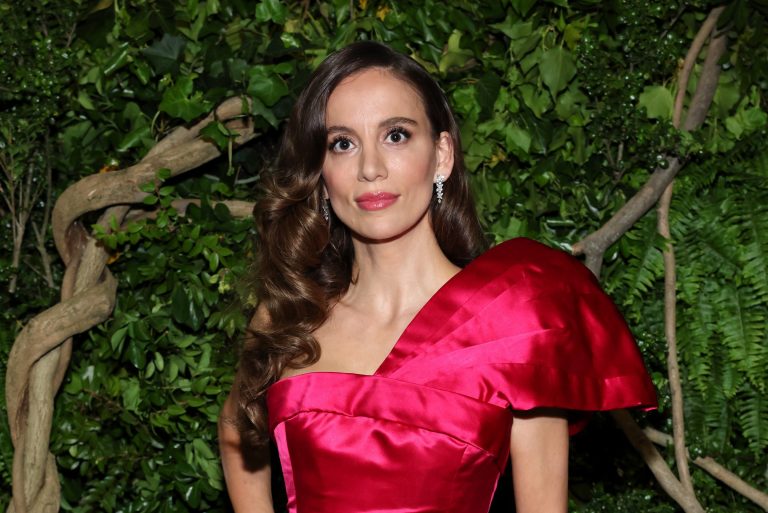
Mira Murati’s name has become synonymous with innovation, integrity, and vision in artificial intelligence. At just 36, she has gone from leading the technology behind ChatGPT to founding one of the most talked-about AI startups in the world — one that’s now a prime target for poaching by Mark Zuckerberg’s Meta. Her journey from Albania to Silicon Valley’s elite boardrooms captures both the ambition and the turbulence of the modern AI race.
Early Life and Education
Mira Murati was born in 1988 in the coastal city of Vlorë, Albania. Her exceptional academic record earned her a scholarship to study at Pearson College in Canada, where she completed the International Baccalaureate. From there, she went on to earn a degree in Mechanical Engineering from Dartmouth College, where her early fascination with robotics and applied mathematics set the stage for a career at the intersection of hardware and intelligence.
Murati’s technical education gave her a strong foundation in problem-solving, critical thinking, and system design — skills that would later prove essential in building products that blend science, creativity, and ethics.
Climbing the Tech Ladder: Tesla to OpenAI
After graduating, Murati joined Tesla as a senior product manager for the Model X, working on both design and Autopilot integration. She quickly gained a reputation for precision and creativity, blending engineering discipline with a futuristic vision of human-machine collaboration.
Following Tesla, she moved to Leap Motion, a company focused on augmented and virtual reality interfaces. There, she served as vice president of product and engineering, working on technologies that blurred the lines between physical and digital interaction.
Her big break, however, came in 2018 when she joined OpenAI. Over the next six years, she would become one of the company’s most influential leaders, guiding projects such as ChatGPT, DALL-E, and Codex — innovations that reshaped global conversations about AI’s capabilities and risks.
The Rise to the Top at OpenAI
At OpenAI, Murati was known not just for technical leadership but for balancing ambition with caution. She often emphasized ethical deployment, safety frameworks, and long-term human alignment. Her focus on the responsible scaling of artificial intelligence earned her the role of Chief Technology Officer in 2022 and, later, interim CEO during a turbulent leadership transition.
Under her watch, OpenAI expanded from being a research hub to a consumer-facing powerhouse. Products like ChatGPT became household names, and OpenAI transformed into one of the fastest-growing technology companies in history.
Yet, for Murati, success wasn’t just about scale — it was about purpose. And that purpose would soon lead her away from the company she helped define.
Founding Thinking Machines Lab
In early 2025, Murati announced her departure from OpenAI to start a new venture: Thinking Machines Lab. Her new company aims to build transparent, customizable, and ethically aligned AI systems — a counterbalance to the increasingly closed and corporate-driven AI landscape.
Thinking Machines Lab was founded as a public benefit corporation, signaling Murati’s intent to align profit with purpose. The startup quickly attracted billions in funding and assembled a dream team of researchers and engineers — many from OpenAI and DeepMind.
The company’s first product, Tinker, is designed to let developers fine-tune large language models safely and efficiently. Instead of keeping AI systems behind black boxes, Murati’s vision empowers creators to shape them with accountability and transparency.
The Billion-Dollar Poaching War with Meta
Thinking Machines Lab’s success has not gone unnoticed. Within months of its launch, reports surfaced that Mark Zuckerberg and Meta tried to acquire Murati’s company for roughly one billion dollars. Murati declined the offer.
What followed became one of the most aggressive talent wars in Silicon Valley history. Meta allegedly offered extraordinary compensation packages — in some cases worth hundreds of millions of dollars — to lure engineers away from Murati’s team. Despite the staggering offers, none of her key employees left.
This loyalty spoke volumes. It revealed that Murati had built more than a company — she had built a culture. Her employees were not merely chasing paychecks; they were following a mission they believed in.
Why Mira Murati’s Team Stayed
Several factors explain why Murati’s startup has remained intact despite the financial temptation:
- Mission-Driven Leadership – Murati’s emphasis on transparency, ethical AI, and human-centric design has created deep loyalty. Her team believes they are building something that matters beyond market competition.
- Ownership and Vision – Employees at Thinking Machines Lab have equity in a fast-growing, purpose-driven company. The long-term rewards of building something transformative outweigh short-term financial gains.
- Trust in Leadership – Murati’s proven track record at Tesla and OpenAI has built immense credibility. Her calm leadership and clarity of direction inspire confidence during uncertainty.
- Cultural Alignment – Many AI researchers today want to work in open, research-friendly environments rather than in ad-driven corporate ecosystems. Thinking Machines Lab represents that independence.
The Bigger Picture: What Murati’s Story Means for AI
Murati’s rise symbolizes a turning point in the AI industry. The focus is shifting from sheer computational power and data dominance to values, vision, and human alignment. Companies like Meta and Google may have infinite resources, but startups like Murati’s hold a different kind of power — credibility and conscience.
Her company’s resistance to acquisition and poaching highlights the growing divide between AI built for humanity and AI built for profit. It also sends a strong message to the next generation of technologists: integrity can be a competitive advantage.
Furthermore, the massive valuation of Thinking Machines Lab — estimated around $10 to $12 billion within months — shows how much investors now value leadership over legacy. In an era defined by speed and hype, Murati’s steady, principle-based approach stands out.
What’s Next for Mira Murati
The road ahead for Murati is both promising and challenging. Thinking Machines Lab will need to:
- Scale its products while maintaining research freedom.
- Balance transparency with commercial competitiveness.
- Keep top talent motivated as offers from tech giants continue.
- Deliver on the vision of safe, human-aligned AI at a time when regulation is tightening worldwide.
But if history is any guide, Murati thrives under pressure. Her calm yet bold approach to innovation has already inspired a generation of AI leaders.
Conclusion
Mira Murati’s story is a rare blend of intellect, courage, and conviction. From Albania to Silicon Valley, from Tesla to OpenAI, and now to her own billion-dollar venture, she has proven that real leadership isn’t about wealth or fame — it’s about vision and values.
As Mark Zuckerberg and others race to dominate the future of AI, Murati stands for something larger: the belief that intelligence — human or artificial — should serve humanity, not the other way around.
Her journey is still unfolding, but one thing is certain — Mira Murati is not just shaping the future of technology; she’s redefining what it means to lead it.