







DBS Group’s Board Tells Its CEO: “Even the CEO’s Job Can Be Replaced by AI”
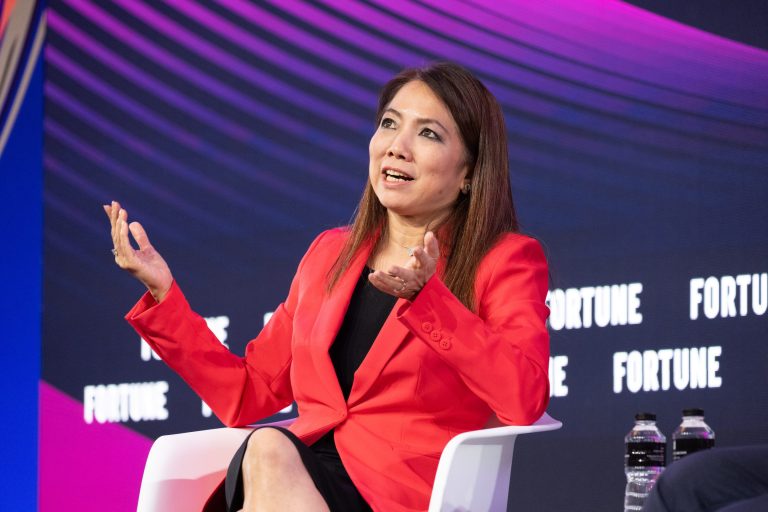
When Tan Su Shan took over as the Chief Executive Officer of DBS Group, she received a message from the board that instantly set the tone for her leadership journey: “Even the CEO’s job can be replaced by AI.”
It wasn’t a threat. It was a wake-up call — a bold reminder that artificial intelligence isn’t just transforming entry-level or technical roles, but even the top office in the corporate hierarchy. In a world driven by algorithms, automation, and machine learning, leadership itself is being redefined.
The Message That Shook the Corporate World
For decades, CEOs have symbolized strategic wisdom, decision-making power, and human intuition. But the DBS board’s message served as a powerful statement: no one is beyond disruption.
Tan Su Shan interpreted this not as an insult but as inspiration. She saw it as a challenge — a call to reinvent how leaders think, operate, and prepare their organizations for the future.
Her takeaway was simple yet profound: if artificial intelligence can replace the CEO, then every role must evolve continuously to stay relevant.
The New Reality: AI at the Top Table
Artificial intelligence is no longer confined to automating repetitive tasks or analyzing spreadsheets. It can now generate financial forecasts, optimize strategies, and even simulate decision-making scenarios.
For a forward-thinking organization like DBS, this raises crucial questions:
- How can leaders stay ahead when machines learn faster?
- What parts of leadership can never be automated?
- How do you balance efficiency with empathy?
By acknowledging AI’s potential to replace leadership functions, DBS signaled that adaptability, not seniority, is the new job security.
Tan Su Shan’s Response: The “Four R” Framework
In response to this challenge, Tan Su Shan introduced her leadership mantra — the Four R’s:
- Reinvent – Continuously transform processes, mindsets, and models to stay future-ready.
- Relevant – Keep learning; relevance is a moving target in a rapidly evolving digital landscape.
- Resilient – Build systems and cultures strong enough to absorb shocks and adapt to change.
- Responsible – Use AI ethically, ensuring fairness, transparency, and human oversight.
This framework became the foundation of her leadership vision — a way to ensure DBS thrives even as the nature of work, talent, and technology evolves.
The Philosophy: Hire for Attitude, Not Just Knowledge
Tan Su Shan also transformed DBS’s hiring approach. In an era where knowledge can be replaced by algorithms, attitude and adaptability are what set humans apart.
She emphasizes hiring people who:
- Are curious and willing to learn new tools.
- Show humility when confronted by smarter systems.
- Embrace collaboration with AI rather than fearing it.
According to her, AI will not replace people — but people who use AI will replace those who don’t.
Why the Board’s Message Matters
The board’s bold statement reflects a larger truth about leadership in the 21st century.
- It Breaks the Myth of Untouchable Leadership
The idea that top executives are immune to automation is outdated. Leaders, too, must evolve their skills, decision-making styles, and ways of thinking. - It Creates a Culture of Accountability
When even the CEO is told their job isn’t safe from AI, it sets a precedent for everyone in the organization to take ownership of innovation. - It Pushes for True Digital Transformation
Digital change is no longer about upgrading software — it’s about reimagining business models, leadership philosophies, and human potential. - It Encourages Human-Machine Collaboration
The future isn’t about replacing humans but combining the best of both worlds: AI’s precision with human creativity and empathy.
How DBS Is Applying This Mindset
Under Tan Su Shan’s leadership, DBS has been aggressively embedding AI and automation across functions — from risk analysis and customer support to investment management and operations.
But rather than using AI just to cut costs, the bank aims to enhance human productivity. Employees are trained to use AI as a co-pilot — an intelligent assistant that frees them from repetitive work so they can focus on innovation, empathy, and problem-solving.
This shift also involves a deep cultural transformation: encouraging experimentation, reducing fear of failure, and promoting continuous learning.
The Broader Lesson for Global Leaders
The story of DBS and Tan Su Shan highlights a universal truth: leadership in the age of AI demands evolution, not ego.
Today’s CEOs must:
- Embrace technology instead of resisting it.
- Lead by learning, staying curious about emerging trends.
- Redefine success beyond profits — towards innovation, inclusion, and adaptability.
- Balance logic with empathy, because AI can analyze data, but it can’t feel compassion or understand values.
In short, leaders must become augmented humans — individuals who combine machine intelligence with emotional intelligence.
The Challenges of Leading with AI
While AI opens doors to innovation, it also brings complex challenges:
- Ethical risks – How to ensure AI decisions are fair and unbiased.
- Job displacement – Managing workforce anxiety as automation grows.
- Data governance – Keeping massive data sets secure and private.
- Cultural resistance – Convincing traditional teams to embrace digital tools.
Tan Su Shan’s leadership shows that the solution lies in transparency, communication, and education. When employees understand why technology is adopted — not just how — transformation becomes smoother.
The Future of Leadership: Human and AI Side by Side
As AI systems advance, the definition of a CEO will evolve. The future leader will not just command; they will collaborate with intelligent systems to make faster, data-driven, and ethically informed decisions.
Key skills of tomorrow’s executives will include:
- Critical thinking and strategic foresight.
- Comfort with data analytics and automation tools.
- Emotional intelligence and empathy.
- The courage to reinvent themselves continuously.
SEO-Friendly Key Phrases
AI leadership, Tan Su Shan DBS, CEO replaced by AI, future of work, human-AI collaboration, leadership in the AI era, DBS digital transformation, AI in banking, responsible AI, adaptive leadership.
Conclusion
When the DBS board told its CEO that even her job could be replaced by AI, it wasn’t predicting her downfall — it was defining a new era of leadership.
Tan Su Shan’s response — rooted in reinvention, resilience, and responsibility — captures what every modern leader must understand: AI is not your competitor; it’s your catalyst.
The message from DBS is clear: In a world where algorithms evolve daily, the only truly irreplaceable quality is the ability to adapt.