









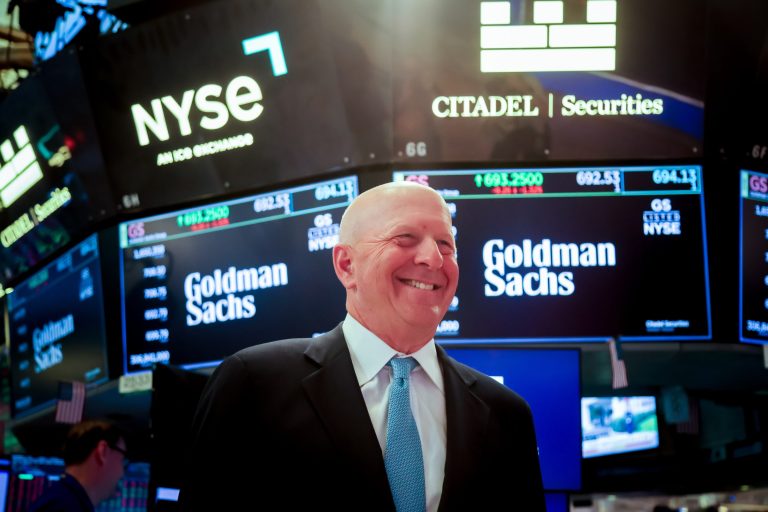
Goldman Sachs posts record Q3 revenue of $15.18 billion as CEO David Solomon credits ‘improved market environment’
Goldman Sachs delivered a blockbuster third quarter, reporting record revenue of $15.18 billion, marking its strongest performance in several years. The results underscore the firm’s resilience and adaptability amid shifting global market dynamics. CEO David Solomon attributed the surge to an “improved market environment,” stronger deal-making activity, and the return of investor confidence across asset classes.
The report exceeded Wall Street expectations by a wide margin, sending a wave of optimism through the financial sector. After facing a challenging 2023 marked by sluggish investment banking activity and cost pressures, Goldman’s latest numbers signal a full-fledged comeback for the Wall Street powerhouse.
A powerful rebound across core divisions
Goldman Sachs’ record-setting quarter was fueled by a synchronized recovery across its major business segments — Investment Banking, Global Markets, and Asset & Wealth Management. The firm’s strategic focus on returning to its traditional strengths appears to be paying off handsomely.
Investment Banking, long regarded as the firm’s crown jewel, saw a sharp rebound as merger-and-acquisition activity and capital markets issuance surged. Companies resumed IPOs and bond sales amid easing rate uncertainty, giving Goldman’s advisory and underwriting teams a major boost.
Revenue from Global Markets also came in strong, with both equity and fixed-income trading contributing significantly. The firm benefited from higher client activity, improved market liquidity, and tighter spreads across asset classes. Meanwhile, Asset & Wealth Management generated record inflows, reflecting growing demand from high-net-worth clients and institutional investors.
Investment banking bounces back
After nearly two years of subdued deal-making, Goldman Sachs’ investment banking arm roared back to life. The division’s performance was bolstered by a strong pipeline of M&A transactions and a revival in initial public offerings. The return of corporate confidence and a more stable interest-rate outlook encouraged companies to pursue long-delayed deals.
According to CEO David Solomon, the improved activity reflects both market normalization and Goldman’s deep client relationships. “We’re seeing increased strategic dialogue across industries,” he said during the earnings call. “Clients are re-engaging with long-term plans as volatility subsides and confidence returns to the markets.”
Goldman’s advisory fees climbed sharply year-over-year, while underwriting revenues surged as the firm led several high-profile equity and debt offerings. This rebound cemented its position as one of the top global advisors in deal-making once again.
Trading engine drives consistent performance
The Global Markets segment continued to deliver stable and impressive results, building on Goldman’s reputation as one of the best trading houses on Wall Street.
Equities trading revenue rose on the back of strong client activity in derivatives and structured products, while Fixed Income, Currencies, and Commodities (FICC) saw robust demand from institutional investors navigating the rate cycle. The firm’s ability to capture opportunities in both volatile and calm market conditions demonstrated the depth of its trading expertise.
Goldman’s technology-driven trading infrastructure, combined with disciplined risk management, enabled it to maximize profits while maintaining a conservative risk posture. This division remains a cornerstone of Goldman’s revenue mix, offering high returns even as broader market volatility moderates.
Wealth management shows steady growth
Goldman Sachs’ Asset & Wealth Management division achieved record quarterly revenue, buoyed by strong inflows and growing demand for customized investment solutions. High-net-worth clients and institutional investors increasingly turned to Goldman for diversified portfolio management and alternative investments.
Fee-based revenue continued to grow steadily, reflecting the bank’s ongoing pivot toward stable, recurring income streams. Solomon emphasized that expanding the firm’s wealth platform remains a strategic priority, describing it as “a critical pillar for sustainable growth.”
The firm also highlighted progress in its alternative investments business — particularly in private credit, infrastructure, and real estate — which helped offset earlier losses in its consumer banking ventures.
Strategic reset paying off
Goldman Sachs’ impressive Q3 results also validate the bank’s recent strategic reset. After scaling back its consumer finance ambitions, the firm has refocused on its core strengths: investment banking, trading, and wealth management.
This renewed concentration has streamlined operations, reduced costs, and restored profitability to levels not seen since before the pandemic. Analysts say Goldman’s decision to step back from retail banking was the right move, freeing resources to double down on its most lucrative businesses.
CEO David Solomon reiterated that the firm is now “fully aligned with our heritage and our strengths.” He added, “Goldman Sachs has always thrived when markets are dynamic — and this quarter is proof of our ability to capture opportunities when the environment improves.”
Record revenue and profitability metrics
The firm’s $15.18 billion in total revenue represents a year-over-year increase of more than 20%, surpassing all major forecasts. Net earnings also jumped substantially, with earnings per share well above consensus estimates.
Goldman reported strong operating leverage, with expenses remaining relatively stable even as revenue surged. Its return on tangible common equity (ROTCE) climbed above 16%, showcasing operational efficiency and strong capital management.
The results position Goldman Sachs as one of the best-performing investment banks this earnings season, outpacing several of its peers in both growth and profitability metrics.
Market reaction and outlook
Following the release, Goldman Sachs’ stock rose modestly, reflecting investor satisfaction with the firm’s trajectory and renewed optimism for continued growth. Market analysts praised the bank’s diversified revenue streams, disciplined execution, and clear strategic direction.
Looking ahead, Goldman’s management expressed confidence in sustaining the momentum into the next quarter. The firm expects continued deal-making activity, steady trading volumes, and strong wealth inflows as global financial conditions stabilize.
“We are operating in an environment that is gradually improving,” Solomon said. “Our focus remains on driving long-term shareholder value through disciplined growth, prudent risk management, and an unwavering commitment to our clients.”
Conclusion
Goldman Sachs’ record third-quarter revenue of $15.18 billion and its biggest earnings beat in years mark a powerful comeback for the Wall Street icon. By capitalizing on an improved market environment and realigning its business around its traditional strengths, the bank has reasserted its dominance in global finance.
With investment banking roaring back, trading staying strong, and wealth management reaching new heights, Goldman Sachs is once again proving why it remains one of the world’s most formidable financial institutions — poised to thrive in both volatile and stable markets alike.