







Former Apple CEO Says ‘AI Has Not Been a Particular Strength’ for the Tech Giant — and Warns It Has Its First Major Competitor in Decades
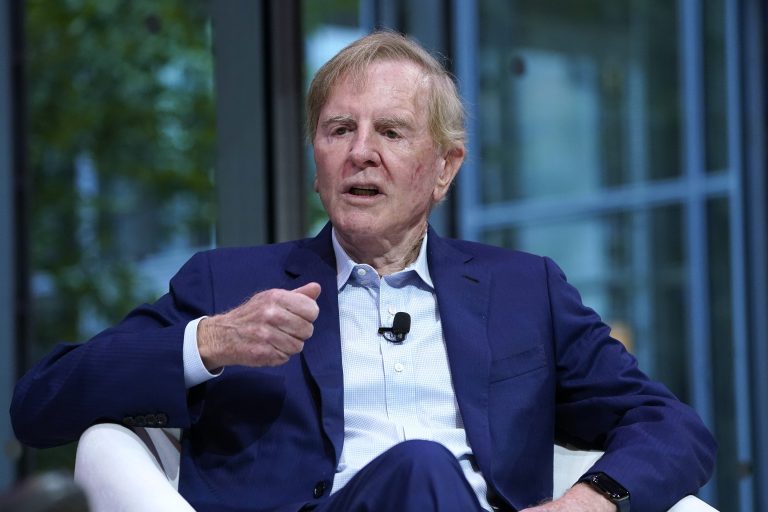
For the first time in decades, Apple may be facing a real challenge to its dominance. According to a former Apple CEO speaking at the Fortune Global Forum 2025, the company that once defined innovation in the digital age is now lagging behind in artificial intelligence, the technology driving the next industrial revolution.
“AI has not been a particular strength for Apple,” the former executive said bluntly during a fireside chat that captured the attention of industry leaders and investors alike. “They’ve built an extraordinary hardware ecosystem, but when it comes to generative AI and intelligent software integration, others have taken the lead.”
Apple’s Legacy—and Its Blind Spot
For over two decades, Apple has been synonymous with revolutionary products—the iPhone, iPad, and MacBook reshaped entire industries. But while the company has mastered hardware and design excellence, critics argue it has been slow to evolve in the AI era, where adaptive algorithms, large language models, and predictive systems are defining consumer experiences.
“Apple’s DNA has always been about privacy, control, and simplicity,” the former CEO noted. “That same philosophy that made the iPhone so successful has also limited their ability to compete in open AI ecosystems.”
While competitors like Google, Microsoft, and OpenAI have rapidly deployed large-scale AI models and integrated them into everyday tools, Apple’s approach to AI has been quieter—focusing mostly on Siri upgrades, photo processing, and on-device intelligence.
The Rise of Real Competition
For years, Apple’s dominance in consumer tech seemed unshakable. But according to industry experts, the rise of AI-driven platforms is creating a new kind of competition — one not based on hardware specs, but on how well companies can build personalized, data-driven ecosystems.
“Apple hasn’t faced a true competitor since Microsoft in the early 2000s,” said the former CEO. “But now, companies like OpenAI, Anthropic, and even Tesla are redefining what it means to be a tech leader.”
Microsoft’s integration of Copilot across Windows and Office has positioned it as a leader in enterprise AI, while Google DeepMind continues to push boundaries in generative and multimodal AI. Meanwhile, Elon Musk’s xAI and Tesla’s FSD (Full Self-Driving) initiatives are challenging Apple’s own ambitions in mobility and smart devices.
Even startups are entering the race. From Humane’s AI Pin to Rabbit’s R1, new entrants are designing AI-first devices that threaten to make traditional smartphones feel outdated.
Apple’s AI Catch-Up Strategy
Apple has taken note—and is now quietly working to close the gap. Reports suggest that the company is investing billions into its Apple Intelligence platform, aiming to integrate AI deeply across iOS, macOS, and Siri.
According to insiders, Apple’s next generation of chips, including the A19 Bionic and M4 Pro, will be heavily optimized for on-device AI processing, allowing users to generate images, text, and recommendations without relying on the cloud.
This move aligns with Apple’s emphasis on privacy-preserving AI, giving users the benefits of generative intelligence without compromising their personal data.
Still, analysts say the company’s progress feels incremental compared to the dramatic AI leaps made by competitors. “Apple’s biggest challenge is cultural,” said tech analyst Joanna Lee. “They’ve built a company obsessed with perfection—but AI thrives on experimentation and speed.”
Consumer Expectations Have Changed
Today’s consumers expect their devices to anticipate needs, automate decisions, and engage in intelligent conversations. Apple’s once-groundbreaking Siri, launched in 2011, now feels outdated in comparison to ChatGPT or Google Gemini.
“Apple’s strength has always been creating beautiful, intuitive products,” said the former CEO. “But the future belongs to companies that create intelligent companions—tools that think, learn, and adapt.”
Apple’s reluctance to open its ecosystem may also hinder its AI ambitions. Unlike Microsoft or Google, which collaborate with startups and integrate APIs widely, Apple’s closed system restricts third-party AI integration—a limitation that could prove costly.
The First Major Competitor in Decades
The former CEO did not name Apple’s “first major competitor in decades,” but many observers believe he was referring to OpenAI—whose partnership with Microsoft has reshaped the entire technology landscape.
OpenAI’s ChatGPT and GPT-powered tools have redefined consumer interaction with technology, creating a new paradigm where software, not hardware, dictates value.
“Apple’s biggest rival isn’t another phone company—it’s whoever controls the world’s smartest algorithms,” the former executive said. “If Apple doesn’t pivot quickly, it risks being remembered as a hardware giant in a software-first world.”
A Turning Point for Cupertino
Despite the criticism, industry watchers remain cautiously optimistic. Apple’s massive resources, loyal user base, and strong brand trust give it a foundation few companies can match. The question is whether it can evolve fast enough.
Insiders hint that Apple’s upcoming products—including AI-powered Macs, personalized digital assistants, and enhanced AR experiences—will mark the company’s serious reentry into the AI race.
“Apple doesn’t usually go first,” the former CEO admitted. “They go last—and best. The challenge this time is that AI is moving faster than anything we’ve ever seen.”
Conclusion
The comments serve as both a critique and a wake-up call. For a company that once redefined how the world communicates and consumes technology, Apple now stands at a crossroads.
As the world shifts from smartphones to smart intelligence, the company that once led through design perfection must now learn to lead through digital cognition. Whether Apple can reinvent itself in this AI-driven future will determine if it remains the world’s most valuable company—or becomes a symbol of missed opportunity.