









Wall Street Cheers Bad News on Jobs, Sending Stocks Higher as Investors Bet a Soft Labor Market Will Force Powell’s Hand in December
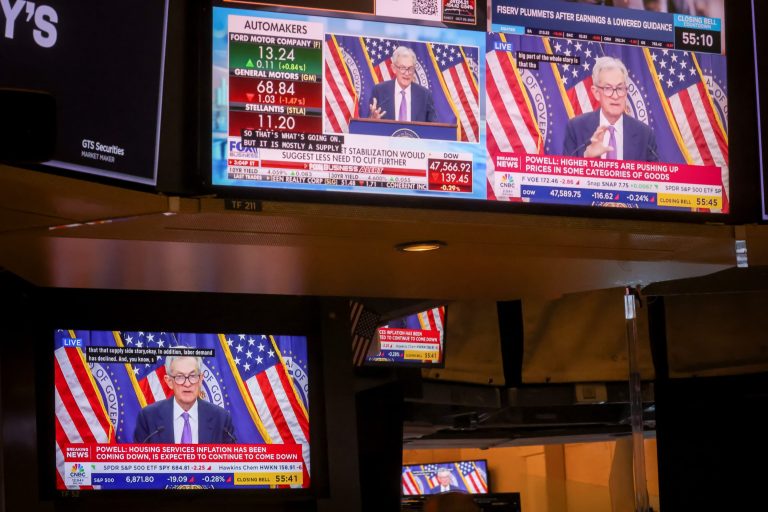
In a surprising twist that has become increasingly common in the post-pandemic economy, Wall Street is celebrating bad news. Fresh data showing a weaker-than-expected U.S. jobs report sent stocks sharply higher, as investors doubled down on their belief that a softening labor market will pressure Federal Reserve Chair Jerome Powell to cut interest rates in December.
While a slowdown in hiring would normally spark concern, the dynamics of high inflation and aggressive Fed tightening have flipped market psychology. To traders, “bad” job numbers are now good news for stocks—because they hint at lower inflation, a less hawkish Fed, and cheaper borrowing costs ahead.
A Softer Labor Market Ignites a Market Rally
The latest jobs data revealed:
- Hiring cooled faster than expected
- Unemployment ticked higher
- Wage growth slowed
- Job openings fell to their lowest level in over three years
These signals collectively suggest that the Fed’s long campaign to cool the economy is working. For Wall Street, that’s a green light.
Stocks surged across all major indexes as soon as the report dropped, with technology and real-estate sectors leading gains—both of which benefit heavily from lower rates.
Investors see the weak numbers as a sign that Powell has little choice but to ease monetary policy sooner than later.
Why Investors Want “Bad” Job Data Right Now
1. Lower inflation expectations
A soft labor market typically reduces wage pressure, which is one of the biggest drivers of inflation. If wage growth normalizes, inflation is more likely to fall toward the Fed’s 2% target.
2. A December rate cut looks more likely
Traders are now pricing in a significantly higher probability that Powell will pivot to a rate cut in the December meeting.
3. Borrowing costs could fall
Lower rates would ease pressure on:
- mortgages
- business loans
- consumer credit
- corporate debt markets
This environment boosts growth-oriented companies and fuels stock valuations.
4. Risk appetite returns
Investors are more willing to take risks when central bank policy is easing. The weak jobs data revived appetite for tech stocks, mid-cap shares, and speculative sectors.
Powell’s Dilemma: Cooling Economy vs. Recession Risks
While investors may be celebrating, the softening labor market puts Powell in a delicate position.
If the Fed cuts too soon:
- Inflation could reaccelerate
- Asset bubbles may inflate
- The Fed’s credibility could weaken
But if the Fed waits too long:
- The economy could tip into a recession
- Consumer spending may drop sharply
- Companies may intensify layoffs
Powell’s challenge is to balance both risks—and the December meeting may set the tone for the entire 2025 economic outlook.
Bond Market Reaction: Yields Fall Sharply
Treasury yields plunged following the jobs report, with the 2-year and 10-year yields both dropping as investors rushed into government bonds.
Lower yields signal:
- greater confidence in rate cuts
- expectations of slowing growth
- reduced inflation fears
This movement reinforces Wall Street’s belief that monetary policy is about to ease.
Sectors Leading the Rally
✅ Technology
Big Tech stocks surged as lower rates boost future earnings power.
✅ Real Estate
REITs and homebuilders jumped due to easing mortgage rate expectations.
✅ Consumer Discretionary
Investors expect improved spending power if borrowing becomes cheaper.
✅ Small-Caps
Rate-sensitive smaller firms saw a strong rebound.
Financials showed mixed performance, as banks benefit from higher rates but also fear a deeper economic slowdown.
What Happens Next?
Investors will closely watch:
- upcoming inflation reports
- wage data
- Powell’s speeches
- Fed meeting minutes
- geopolitical risks
If the labor market continues to soften, markets may fully price in not just a December rate cut, but a series of cuts throughout 2025.
However, Powell has warned repeatedly that the Fed will not rush into easing. Whether the weak jobs report truly forces his hand remains the biggest question for financial markets.
The Bottom Line
Wall Street’s rally on weak job data shows how dramatically the economic landscape has shifted. A softer labor market—traditionally seen as a red flag—is now viewed as the key to unlocking the next wave of Fed rate cuts.
Investors are betting big that Jerome Powell will pivot in December. If he does, this moment could mark the turning point for markets heading into 2025.