





Forget the Four-Day Workweek: Elon Musk Predicts You Won’t Have to Work at All in ‘Less Than 20 Years’
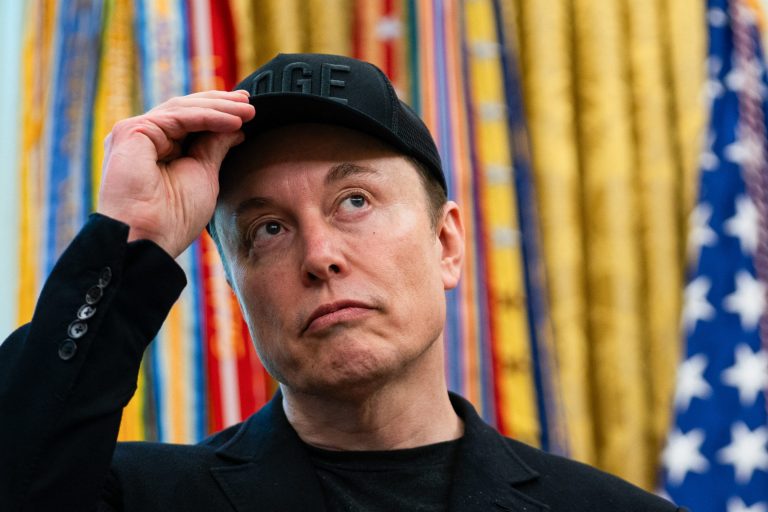
The global debate over the four-day workweek may soon feel outdated. According to Elon Musk, humanity is moving toward something far more radical: a future where people might not have to work at all. Speaking at a recent AI and robotics summit, Musk claimed that thanks to rapid advances in artificial intelligence and fully autonomous systems, humans could be free from traditional labor within “less than 20 years.”
While the idea sounds straight out of a sci-fi script, Musk insists the transition is already underway — and the world must prepare quickly.
AI Acceleration Makes the 4-Day Workweek Obsolete
For years, governments and companies have discussed shifting from a five-day to a four-day work routine to improve well-being, productivity, and mental health. But Musk’s vision leapfrogs that conversation entirely.
In his view:
- AI and humanoid robots will handle everything from manufacturing and logistics to customer service and coding.
- Autonomous agents will complete tasks traditionally requiring human decision-making.
- Productivity will increase far beyond what any human workweek — four or five days — could achieve.
Musk argues that in such an economy, the very idea of “work-life balance” changes. Instead of optimizing human schedules, society will optimize AI-run systems that operate 24/7 without fatigue or error.
A Future of “Universal High Income”
One of Musk’s boldest statements was that governments may soon need to create a system he calls “universal high income.”
Not to be confused with Universal Basic Income (UBI), which provides a minimal survival allowance, this new model would:
- Supplement people with income not tied to work,
- Ensure citizens maintain a high standard of living,
- Allow people to focus on creativity, hobbies, travel, relationships, and leisure instead of earning wages.
According to Musk, as AI becomes capable of performing “almost any job” better than a human, the economic model — not the human work ethic — will need to evolve.
Robots Doing “Everything You Don’t Want to Do”
Tesla’s Optimus robots, which Musk claims will soon revolutionize domestic and industrial work, are central to his prediction. Musk believes:
- Robots will clean homes, cook meals, manage errands, drive vehicles, and repair electronics.
- In factories, they’ll take over repetitive, dangerous, and high-precision tasks.
- In offices, AI systems will run scheduling, data analysis, content creation, customer support, and strategy modeling.
If these systems scale globally — as Musk expects — the need for human labor could shrink dramatically.
Critics Say the Timeline Is Too Optimistic
Not everyone shares Musk’s conviction.
Economists and labor researchers caution that:
- AI may disrupt jobs faster than governments can create safety nets.
- Inequality could worsen before it improves.
- New regulations, ethical frameworks, and global cooperation are essential to prevent misuse of AI power.
- Entire industries may resist full automation due to security, cultural, or economic concerns.
While experts agree that AI will reshape the workforce, predicting a complete end to human labor in under 20 years is seen as highly ambitious.
If Work Ends, What Happens to Purpose?
One philosophical question Musk raises — intentionally or not — is: “Who are we without work?”
For centuries, work has been:
- A source of identity,
- A way to contribute to society,
- A structure for daily life,
- A measure of personal achievement.
If AI takes over, society will need to redefine meaning, purpose, and fulfillment. Musk believes humans will naturally shift toward:
- Creativity,
- Innovation,
- Art,
- Sports,
- Research,
- Exploration,
- Self-expression.
In short: the things humans actually enjoy but rarely have time for.
Government Roles: Adapting to an AI-Driven Economy
To prepare for a future with minimal human labor, Musk urges policymakers to focus on:
- AI regulation to ensure ethical development,
- Education reforms centered on creativity rather than rote skills,
- A new welfare structure that supports citizens,
- Global cooperation on data and safety standards.
The biggest challenge? Ensuring that the economic gains from AI don’t concentrate only among tech giants, but reach ordinary people.
A World Without Work: Utopia or Uncertainty?
Musk’s prediction echoes a long-held dream in technological history: machines freeing humans from labor. But this transformation brings both promise and risk.
Potential benefits:
- More leisure and personal freedom
- Breakthroughs in creativity and research
- Improved mental health
- A more equitable distribution of time and opportunity
Potential risks:
- Widening wealth gaps
- AI-driven discrimination
- Loss of motivation or direction
- Threats to privacy and autonomy
Whether Musk’s 20-year prediction comes true or not, one thing is certain: the next two decades will redefine what “work” means.
Conclusion
Elon Musk’s forecast forces the world to confront a bold possibility: a society where humans no longer need to work. Whether we call it automation, AI super-productivity, or the robot revolution, the shift has already begun. The question is no longer whether AI will change the global workforce — but how fast, and how prepared we are for a world where work might become optional.
As Musk puts it, “This is not science fiction. It’s economics, technology, and inevitability.”