





Venezuela’s Mineral Wealth Sparks Global Power Struggle
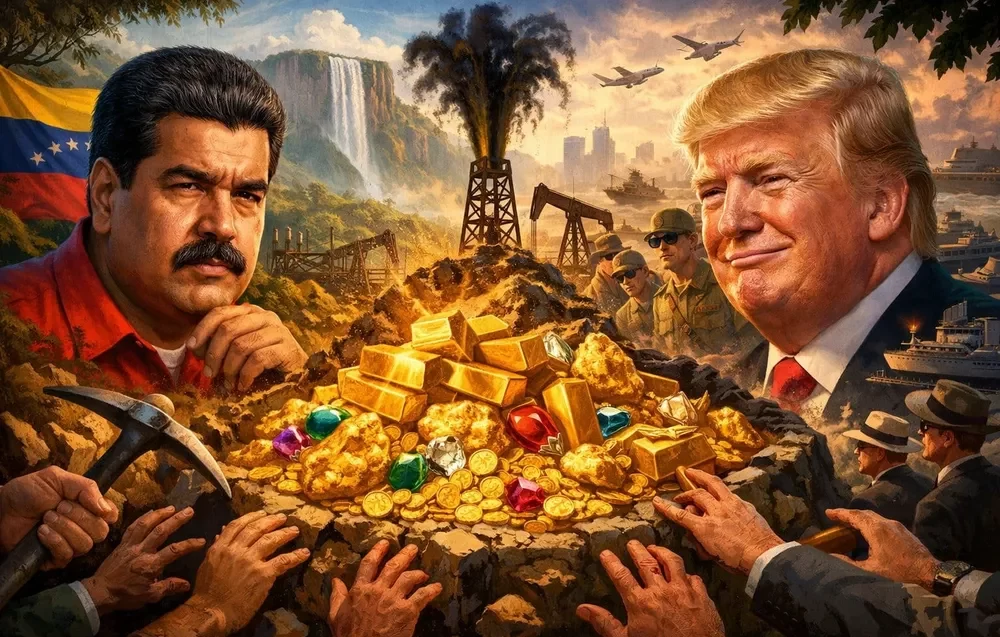
Venezuela, a nation long defined by its vast oil reserves, is rapidly emerging as a central player in the global competition for critical minerals. Beyond hydrocarbons, the South American country sits atop some of the world’s most valuable deposits, including gold, coltan, and rare earth elements — minerals that are indispensable for advanced technologies such as electric vehicles, semiconductors, renewable energy systems, and defense equipment.
The Orinoco Mining Arc, a vast region in eastern Venezuela, is believed to contain mineral wealth worth hundreds of billions of dollars. While these resources have enormous potential to influence global supply chains, decades of mismanagement, political instability, and inadequate infrastructure have left much of the territory underdeveloped. Illegal and unregulated mining operations by non-state actors are widespread, further complicating efforts to harness the wealth responsibly.
The rising interest in Venezuela’s minerals has drawn the attention of major powers, notably the United States and China. Washington, heavily dependent on imported rare earths and other strategic materials, views Venezuela as a potential alternative to supply chains dominated by China. Beijing, meanwhile, has expanded its investments in Latin America over the past decade, seeking secure access to the minerals necessary for its high-tech and defense industries. Analysts warn that competition over Venezuelan resources could intensify geopolitical tensions and realign global alliances.
Environmental and social concerns are also central to the debate. Large-scale mining in the Orinoco region has led to deforestation, water pollution, and conflicts involving local communities and armed groups. Human rights advocates caution that without robust regulations and governance, mineral extraction could exacerbate existing social and environmental crises in the country.
Experts say Venezuela’s mineral wealth represents both an opportunity and a test for its political leadership. Responsible development could provide a lifeline to a struggling economy, generate much-needed revenue, and strengthen the country’s standing on the global stage. Conversely, mismanagement risks perpetuating cycles of corruption, exploitation, and environmental damage.
As nations around the world watch closely, Venezuela’s minerals are no longer just a local issue — they have become a centerpiece in the global race for resources that power the modern economy and technological future. How the country manages this wealth could reshape its role in international politics for decades to come.