


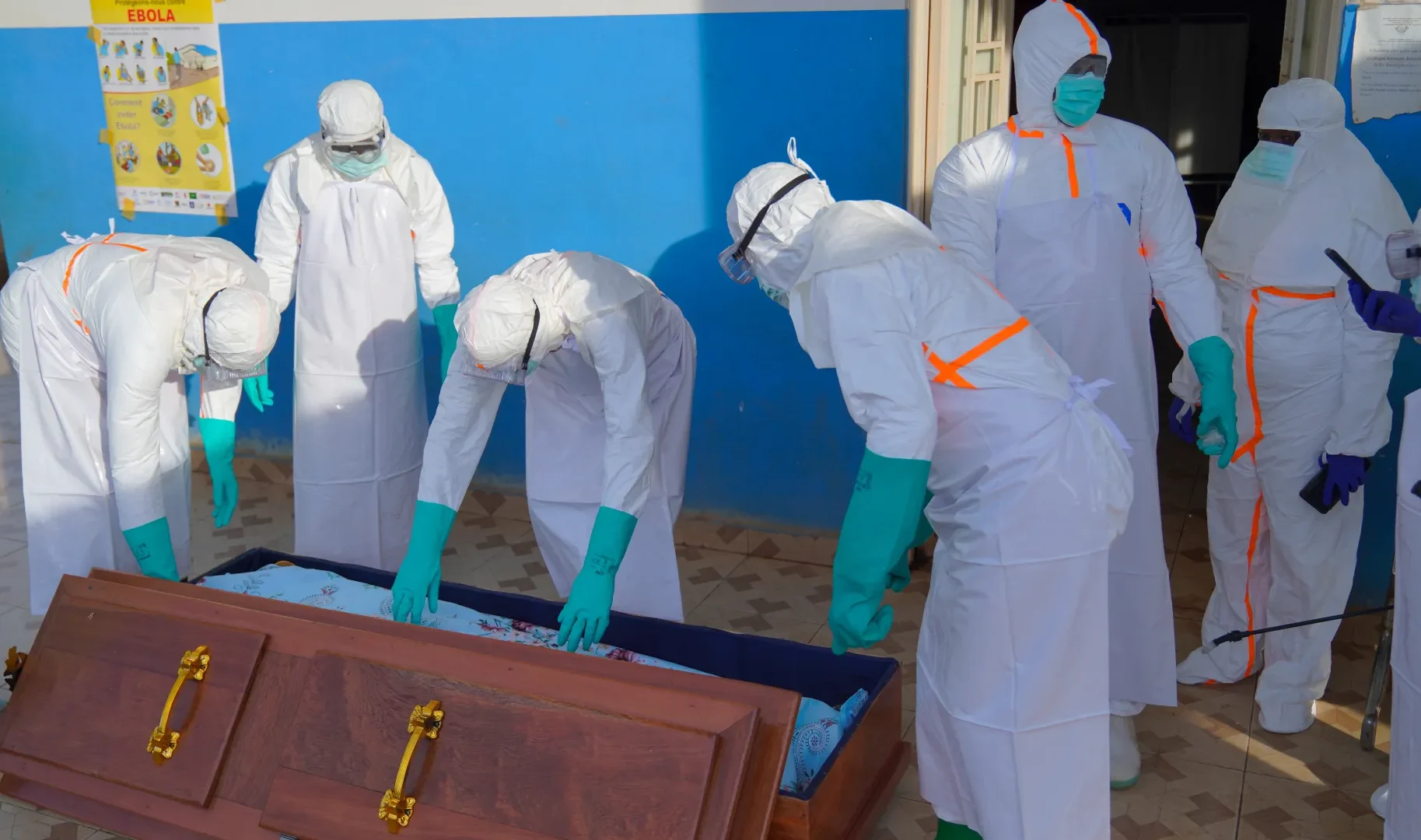







Africa Faces Potentially Worst Ebola Crisis as Cases Surge Across Borders
Health officials are raising urgent concerns that the latest Ebola outbreak in eastern Africa could become the deadliest in history if immediate action is not taken to contain its spread. The warning comes from Jean Kaseya, Director-General of the Africa Centres for Disease Control and Prevention (Africa CDC), who described the situation as a growing public health emergency with the potential to surpass previous devastating outbreaks.
Speaking during a virtual meeting of African heads of state and international donors in Burundi, Kaseya warned that the outbreak is expanding rapidly and could exceed the scale of the catastrophic Ebola epidemics that struck West Africa in 2014 and the Democratic Republic of Congo (DRC) in 2018. Those outbreaks claimed more than 11,000 and 2,000 lives respectively, making them among the deadliest disease outbreaks in modern African history.
The current outbreak is centered in the Democratic Republic of Congo, where authorities have reported at least 837 infections and 196 deaths. The virus has already crossed borders into neighboring Uganda, where 19 cases and two deaths have been confirmed, raising fears of a wider regional health crisis. Public health experts warn that increasing population movement, porous borders, and challenges in disease surveillance could accelerate transmission across multiple countries.
One of the biggest concerns is that many infected individuals are not being identified early enough. Health workers have reported difficulties tracking contacts, while misinformation and mistrust in some communities have discouraged people from seeking treatment or cooperating with response teams. Such challenges have historically allowed Ebola outbreaks to spread more quickly and become harder to control.
Medical experts also fear that strained healthcare systems in affected regions could struggle to cope if infections continue to rise. Hospitals and treatment centers are already facing significant pressure, while international health organizations are calling for greater financial support, medical supplies, and emergency personnel to strengthen containment efforts.
Despite advances in vaccines and treatment options compared with previous outbreaks, officials caution that these tools alone will not stop the virus without widespread community cooperation and coordinated international action. Rapid testing, contact tracing, vaccination campaigns, and public awareness efforts remain critical to preventing a larger disaster.
As governments and aid agencies race to contain the outbreak, health authorities stress that the coming weeks will be crucial. Without a swift and effective response, the current Ebola crisis could evolve into one of the most severe public health emergencies Africa has ever faced, threatening thousands of lives and placing enormous strain on healthcare systems across the region.