







Apple CEO Tim Cook Has Created More Shareholder Value Than Steve Jobs—But His AI Weaknesses Are Now on Display
For over a decade, Apple Inc. has been synonymous with seamless innovation, robust product ecosystems, and exponential shareholder returns. At the helm of this transformation has been Tim Cook, a logistics genius and supply chain wizard who turned Apple into a global cash machine. Since taking over as CEO in August 2011, Cook has added trillions to Apple’s market cap—far more than the legendary Steve Jobs ever did. But as the age of Artificial Intelligence (AI) takes center stage, cracks are beginning to show in Cook’s otherwise impeccable legacy.
Tim Cook: The Master Operator
When Steve Jobs passed away in 2011, Apple fans and investors feared the worst. Jobs was not just a CEO—he was a visionary who redefined entire industries. From the iPhone and iPad to the iTunes Store, Jobs had the rare ability to predict consumer desires before they even knew what they wanted. Tim Cook, his successor, lacked that spark of creativity—but he brought something equally vital: operational excellence.
Under Cook, Apple’s revenues soared, profit margins strengthened, and supply chains became the gold standard of global efficiency. He oversaw the successful launch and scaling of new product lines like the Apple Watch, AirPods, Apple Services, and Apple Silicon. Cook’s Apple became the first publicly traded U.S. company to reach a $3 trillion market valuation, creating more wealth for shareholders than any other tech CEO in modern history.
The AI Revolution—and Apple’s Hesitation
But the tide is turning.
The tech world is entering the AI-first era, and companies like Google, Microsoft, Meta, and Nvidia are racing ahead. Generative AI, machine learning, and autonomous computing are no longer just buzzwords—they are reshaping productivity, healthcare, finance, and entertainment.
Apple, meanwhile, seems to be playing catch-up.
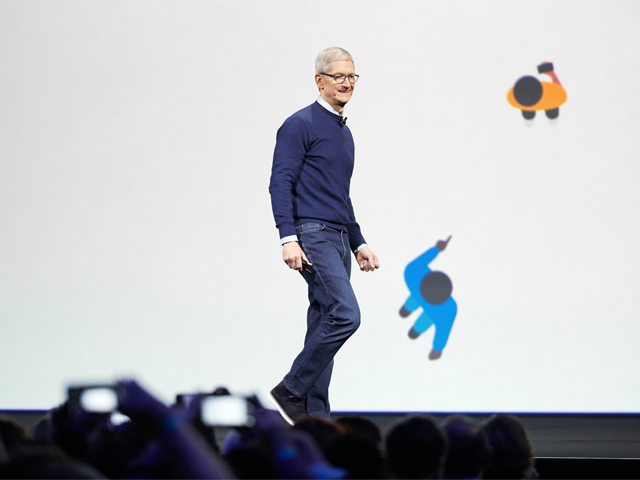
While competitors are releasing AI copilots, chatbots, real-time image generators, and large language models (LLMs), Apple has been relatively quiet. At WWDC 2024, Cook announced “Apple Intelligence,” an AI integration into iOS 18 and macOS—but the features appeared modest in comparison to OpenAI’s GPT-5 rollout or Google’s Gemini ecosystem.
Even more telling: Apple announced that ChatGPT would be integrated into Siri for advanced queries—a move seen by many as Apple outsourcing innovation in a field where it once led. Critics argue this reflects a lack of internal AI leadership and long-term vision.
Why Tim Cook May Be Ill-Suited for the AI Era
Tim Cook’s strengths lie in optimization, not imagination. His leadership style is collaborative, cautious, and structured. This approach is perfect for scaling mature businesses—but may fall short in disruptive technological revolutions.
Unlike Elon Musk, Mark Zuckerberg, or Satya Nadella, Cook isn’t known for taking bold bets on moonshot technologies. Apple’s approach to AI so far reflects this caution:
- No native Apple LLMs released publicly.
- No bold acquisitions of AI startups.
- No open-source contributions like Meta’s LLaMA.
- Limited AI features in consumer-facing apps.
Internally, reports suggest that Apple has struggled to attract top-tier AI talent due to its secretive culture and conservative development cycles. While companies like OpenAI move rapidly in public, Apple prefers to iterate slowly and quietly.
Shareholder Value vs. Innovation Value
From a financial standpoint, Cook remains a titan. Apple’s services revenue continues to grow, hardware sales are stable, and buybacks remain aggressive. The stock remains one of the most trusted assets in institutional portfolios.
But shareholder value is not the same as innovation value. In the AI age, companies that lead in foundational research and platform shifts may become the next trillion-dollar giants. Apple risks becoming a follower, rather than a trailblazer.
Investors are beginning to notice. In recent quarters, Apple has underperformed compared to Microsoft and Nvidia, both of which have been aggressively expanding their AI capabilities and partnerships. The market is now asking: can Apple innovate beyond its closed ecosystem?
The Road Ahead: Will Apple Catch Up in AI?
To be fair, Apple has a unique advantage—hardware integration. No other company owns the entire user stack from chip to OS to app. If Apple can integrate AI across its tightly controlled ecosystem while preserving privacy and battery efficiency, it could offer a superior user experience.
The company also has deep pockets, with over $160 billion in cash reserves, and could still acquire or partner its way into AI leadership. There’s still time—but not much.
The next two years will be pivotal. With the iPhone 17 rumored to include on-device AI, and Apple’s secretive AI teams reportedly working on next-gen Siri upgrades and generative visual tools, 2026 could be the year Cook proves doubters wrong.
But one thing is clear: the AI revolution demands bold vision, not just precision execution. And that raises an important question:
Is Tim Cook the right person to lead Apple into the next frontier of tech—or will he be remembered as the steward who preserved Apple’s greatness but couldn’t renew it?