










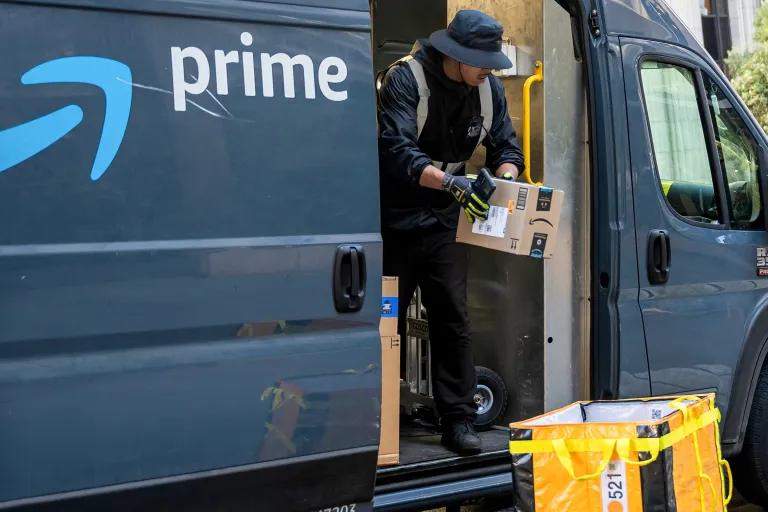
Amazon’s Prime Day Celebratory Recap Was Missing One Key Metric — And Analysts Are Taking Notice
Amazon’s annual Prime Day — often hailed as the “Super Bowl of online shopping” — came and went this July with record fanfare, viral deals, and flashy headlines. But amidst the celebratory press releases, success stories, and curated highlights from the e-commerce giant, one crucial figure was conspicuously absent: total sales revenue.
For years, Amazon has proudly reported gross sales figures following Prime Day, allowing Wall Street analysts, retail competitors, and global investors to gauge the platform’s true performance during the highly anticipated event. This year, however, that metric was nowhere to be found.
The omission has sparked industry speculation, raised eyebrows in financial circles, and triggered a broader conversation: Is Amazon trying to manage expectations in a slowing consumer environment, or is something bigger at play?
What Amazon Did Reveal: Carefully Curated Wins
In its post-event press release, Amazon boasted the following:
- “Biggest Prime Day ever” with “more deals offered than any previous year”
- Over 150 million items sold by third-party sellers
- High-performing categories included home appliances, fashion, beauty, and tech gadgets
- Tens of millions of shoppers participated in the two-day sale across major markets including the U.S., India, UK, and Japan
- Same-day and one-day deliveries hit new records thanks to Amazon’s revamped logistics and AI-optimized delivery network
The company emphasized shopper engagement, Prime membership renewals, and participation from small businesses. It also spotlighted products like Echo devices, Fire TVs, and Ring doorbells as best-sellers — all from Amazon’s own ecosystem.
But nowhere in the celebratory recap was the figure Wall Street watches most closely: gross merchandise volume (GMV) or total revenue generated during the event.
Why the Missing Metric Matters
Historically, Amazon has used the total Prime Day sales figure as a proof point of its retail dominance. In past years, the company has proudly shared numbers such as:
- $11.2 billion in Prime Day 2021
- $12.9 billion in 2022
- $13.6 billion in 2023
Even during last year’s economic slowdown, Amazon released an estimated $14.5 billion in sales — helping prop up investor confidence.
In 2025, however, the company only offered performance highlights in relative terms, such as “more items sold” and “best-ever event,” without any hard sales number.
Analysts argue this move might be strategic, especially in a volatile economic climate where inflation has softened discretionary spending, and competition from Walmart, Temu, and Flipkart is heating up.
What Analysts Are Saying
“This is a textbook case of selective disclosure,” says Mark Gerstein, a senior retail analyst at JP Morgan. “When companies stop reporting a metric they’ve shared for years, it usually signals softness in that data. It doesn’t mean Prime Day failed — but it likely didn’t outperform last year in a meaningful way.”
Others see it as a shift in Amazon’s communication strategy.
“They may be pivoting toward engagement-based metrics — like new Prime signups or third-party seller volume — to show long-term platform value rather than chasing short-term headline numbers,” says Anjali Sinha, an e-commerce researcher at Gartner.
Still, the lack of clarity left many on Wall Street uneasy. Amazon’s stock dipped 1.3% the day after the press release, even as rival retailers like Walmart and Target saw modest gains, possibly due to perceived market share gains.
Is Amazon Losing Its Edge? Not Quite.
While Amazon may not have disclosed total sales, there’s little doubt Prime Day remains a retail powerhouse:
- The event generated record traffic across mobile and desktop platforms, according to Adobe Analytics.
- Amazon Web Services (AWS) saw a spike in demand due to increased backend traffic support.
- Third-party sellers experienced up to 4x more orders than usual, particularly in niche lifestyle and fitness categories.
- Amazon India alone reported its highest-ever Prime Day participation, signaling emerging market growth.
The company also used Prime Day to deepen its ecosystem integration — promoting Alexa-enabled devices, offering Prime Video bundles, and locking in shoppers through Amazon Pharmacy and Grocery incentives.
In essence, Prime Day 2025 was not just about transactions — it was about ecosystem stickiness and customer retention.
The Bigger Picture: Changing Consumer Behavior
Behind Amazon’s cautious reporting lies a more complex retail landscape.
Key market trends influencing Prime Day performance:
- Economic pressure on middle-income households has made shoppers more value-conscious.
- Buy Now, Pay Later (BNPL) services like Affirm saw higher adoption, suggesting tighter personal budgets.
- Sustainability concerns are growing, especially among Gen Z shoppers — impacting the impulse-buying culture of Prime Day.
- AI-curated deals and dynamic pricing received mixed feedback, with some consumers finding pricing unpredictable and confusing.
In this environment, Amazon’s decision to focus on seller participation and delivery efficiency may reflect a long-term play rather than a short-term numbers game.
Conclusion: Transparency or Tactic?
Amazon’s choice to omit Prime Day’s total sales figure in 2025 might have been strategic — or simply cautious. Either way, it has reignited debate about the transparency of tech giants, the maturity of the online retail market, and the role of headline numbers in shaping public trust.
What remains clear is that Prime Day is evolving. It’s no longer just about volume — it’s about value creation, Prime ecosystem expansion, and retaining consumer trust in a shifting economy.
Whether this evolution will satisfy investors in the long term remains to be seen. But for now, the missing number speaks just as loudly as the ones Amazon chose to share.