










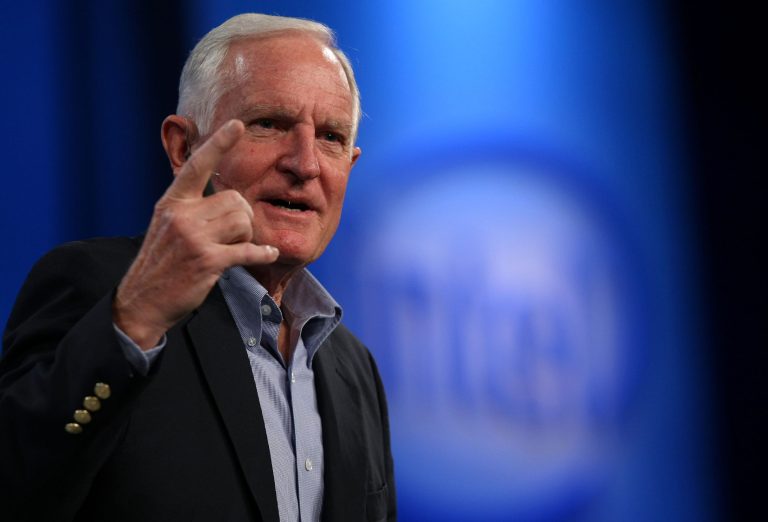
Former Intel CEO Craig Barrett Unveils $40 Billion Plan to Revive Intel and U.S. Chip Manufacturing
Craig Barrett, who served as Intel’s CEO from 1998 to 2005, has outlined an ambitious plan to restore Intel’s dominance in advanced chip manufacturing and strengthen America’s position in the global semiconductor industry.
Barrett believes Intel needs around $40 billion in fresh capital to compete with global leaders such as Taiwan’s TSMC and South Korea’s Samsung. Instead of relying entirely on federal aid, he proposes a public–private funding model in which eight of the largest U.S. technology companies—potentially including Nvidia, Apple, Google, and others—would each contribute $5 billion. This approach, he says, would provide Intel with the resources to push ahead with next-generation manufacturing technology.
He is critical of Intel’s current leadership for hesitating to invest in advanced process nodes, like the upcoming 14A technology, until customers commit to long-term contracts. According to Barrett, waiting for customer commitments before building the capability is unrealistic in an industry where speed and readiness determine market leadership.
Barrett points out that Intel already possesses cutting-edge technologies such as high NA EUV lithography and backside power delivery, which could help it regain its competitive edge—if backed by sufficient investment.
His plan also includes advocating for tariffs on imported high-end semiconductors, similar to tariffs on steel and aluminum, to encourage domestic production. He rejects the idea of breaking up Intel, arguing that it would slow down decision-making and distract from the urgent need for action.
For Barrett, revitalizing Intel is not just about corporate survival—it’s about national security. With global supply chains under pressure and geopolitical tensions high, he believes a strong U.S. semiconductor manufacturing base is essential for the country’s technological and strategic future.