








DC’s Attorney General Warns Trump’s Police Takeover is Illegal and Could Wreak Havoc in the Capital
Washington, D.C. has once again found itself at the center of political and legal turmoil, this time over a controversial move by former President Donald Trump. The city’s Attorney General has issued a sharp warning, declaring that Trump’s proposed plan to take control of policing in the nation’s capital is not only unlawful but also a threat that could bring “operational havoc” to a city already burdened by political tensions.
A Constitutional Clash in the Capital
The attorney general’s remarks come amid reports that Trump, emboldened by his influence and renewed political presence, has suggested asserting federal authority to override local control of the D.C. Metropolitan Police Department. While Washington, D.C. is unique in its governance—operating under local leadership but still subject to congressional oversight—the move to seize control of policing would represent an unprecedented federal intrusion.
Legal experts point out that the U.S. Constitution and the District of Columbia Home Rule Act grant significant authority to local officials over policing, despite Congress holding ultimate jurisdiction over the capital. The attorney general stressed that any attempt by Trump to install federal control would run afoul of the law and undermine the fragile balance between local autonomy and federal oversight.
Why D.C. Policing Matters
Unlike other cities, D.C. does not enjoy full statehood. This leaves the district vulnerable to political maneuvering whenever federal leaders want to assert authority. The Metropolitan Police Department is one of the largest municipal forces in the country and plays a critical role in safeguarding not only residents but also federal buildings, national landmarks, and large-scale events like inaugurations and protests.
Shifting operational command from city officials to federal leadership would not just be symbolic; it would fundamentally alter how law enforcement functions in the capital. The attorney general warned that it could cause chaos by creating confusion over jurisdiction, accountability, and chain of command—especially during emergencies.
Operational Havoc and Public Safety Concerns
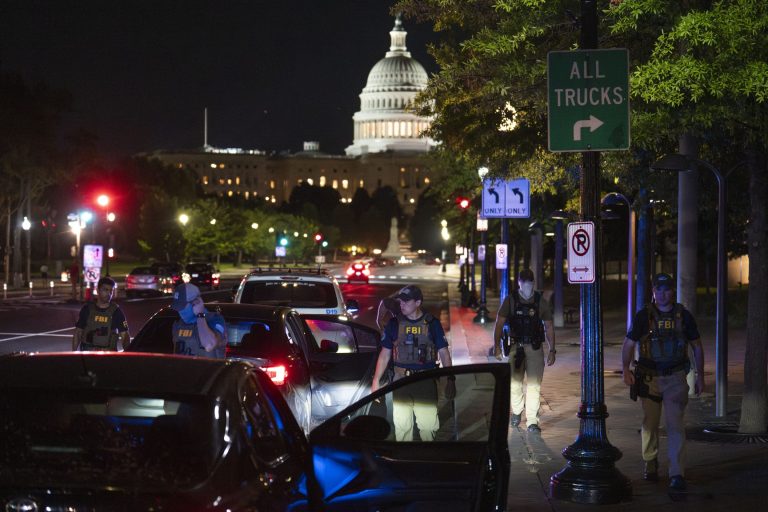
The phrase “operational havoc” was not chosen lightly. Law enforcement coordination in D.C. already involves a complex web of agencies, including the Secret Service, Capitol Police, National Guard, and FBI. Adding another layer of political interference could fracture communication channels at critical moments.
Imagine a large-scale protest near the Capitol or a security threat on the National Mall. If Trump or any federal actor attempted to assert control over the police, officers could be caught in conflicting orders—unsure whether to follow directives from the mayor, the police chief, or a political figure. That uncertainty, experts warn, could slow response times, escalate violence, and erode public trust in law enforcement.
Political Motivations Behind the Move
Critics argue that Trump’s push to control D.C. police is not about security but politics. During his presidency, Trump often clashed with the D.C. mayor and local officials, particularly during the 2020 racial justice protests. His calls to “dominate the streets” with force raised concerns about authoritarian overreach.
By attempting to take over the police force, Trump may be signaling his continued desire to centralize power and showcase strength to his supporters. But this move risks alienating residents of the capital, who already lack voting representation in Congress and have long fought for greater autonomy.
The Attorney General’s Stand
The D.C. Attorney General made it clear that any attempt to override local authority would be met with legal challenges. His office has vowed to protect the rights of the district’s residents and ensure that policing remains accountable to the people of D.C., not to a political figure.
In his statement, he underscored that law enforcement decisions must be rooted in public safety, not in partisan interests or displays of political dominance. “The people of Washington, D.C. deserve stability, safety, and lawful governance. Any unlawful takeover attempt will not go unchallenged,” he said.
What Comes Next?
The battle over D.C.’s policing authority is far from settled. If Trump attempts to move forward with his plan, it would likely spark a constitutional confrontation involving Congress, the courts, and potentially the Supreme Court. In the meantime, the attorney general’s strong words are meant to reassure residents that local officials will fight to preserve their autonomy.
For D.C. residents, the debate is more than a political headline. It is about the right to self-govern and the ability to trust that their police serve the community rather than political power brokers. As Trump continues to wield influence, the conflict over policing in the capital could become a defining legal and political fight in the months ahead.