










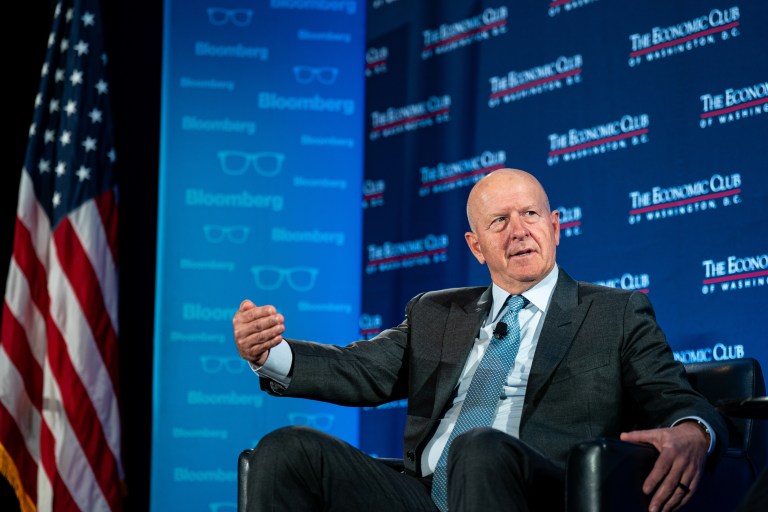
Goldman Sachs CEO: AI’s Opportunity Is Enormous, But ‘There Will Be Winners and Losers’
Artificial Intelligence (AI) is reshaping industries faster than any technological revolution before it. From financial services to healthcare, logistics, and retail, every business leader today is grappling with one fundamental question — how can we leverage AI to grow, not fall behind? Goldman Sachs CEO David Solomon recently shared his perspective, calling AI “an enormous opportunity” but warning that “there will be winners and losers.” His message underscores a vital truth: AI will redefine competition — not just in technology, but in every business that uses it.
The Promise of AI: A Once-in-a-Generation Opportunity
According to Solomon, artificial intelligence represents one of the greatest opportunities of the 21st century. It has the potential to transform how companies operate, make decisions, and interact with customers.
For Goldman Sachs, a firm built on precision, analytics, and speed, AI’s value lies in its ability to process massive amounts of data in real time — identifying risks, predicting trends, and automating complex operations. The company has already begun using AI in areas like risk management, trading, compliance monitoring, and client analytics, setting an example for how finance can harness technology responsibly.
But Solomon cautions that while the promise is immense, the path to success is uneven. “AI will create efficiencies, open new markets, and change the way we work. But it will also disrupt industries and displace old models. Not everyone will win,” he said.
Winners Will Be Those Who Adapt — Fast
In the emerging AI-driven economy, adaptability is the new currency. The businesses that embrace change early and strategically will lead the market, while those that hesitate risk falling behind. Solomon’s warning reflects a broader truth: AI rewards vision, execution, and data-driven agility.
Companies that invest in digital infrastructure, upskill employees, and integrate AI into their core strategy are positioned to gain exponential advantages. For instance:
- Banks that automate risk assessment and fraud detection will serve clients faster and more securely.
- Manufacturers using AI for predictive maintenance will cut downtime and boost profitability.
- Retailers leveraging AI-powered personalization will create deeper customer loyalty.
On the other hand, organizations that resist AI — either due to cost concerns or fear of disruption — may find themselves outpaced by more innovative competitors. As Solomon put it, “This is not just about technology adoption. It’s about business survival.”
The Losers: Companies That Fail to Evolve
AI will inevitably create winners and losers, just as every major technological shift has done — from the internet to automation. The losers won’t necessarily be small companies but those that lack clarity, strategy, and execution.
Many organizations fall into the trap of “AI experimentation without direction.” They invest in pilot projects, deploy chatbots, or buy analytics software without integrating AI into their long-term vision. The result? Wasted resources, minimal ROI, and confusion.
The Goldman Sachs CEO’s warning serves as a reality check: AI will widen the gap between the technologically agile and the slow movers. Companies that fail to build digital cultures, modernize data systems, or develop governance frameworks will find themselves at a structural disadvantage.
The Financial Industry: Leading by Example
In finance, AI’s impact is particularly profound. The ability to analyze trillions of transactions, detect anomalies, and anticipate market behavior gives banks a competitive edge. Goldman Sachs, among others, is investing heavily in AI to streamline workflows, support decision-making, and enhance client experience.
From automated trading algorithms that react faster than human traders to AI-driven compliance systems that flag risks instantly, the financial sector is becoming smarter, faster, and more resilient. Yet Solomon emphasizes that innovation must be balanced with responsibility. “AI can do extraordinary things, but it must be governed wisely. Trust and transparency are key,” he said.
The Human Element Still Matters
While AI can enhance productivity and insight, Solomon is clear that it cannot replace human judgment. “AI will change what we do, but not why we do it,” he remarked. The true winners will be companies that blend AI efficiency with human empathy, ethics, and creativity.
This means reskilling employees, fostering innovation, and ensuring that AI systems are fair and explainable. The future of work, according to Solomon, will be “human-led, tech-enabled.”
Strategic Takeaways for Businesses
To thrive in the AI revolution, organizations need a clear, actionable strategy. Based on Solomon’s insights and broader industry trends, here are key takeaways for leaders:
- Build a Data-First Culture: AI is only as strong as the data feeding it. Invest in clean, unified, and accessible data.
- Invest in Talent and Training: Equip teams with AI literacy and digital skills to complement new technologies.
- Start Small but Think Big: Launch targeted AI projects that solve real business problems and expand from proven success.
- Ensure Ethical Governance: Build frameworks for responsible AI use — transparency, fairness, and accountability.
- Focus on Long-Term ROI: Treat AI as a long-term strategic transformation, not a short-term experiment.
The Global AI Divide
Solomon’s comments echo a growing sentiment across industries — AI will not just reshape competition within sectors but redefine the global economy. Nations investing heavily in AI research, infrastructure, and education will lead in innovation and productivity.
The “AI divide” could soon mirror the digital divide of the 2000s, with advanced economies accelerating ahead. For businesses and governments alike, this means the time to act is now.
The Bottom Line: The Future Belongs to the Bold
Goldman Sachs’ CEO is right — AI’s opportunity is enormous. But like every revolution, it will separate those who evolve from those who cling to the past. The winners will be strategic, data-driven, and adaptable. The losers will be those who view AI as a buzzword rather than a transformation engine.
Artificial intelligence isn’t just another wave of technology — it’s the new operating system of business. And as David Solomon makes clear, those who prepare today will define the economy of tomorrow.