









Powell: Unlike the Dot-com Boom, AI Spending Isn’t a Bubble — “They Actually Have Earnings”
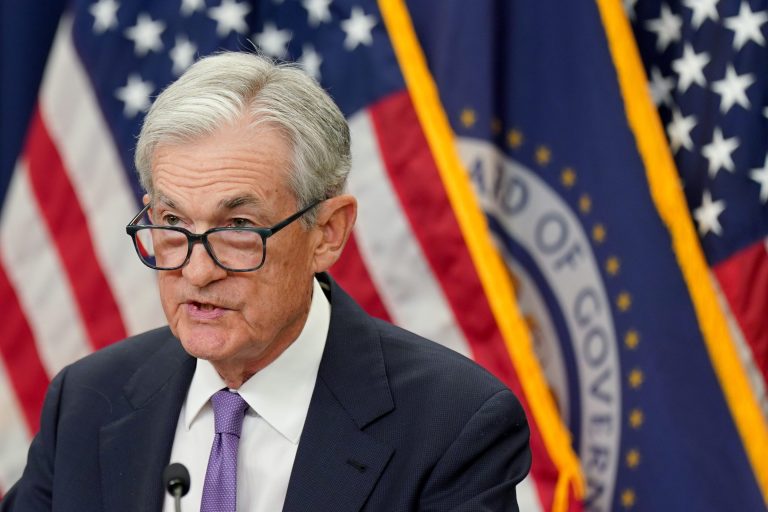
In a recent public comment, Federal Reserve Chair Jerome Powell made a pointed distinction between the current surge in artificial-intelligence (AI) investment and the late-1990s dot-com boom. He stressed that while the exuberance around AI is real, the underlying companies are different this time — “they actually have earnings,” he said, adding “I won’t go into particular names, but they actually have earnings.”
Powell’s argument hinges on the idea that whereas many dot-com firms in 1999-2000 were speculative ventures with little or no proven business model or profit track record, today’s leading AI-focused companies are generating real revenues and delivering measurable results. That, he says, makes the current cycle fundamentally distinct — and, by implication, less likely to degenerate into a classic bubble.
What Powell Is Saying
- He emphasised the earnings base of prominent AI companies: “these companies that are so highly valued actually have earnings and stuff like that… you go back to the ’90s and the dot-com, they were … ideas rather than companies.”
- He acknowledged the scale and intensity of AI investment, but implicitly argued it is built on more robust financial fundamentals than past speculative waves.
- He declined to highlight specific firms, signalling the remark is about the broader ecosystem rather than any one vendor.
Why This Matters
Powell’s framing has several implications for markets, investors and those tracking the intersection of technology and finance:
- Market reassurance: By saying the AI investment cycle is different, Powell is signalling that, in his view, the risk of a bubble bursting and dragging on broader financial stability is lower than some critics fear.
- Valuation context: If earnings are real, then high valuations may be more defensible — though this doesn’t guarantee they are cheap. The distinction is between “profitable today” versus “profitable in some speculative future”.
- Policy-signal: As Fed Chair, Powell’s comments help shape the narrative around technology investment, inflation, productivity and how monetary policy may adapt.
- Technology cycle framing: His remark helps set the tone that AI is being positioned not as a hype wave alone, but as a structural shift with measurable economic potential.
Caveats and Criticisms
Despite Powell’s confident framing, there are several counter-points worth noting:
- Having earnings does not rule out a bubble. Valuation multiples (price to earnings, price to cash flow) and the sustainability of earnings growth still matter.
- Some analysts argue the analogy to the dot-com era remains valid because many companies today still rely on speculative future profits, large capital expenditures and shifting business models. For example, one recent piece argued: “The current AI boom is different … in the sense that … they actually have earnings … So it’s really a different thing.”
- Earnings may be concentrated in a handful of large firms, while many smaller players in the AI space remain loss-making, which raises questions about broad-based sustainability.
- Portfolio risk remains: even if the system isn’t built on leverage (as some argue), a sharp correction in valuation could still have significant wealth and confidence consequences.
- Structural challenges (hardware costs, energy usage, regulation, competition) could hamper earnings growth or delay returns, meaning the “real earnings” today might not justify the scale of investment.
What to Watch Going Forward
Given Powell’s comments and the wider debate, some key metrics and signals to monitor:
- Earnings growth of major AI-focused companies: Are they expanding profits, or simply growing revenues while costs balloon?
- Valuation multiples: Are firms being valued on sustainable earnings, or on speculative “future AI dominance”?
- Capital-expenditure trends: How much is being spent on infrastructure (data centres, chips) vs returned via profits?
- Adoption / productivity gains: Are companies deploying AI and seeing measured returns (cost savings, revenue lift, new business models) or are many stalled?
- Macro / policy backdrop: Monetary policy, regulation (e.g., AI safety oversight), supply-chain constraints (chips, energy) could shift the risk profile.
Why This is Relevant for You
Since your interests span finance, content creation, investing and career trends, this topic ties into several themes:
- From a finance/advisory perspective: understanding whether the AI wave is speculative or structural is critical for asset allocation, fund recommendations or investment strategy.
- From a content-creation angle: you could craft a post or video around “Powell says AI isn’t a bubble – but is he right?” – this addresses trending tech + markets + policy and will resonate with your audience.
- From a career/training lens: if AI is indeed moving from speculation to value creation, this changes what skills are in demand (analytics, AI-augmented roles) and what job-sectors may grow or contract.
Final Thoughts
Powell’s message is clear: this technology‐investment wave is different — not purely speculative, because many of the key players are already profitable. That distinction matters. However, it does not mean risk is absent. Valuations remain high, execution risk is meaningful, and structural hurdles are real.
For those following the nexus of tech, finance and policy, the story of AI going from “promise” to “profit” is now front and centre — and Powell’s comments help frame that transition.