




Delta CEO Slams ‘Inexcusable’ Shutdown That Led to Canceled Flights and Workers Doing High-Stress Jobs Without Pay
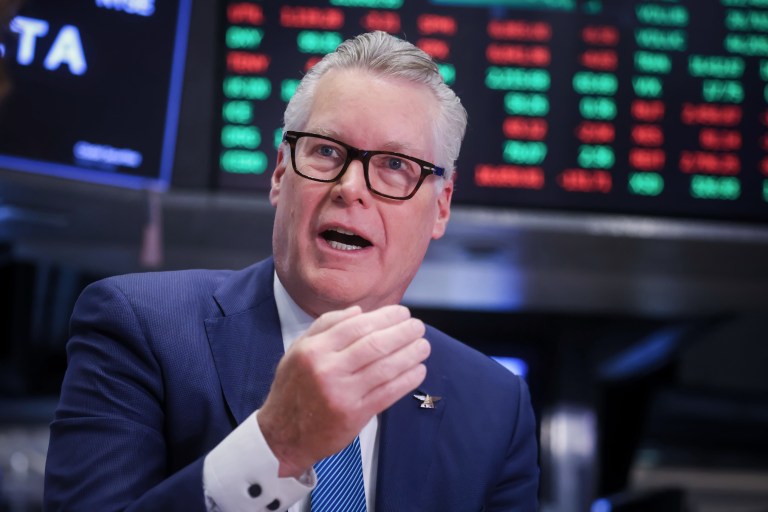
In a scathing rebuke that has sent shockwaves across the aviation industry, Delta Air Lines CEO has publicly condemned the recent government shutdown, calling it “inexcusable, damaging, and deeply irresponsible.” The shutdown, which froze essential operations and triggered staffing shortages across critical safety departments, caused mass flight cancellations, stranded travelers nationwide, and forced thousands of aviation workers to perform high-stress, safety-sensitive jobs without pay.
The incident has reignited the national conversation around how political gridlock directly affects industries that rely on manpower, precision, and continuous coordination—none more so than aviation.
A Shutdown That Brought the Skies to a Standstill
According to Delta’s leadership, the shutdown didn’t just impact schedules—it shook the foundation of the air travel system. TSA agents, air traffic controllers, safety inspectors, and essential airport personnel continued to report for duty even as paychecks were delayed. In high-pressure jobs where fatigue and focus can mean the difference between safety and disaster, this placed the entire system under enormous strain.
Delta confirmed that the airline was forced to cancel hundreds of flights, with delays cascading across major hubs. Several airports reported longer wait times, slower security lines, and limited staffing, making operations significantly more chaotic.
The CEO described the situation as “a direct consequence of political negligence,” warning that an aviation system built on constant vigilance cannot be expected to run flawlessly when workers are pushed to the brink.
Workers Forced to Choose Between Duty and Survival
One of the most troubling themes highlighted by the Delta chief was the unfair burden placed on essential aviation workers, many of whom showed up despite not being paid. Air traffic controllers—whose jobs are already among the most stressful in the nation—reported elevated fatigue, anxiety, and financial strain.
The CEO emphasized the moral dilemma these employees faced:
- Show up without pay, risking burnout and mental strain
- Or stay home and disrupt the safety infrastructure, deepening chaos
Many chose the former—out of dedication, but at a personal cost.
Industry experts have long warned that the aviation workforce cannot serve as a “safety net” during political battles. When the government shuts down, the system still demands precision, yet crucially, workers are not compensated. The Delta chief made it clear that such conditions are unacceptable in a modern, interconnected, safety-dependent industry.
Travelers Paid the Price Through Chaos and Cancellations
Passengers were also caught in the fallout. Major hubs like Atlanta, New York, and Los Angeles saw disruptions ripple across the network. Families, business travelers, and international passengers faced:
- Last-minute cancellations
- Hours-long delays
- Misconnections
- Limited rebooking options
- Overcrowded terminals
Delta, despite its large operational capacity, could not absorb the shock created by the external shutdown. The CEO apologized to affected passengers but reiterated that the root cause was not mismanagement by the airline—but a failure at the federal level.
CEO Calls for Policy Reform to Protect Critical Sectors
In his statement, the Delta CEO urged lawmakers to take immediate steps to ensure future shutdowns never compromise critical infrastructure, especially aviation. His proposals include:
1. Guaranteed Pay for Essential Workers During Shutdowns
Aviation workers should never be placed in a position where they must work without pay. Their roles are too crucial to national safety.
2. Safety Systems Must Remain Fully Operational
Departments like the FAA, TSA, and NTSB must have continuity mechanisms so that inspections, staffing, and oversight don’t halt.
3. Create an Aviation Stability Act
The CEO and several other industry voices suggest legislation that shields aviation from political shutdowns—similar to protections granted to the military.
4. Stronger Communication Protocols
Airlines need real-time visibility from federal agencies so they can prepare for disruptions instead of being blindsided.
Economic Fallout: Billions at Risk
Aviation shutdowns ripple far beyond airports. Analysts estimate that each week of disruption:
- Costs airlines tens of millions in losses
- Impacts tourism and business travel
- Delays cargo shipments and supply chains
- Affects local economies connected to airport operations
The Delta CEO emphasized that the aviation industry is a pillar of the U.S. economy, contributing over $1 trillion annually. Allowing political disagreements to interfere with such a critical sector creates a vulnerability that the U.S. cannot afford.
A Wake-Up Call for Washington
The CEO’s comments were not just about Delta—they were a warning shot for the entire aviation ecosystem. Shutdowns undermine:
- National safety
- Worker well-being
- Economic stability
- Global competitiveness
By calling the shutdown “inexcusable,” Delta’s leadership is pushing lawmakers to put the integrity of America’s skies above politics.
Conclusion: Stability Must Become a Priority
Delta’s forceful criticism has amplified one thing: Aviation cannot be treated as collateral damage during political battles. Workers must be protected. Safety systems must stay intact. Airlines must have predictable operating conditions.
The shutdown exposed vulnerabilities that can no longer be ignored. As the CEO stressed, it is time to build a system that ensures America’s aviation infrastructure remains stable, safe, and fully functional—no matter what unfolds in Washington.