





China Faces Global Scrutiny Over Taiwan Military Drills
China has drawn international attention and criticism after conducting extensive military exercises near Taiwan, raising tensions across the Asia-Pacific region. The drills, which included live-fire exercises and simulated missile launches, came shortly after Taiwan announced plans to strengthen its defence capabilities and deepen security cooperation with the United States.
Chinese state media described the exercises as “routine and necessary” measures to safeguard national sovereignty, while Taiwanese officials warned that such actions threaten regional stability and could disrupt global trade routes. “These provocative drills are a direct challenge to peace in the Taiwan Strait,” said a spokesperson from Taiwan’s Ministry of Defence.
The United States and several allies, including Japan and Australia, condemned the manoeuvres. A U.S. State Department official stated that Beijing’s actions “increase the risk of miscalculation and undermine decades of regional stability,” urging China to pursue dialogue instead of military coercion. Japan’s Defence Ministry reported that Chinese aircraft entered Taiwan’s Air Defense Identification Zone multiple times over the past week, prompting Japanese fighter jets to respond.
Analysts suggest that China’s actions are aimed at projecting power amid domestic political pressures and asserting its claim over Taiwan ahead of upcoming diplomatic negotiations. “These drills serve both a domestic political message and a strategic signal to Taiwan and the international community,” said Dr. Li Ming, a security expert at Peking University.
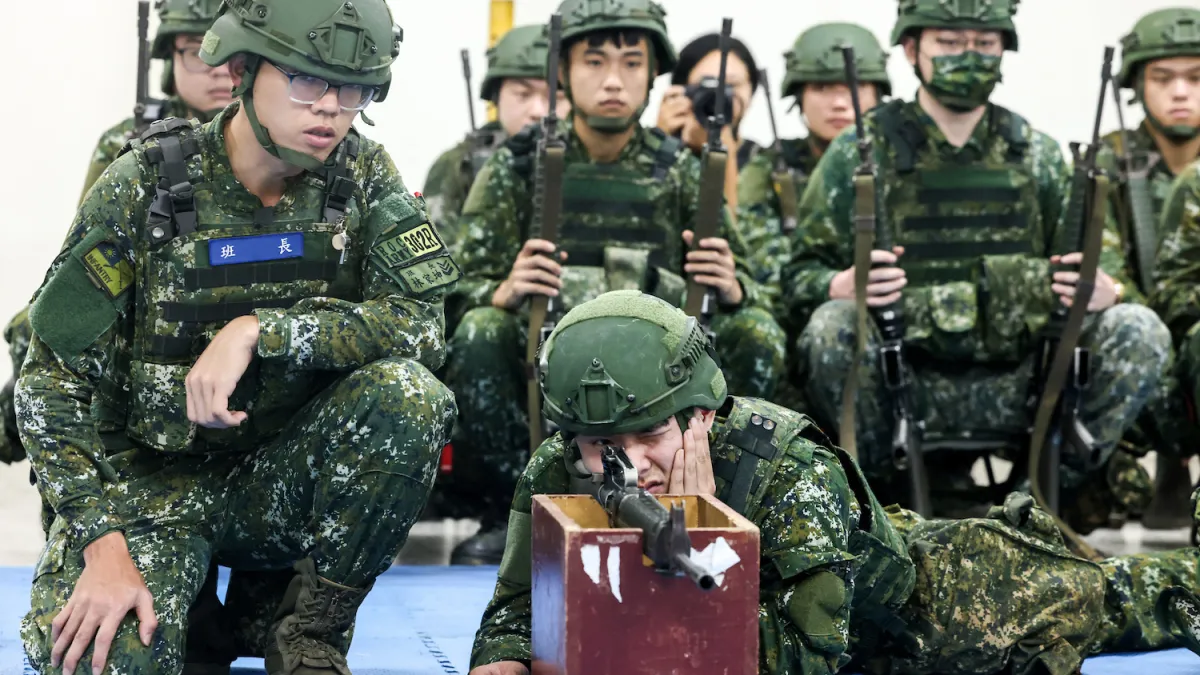
Meanwhile, Taiwan has responded by conducting its own defensive exercises and coordinating closely with allies to enhance surveillance and readiness. Officials emphasised that Taiwan remains committed to maintaining peace but will defend its territory if provoked.
The tensions come at a time when the global economy is already facing uncertainties, and the Taiwan Strait is a critical route for international trade, including semiconductor shipments that underpin the technology sector worldwide. Experts warn that escalating military activity in the region could have far-reaching consequences beyond geopolitics, potentially affecting supply chains and energy markets.
As international leaders call for restraint, both sides continue to navigate a delicate balance between asserting sovereignty and avoiding conflict. The coming weeks are expected to be closely watched by governments and businesses worldwide, as the Taiwan issue remains one of Asia’s most sensitive and consequential political flashpoints.