










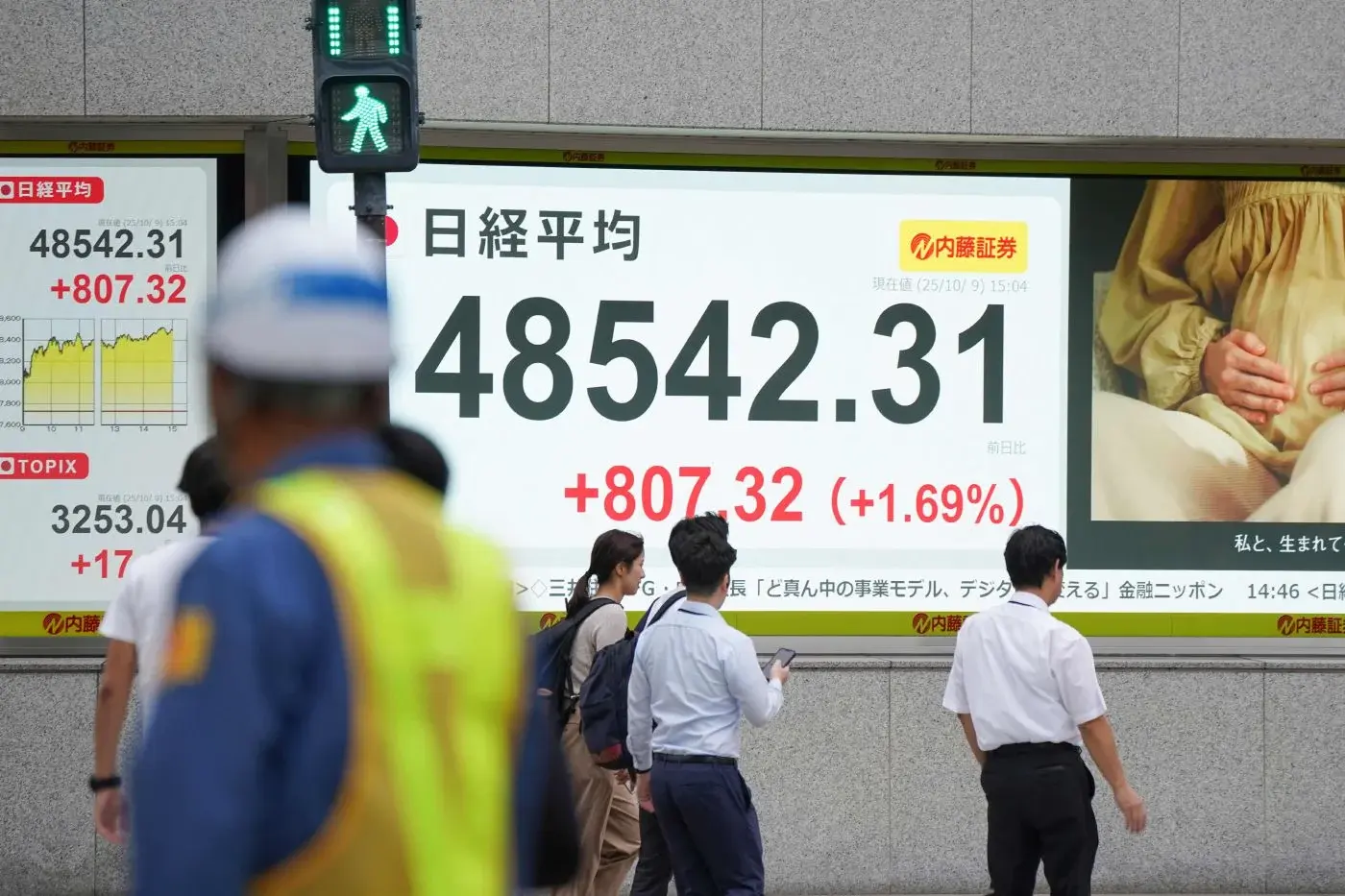
Asian Stocks Slip Amid Global Trade and Market Volatility
Asian stock markets fell sharply on Friday as global investors reacted to heightened economic uncertainty, trade tensions, and volatile currency movements. Key indices across the region, including Japan’s Nikkei 225, Hong Kong’s Hang Seng, and India’s Sensex and Nifty, ended the day lower, reflecting widespread risk-off sentiment among investors.
In India, the Sensex dropped nearly 770 points, while the Nifty 50 fell around 1%, closing near 25,000 points. Shares of major conglomerates, including the Adani group, were among the heaviest losers. Analysts attributed the slide to a combination of global market pressures and domestic currency weakness, which has eroded investor confidence. The Indian rupee also declined against the U.S. dollar, adding to concerns about capital outflows and inflationary pressures.
Elsewhere in Asia, Japan’s Nikkei 225 fell more than 0.8%, while Hong Kong’s Hang Seng lost close to 1.2%, as traders remained cautious ahead of economic data releases and in light of ongoing geopolitical tensions. Chinese markets also saw modest declines amid fears of slower economic growth and renewed scrutiny over regulatory policies.
Global equity funds experienced record outflows this week, particularly from U.S. and Chinese stocks, highlighting investors’ growing unease with the global economic outlook. Market experts noted that uncertainty over trade policies, interest rates, and geopolitical disputes are contributing to volatility, prompting investors to shift assets into safer investments.
The drop in Asian markets comes amid broader concerns about the global economy, with analysts warning that persistent trade tensions, inflationary pressures, and potential disruptions in supply chains could continue to affect investor sentiment in the near term. Despite the sell-off, some experts emphasised that current valuations present long-term buying opportunities for disciplined investors, though caution remains the prevailing strategy.
Investors will closely watch upcoming economic data, corporate earnings, and developments in international trade negotiations to gauge the potential direction of markets in the coming weeks. Analysts say that while volatility may persist, regional markets are expected to remain responsive to global developments, particularly in the United States, Europe, and China, which continue to influence Asian equities.