









Mysterious Sky Lights Over Nepal Explained: SpaceX Rocket Launch the Cause
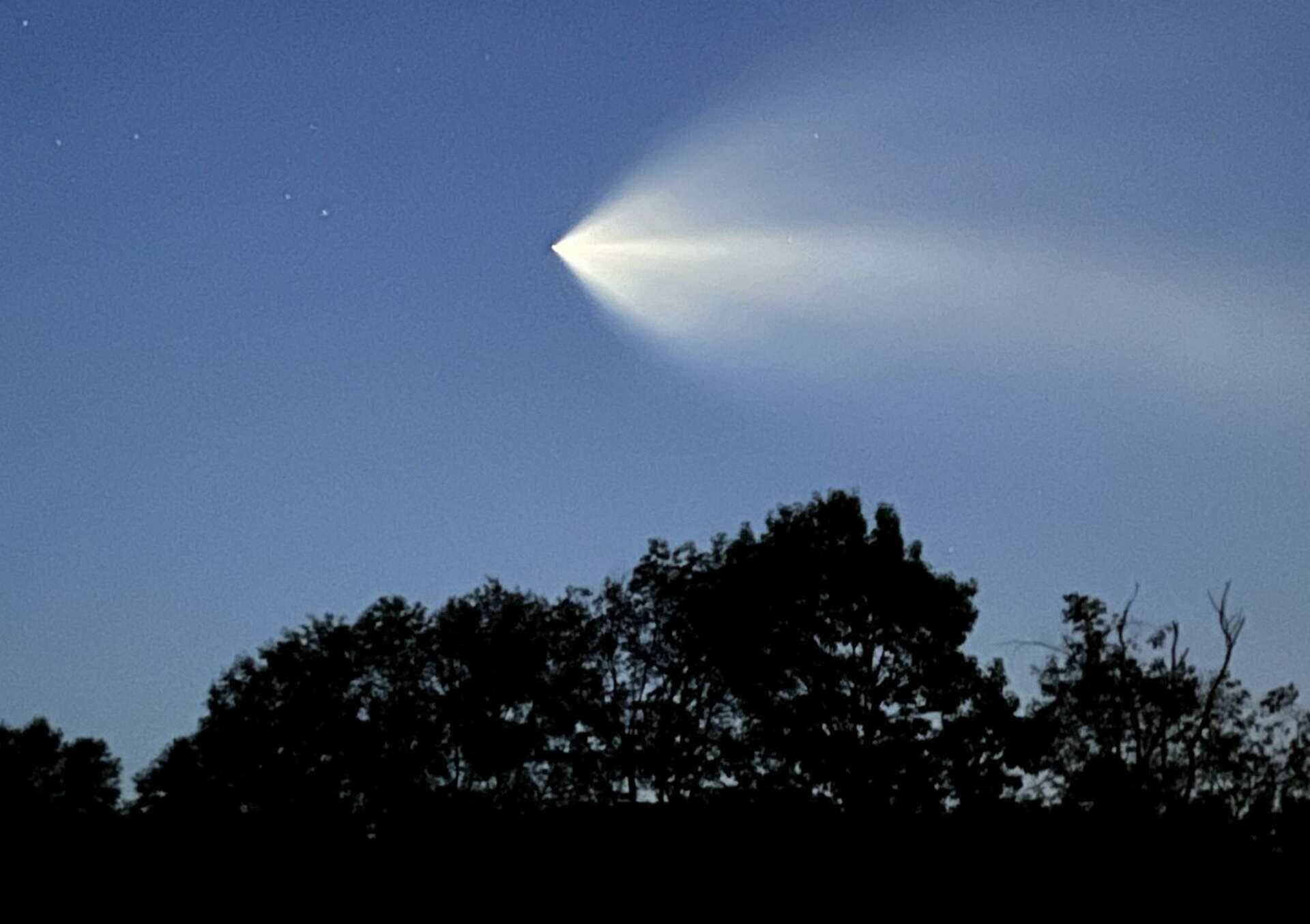
Residents across Nepal and neighboring regions were left amazed and curious last night when a strange glowing formation appeared in the evening sky. Many people described the lights as looking like a jellyfish or even a UFO, sparking widespread discussion on social media. The unusual sight drew attention from local observers, photographers, and astronomy enthusiasts who shared videos and photos capturing the spectacular phenomenon.
Experts have now clarified that the mysterious lights were caused by a SpaceX Falcon 9 rocket launch from Cape Canaveral in the United States. As the rocket ascended into the upper atmosphere, sunlight struck the exhaust plume at high altitude, creating a bright and unusual glow visible thousands of kilometers away. The combination of the rocket’s trajectory, high-altitude sunlight, and atmospheric conditions resulted in a jellyfish-like shape that illuminated the sky over Nepal and parts of northern India.
Scientists emphasize that this phenomenon, known as a “rocket plume illumination” or “twilight phenomenon,” is entirely natural and poses no danger. It occurs when rocket exhaust gases at high altitudes reflect sunlight after the sun has set for observers on the ground. The sight can appear otherworldly due to its shape, brightness, and sudden appearance, but it is simply the result of physics and atmospheric optics interacting with human observation.
Many residents captured the lights on their phones and shared them widely on social media, leading to curiosity and excitement across the region. While some initially speculated about UFOs or mysterious aerial activity, space and atmospheric experts confirmed that such displays are not uncommon during certain rocket launches, especially during the early evening hours when sunlight can illuminate the plume from below the horizon.
This event serves as a reminder of how modern space activities can create striking visual experiences for people on the ground. Rocket launches, particularly those occurring near twilight, can turn an ordinary mission into a spectacular sky show visible over vast distances. For space enthusiasts and casual observers alike, such sightings highlight the fascinating intersection of science, technology, and nature.
Experts hope that this phenomenon will encourage greater interest in astronomy, space exploration, and atmospheric science. Although it initially appeared mysterious, the lights over Nepal were a safe, awe-inspiring reminder of the extraordinary effects of human-made objects interacting with natural atmospheric conditions.