









The African baobab: the “Tree of Life” that sustains communities
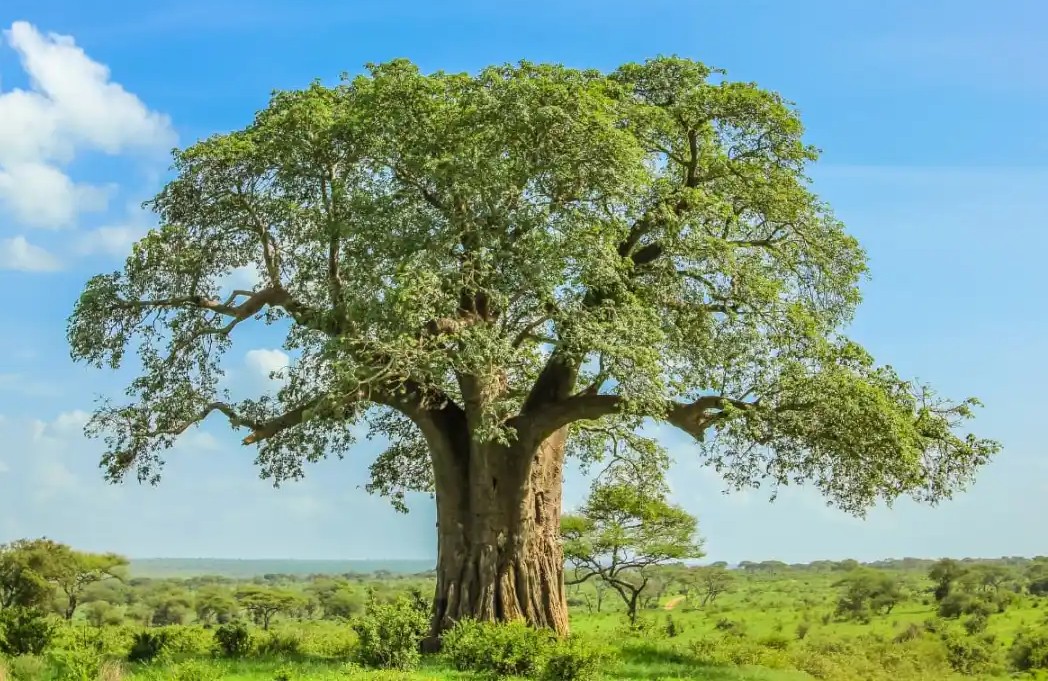
The African baobab tree, often referred to as the “Tree of Life,” is one of the most iconic and important natural symbols across the African continent. Found mainly in dry, hot regions such as the savannahs of sub-Saharan Africa, the baobab is known for its massive trunk, long lifespan, and extraordinary ability to store water.
The baobab can live for thousands of years, with some specimens believed to be among the oldest living trees on Earth. Its thick, swollen trunk can store thousands of litres of water, allowing it to survive harsh drought conditions when other vegetation struggles to grow. This unique adaptation has made it a vital resource in regions where water is scarce.
Almost every part of the baobab is useful. The fruit, often called “monkey bread,” contains a nutrient-rich powder high in vitamin C, fibre, and antioxidants. It is used in drinks, foods, and traditional medicine. The leaves are also edible and can be cooked or dried, while the bark is used for rope, baskets, and cloth.
For many rural communities, the baobab is more than just a tree—it is a source of food, medicine, shelter, and income. It also plays an important cultural role, often serving as a gathering place for meetings, storytelling, and community discussions.
Ecologically, the baobab supports a wide range of wildlife. Birds, insects, and mammals depend on its fruit, flowers, and hollow trunks for food and shelter. The tree’s night-blooming flowers are pollinated by bats and insects, making it an important part of the local ecosystem.
Despite its resilience, the baobab faces increasing threats in some areas, including climate change, land clearing, and human activity. Scientists have also reported that some of the oldest baobabs have collapsed in recent years, raising concerns about environmental stress and long-term survival.
Even so, the baobab remains a powerful symbol of endurance and life across Africa. Its ability to sustain both people and nature has earned it a legendary status, truly justifying its title as the “Tree of Life.”