
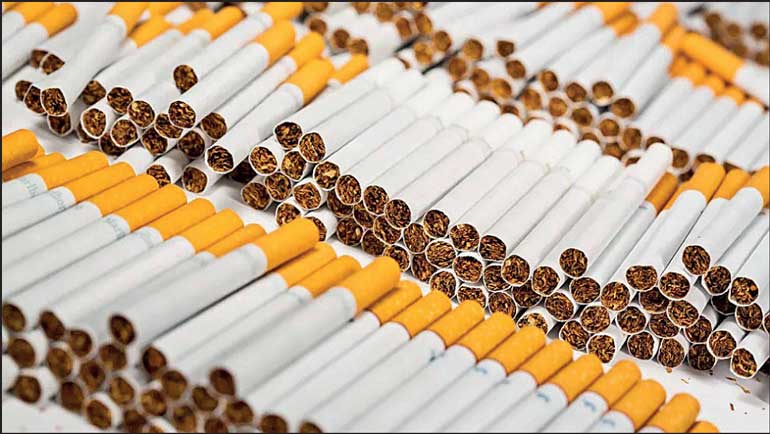
Sri Lanka is considering a policy that could fundamentally reshape its tobacco market, with a proposed tobacco-free generation measure designed not simply to reduce smoking but to prevent future generations from becoming tobacco consumers altogether.
Under the proposal, people born on or after January 1, 2010, would never be legally permitted to purchase tobacco products. The measure would not criminalise young people for possessing or attempting to obtain tobacco. Instead, responsibility would fall on retailers and sellers, creating a gradual generational barrier between the tobacco industry and future adult consumers.
For tobacco companies, the significance is enormous. The policy would not immediately eliminate the existing market, because people who can currently legally purchase tobacco would retain that right. Instead, its impact would emerge over time, as each new generation reaches adulthood without becoming part of the legal tobacco market.
Dr. Dineth Bandara, who has defended the proposal, argues that this gradual approach is precisely what makes the policy different from an overnight prohibition. Sri Lanka already prohibits the sale of tobacco products to people under 21, meaning those born in 2010 would not reach the existing legal purchasing age until 2031.
The underlying objective is to close the pipeline through which tobacco companies replace customers who quit, become seriously ill or die from tobacco-related diseases.
Dr. Bandara estimates that tobacco use kills around 22,000 people in Sri Lanka each year, placing the debate firmly within a wider public-health crisis. He compares the tobacco market to a bathtub: existing smokers represent the water already inside, while new smokers represent the tap continually adding more. Conventional measures such as taxation, education and cessation programmes can reduce consumption, he argues, but a tobacco-free generation policy would ultimately seek to turn off that tap.
The proposal is nevertheless likely to face questions over enforcement and illicit trade. Critics of strict tobacco restrictions in different countries have warned that limiting legal supply can create opportunities for illegal markets. Supporters counter that Sri Lanka's proposal would be introduced gradually and would not suddenly remove cigarettes from adults who already have the legal right to buy them.
The international tobacco-control movement has increasingly explored generational approaches. The United Kingdom's Tobacco and Vapes Act 2026, for example, prevents anyone born on or after January 1, 2009, from ever being legally sold tobacco products, establishing a similar generational model.
The World Health Organization has also recognised tobacco-free-generation legislation as a potentially legitimate tobacco-control measure under the global tobacco-control framework.
For the tobacco industry, however, the mathematics are stark. A business built on a continuing supply of adult consumers faces a fundamentally different future if younger generations are prevented from entering its legal customer base.
That is why the debate is about far more than cigarettes. It is a contest between an industry seeking to preserve a market and governments seeking to ensure that market becomes progressively smaller.
If Sri Lanka succeeds, the effect would not be immediate. There would be no dramatic closing of cigarette factories overnight and no sudden disappearance of tobacco products from shops. Instead, the industry would face a slow erosion of its customer base, year after year, generation after generation.
And that may ultimately be the most powerful part of the proposal: rather than trying to end smoking in a single stroke, Sri Lanka would attempt to make tobacco consumption gradually disappear with the generations.