
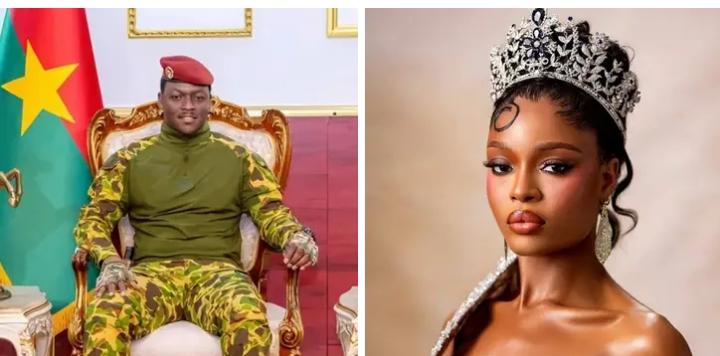
Burkina Faso is shifting the spotlight from beauty competitions to scientific achievement, launching a national contest for young women in mathematics, physics and chemistry just months after suspending beauty pageants across the country. The initiative is drawing attention to a broader debate about how societies recognise women's potential and encourage the next generation of female scientists.
The competition, known as HAKILI Mousso, meaning “Female Intelligence,” brought together 84 young women to showcase their academic abilities and compete for prizes designed to support their education and ambitions. The programme culminated in an awards ceremony in September 2026, celebrating students whose achievements demonstrated the growing potential of women in science and technology.
Among the leading participants, Adjaratou Bama topped the mathematics category with a score of 14.25 out of 20, while Aminata Traoré led physics with 15 out of 20. In chemistry, Inès Marie Fabiolas Nikiéma achieved an impressive 18.73 out of 20. The first-place winners received two million West African CFA francs each, alongside a laptop and a motorcycle, providing both financial assistance and practical resources for their future studies.
The initiative seeks to challenge longstanding stereotypes that can discourage girls from pursuing science, technology, engineering and mathematics. Across many countries, women remain underrepresented in scientific research and technical professions, despite evidence that expanding their participation can strengthen innovation, productivity and economic development.
Burkina Faso's competition aims to make academic excellence more visible, giving talented young women recognition beyond the classroom and encouraging others to consider careers that may previously have seemed out of reach. President Ibrahim Traoré met the finalists and urged them to believe in their abilities and contribute to the country's development.
The timing has attracted particular interest. In June 2026, authorities suspended beauty pageants nationwide while reviewing regulations governing such events. Officials said the review would consider cultural identity, social values and human dignity. The government has indicated that beauty competitions could return under revised rules, so the science contest should not automatically be interpreted as their permanent replacement.
Nevertheless, the contrast has fuelled discussion about how women's achievements are celebrated. Supporters see HAKILI Mousso as an opportunity to elevate intelligence, curiosity and educational ambition. Others argue that promoting scientific careers should not require dismissing other forms of self-expression.
The initiative's long-term impact will depend on whether the recognition translates into sustained opportunities, including scholarships, mentorship, quality science education and access to professional careers.
For Burkina Faso, the message is clear: young women have the ability to help shape the country's scientific and technological future. The real test will be whether this competition becomes the beginning of lasting investment in their talent, rather than a single moment of national celebration.