
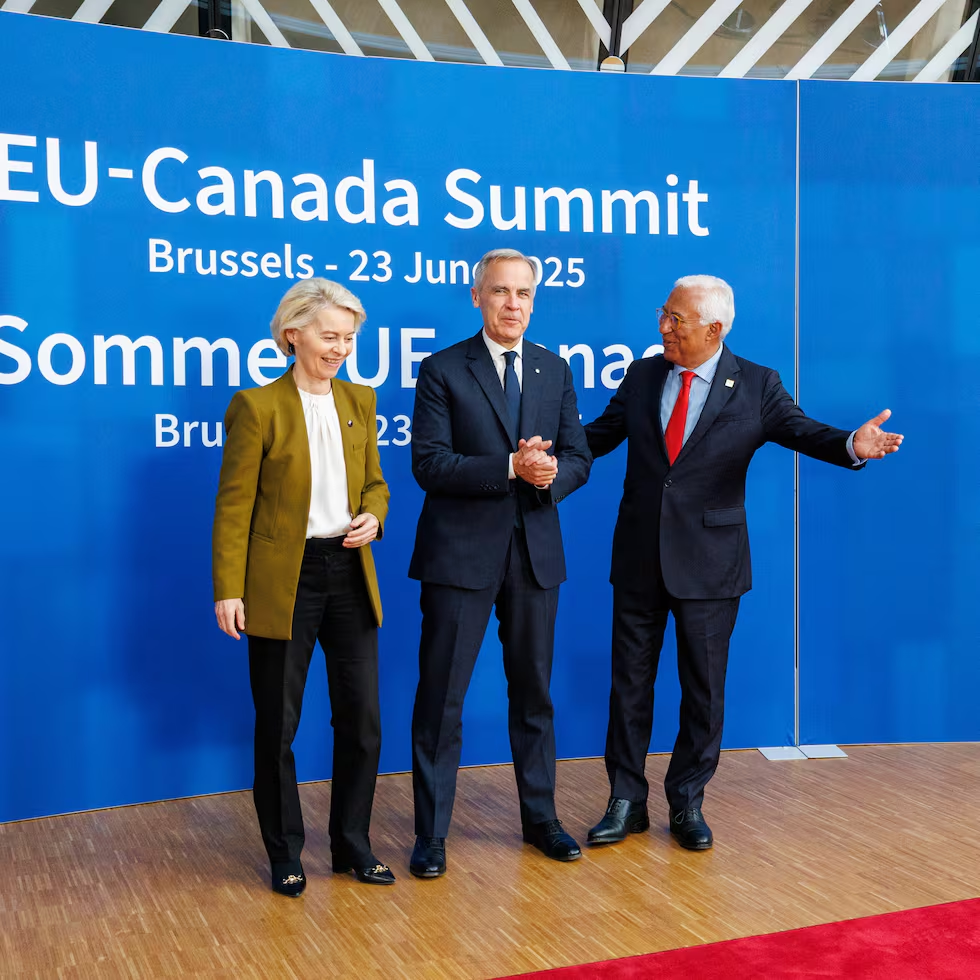
In an unprecedented diplomatic move, the European Union has extended a landmark proposal to Ottawa, inviting Canada to become the 27-nation bloc's first "associate member". As reported by France 24, European Commission President Ursula von der Leyen unveiled the offer during her annual State of the European Union address in Strasbourg, signalling a major shift in European strategic partnerships.
The overture comes amidst deepening economic and political strain between Ottawa and Washington under US President Donald Trump. According to BBC News, Canadian Prime Minister Mark Carney has actively sought closer alignment with European partners following a breakdown in relations with the United States. Speaking in Strasbourg ahead of his own scheduled address to the European Parliament, Carney described the target relationship as a "unique alliance" rather than conventional EU membership, building on his broader push since early 2026 to unite "middle powers" against global instability.
During her speech, von der Leyen emphasised that Brussels must "urgently reimagine our partnerships" within an "openly hostile world", as documented by The Guardian. The Commission chief pointed to strong transatlantic common ground on critical priorities, including artificial intelligence, climate action, energy security, defence, and joint backing for Ukraine. NPR News notes that Washington's tariff policies and rhetoric have increasingly driven Canada to seek institutional ties across the Atlantic.
The announcement has also resonated across the United Kingdom. Analysis published by The Guardian highlights that Brussels taking the initiative to design an associate framework for non-European allies offers a striking blueprint—and potential warning—regarding post-Brexit Britain's own strategic posture. Beyond geopolitical realignment, France 24 reports that von der Leyen's speech featured notable social policies, including a draft measure to prohibit children under the age of 13 from accessing social media platforms, online gaming, and artificial intelligence chatbots.