
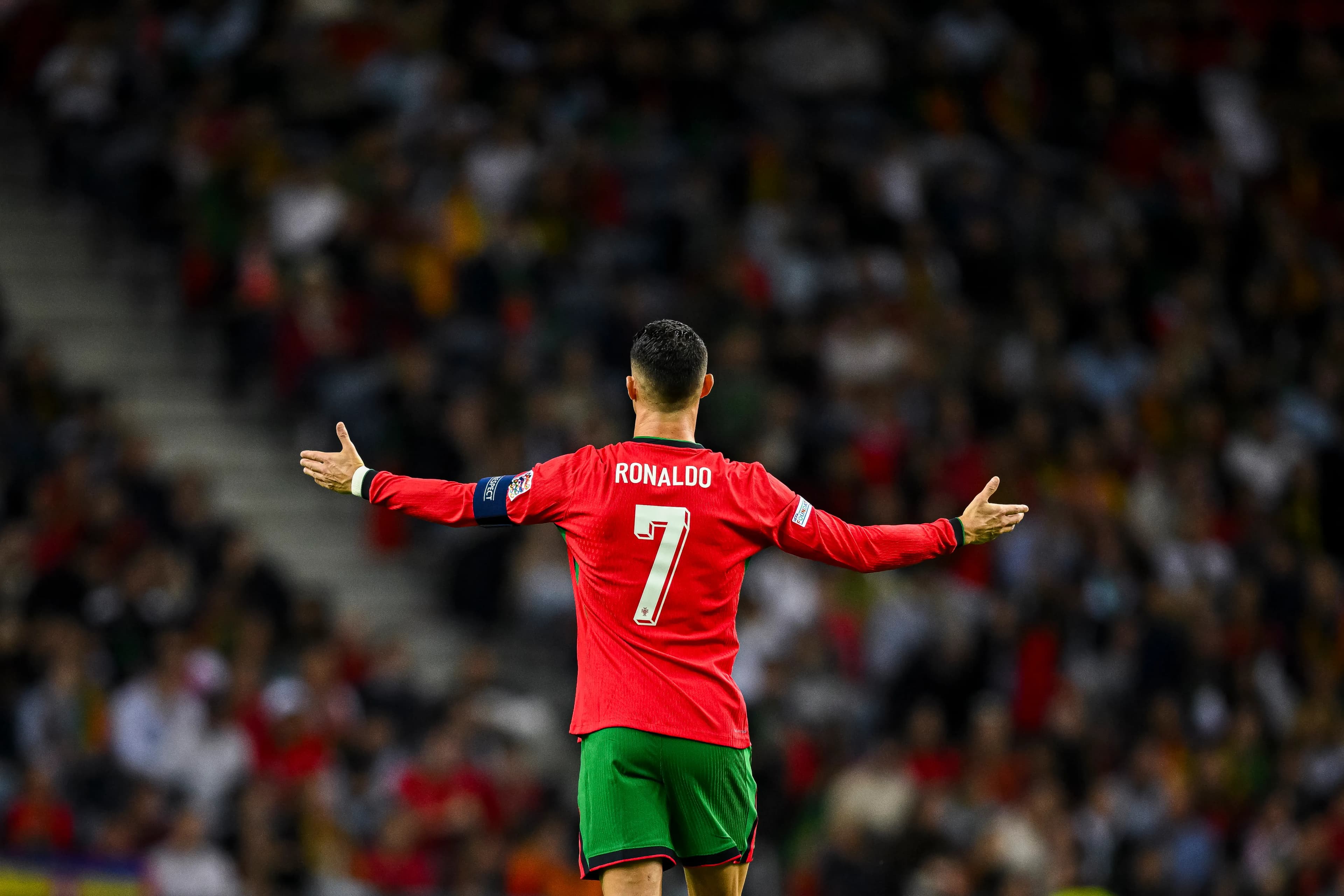
Cristiano Ronaldo’s future with Portugal has been thrown into serious uncertainty after the veteran captain abruptly left the national team camp, followed almost immediately by the sight of Rafael Leão wearing his iconic No. 7 shirt.
The 41-year-old Ronaldo departed Portugal’s training camp in Copenhagen on September 30 after tensions emerged between him and newly appointed head coach Jorge Jesus. The development came after Ronaldo was left on the bench during Portugal’s 2-1 Nations League victory over Norway and trained separately from his teammates. Jesus later acknowledged that Ronaldo had been unhappy about being left out but denied that there had been a serious confrontation between the pair.
Ronaldo subsequently confirmed on social media that he had decided to leave the national team camp following a conversation with Portuguese Football Federation president Pedro Proença. He said he would explain the reasons for his decision “in due time” and wished Portugal and his teammates success. He has not, however, formally announced his retirement from international football.
The situation took an extraordinary turn when Portugal’s famous No. 7 shirt appeared on another player almost immediately. Rafael Leão was assigned the number for Portugal’s Nations League match against Denmark, while Fábio Silva took Leão’s usual No. 17 shirt.
For fans, the image was striking. Ronaldo has been synonymous with Portugal’s No. 7 for almost two decades, turning the number into a global symbol of his “CR7” identity. But the change does not mean Portugal has permanently retired or transferred Ronaldo’s number.
UEFA regulations require players on the Nations League match sheet to be assigned numbers from 1 through 23. With Ronaldo no longer in the matchday squad, Portugal could not simply leave No. 7 vacant. Leão therefore inherited the number for the Denmark match, while Silva moved into No. 17.
This is also not the first time another Portuguese player has worn Ronaldo’s No. 7. Nani, Ricardo Quaresma, Bruma and others have previously used the number when Ronaldo was absent, although none carried the same significance associated with the shirt during his extraordinary international career.
Ronaldo’s departure nevertheless comes at a sensitive moment for Portugal. Jesus is beginning a new era as head coach after replacing Roberto Martínez, while the national team is attempting to move forward with a mixture of established stars and younger players.
Jesus has maintained that there was no major personal conflict. He said he remained comfortable with the situation and indicated that Ronaldo’s absence was connected to footballing decisions surrounding his role in the team.
Portugal subsequently defeated Denmark 4-2 in Copenhagen without Ronaldo, demonstrating that the team could continue competing successfully in his absence. But the result did little to answer the larger question surrounding the captain.
Ronaldo remains Portugal’s most-capped player and its leading international goalscorer, having represented the country for more than two decades and helped it win the 2016 European Championship and two Nations League titles.
The timing has therefore created a powerful image of transition: Ronaldo is away from the camp, Bruno Fernandes has taken on greater leadership responsibility, and another generation is stepping into roles once identified almost exclusively with CR7.
For now, Portugal has not officially closed the door on Ronaldo. His own promise to explain his decision leaves open the possibility of another chapter.
But with his legendary No. 7 already appearing on Rafael Leão’s back, the football world is confronting a question that once seemed almost impossible to ask: could Portugal be entering the post-Ronaldo era sooner than expected?