
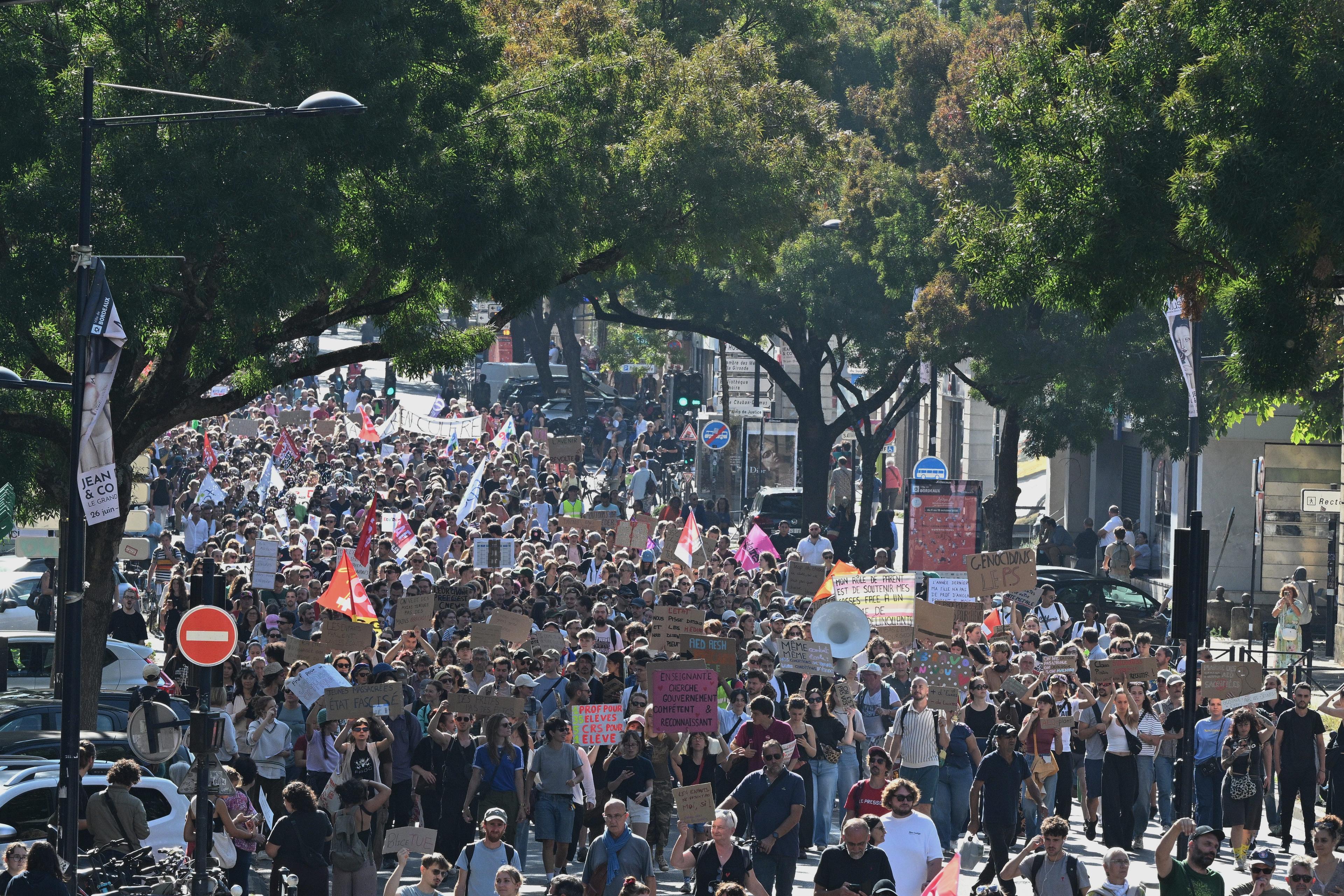
France is facing a growing wave of student protests that has transformed school gates, streets and city centres into the latest battleground over the country’s future. What began with complaints about teacher shortages and deteriorating school buildings has developed into a nationwide movement, exposing deeper frustrations among young people over education, inequality and their prospects.
The protests began in September around high schools in the Paris region before spreading rapidly across the country. Students have blockaded school entrances, marched through cities and joined demonstrations supported by teachers, trade unions and other groups. Hundreds of schools have been affected, while thousands of people have been arrested as some demonstrations descended into clashes and vandalism.
At the heart of the anger are problems students say they encounter every day. Teachers can be absent for weeks without replacements, classrooms can be overcrowded, and some school buildings are in poor condition. Students have also complained about long school days, restrictions on mobile phones and the pressure surrounding France’s university admissions system, Parcoursup.
The grievances come at a difficult time for France. The government is under intense pressure to control public debt and reduce spending, leaving limited room for the large investments demanded by protesters. Prime Minister Sébastien Lecornu has acknowledged that many of the students’ concerns are legitimate and promised proposals by the end of October, including measures addressing school buildings and teacher shortages.
But the protests have increasingly become a confrontation over how young people are treated by the state. Police responses have drawn fierce criticism after several teenagers suffered serious injuries. Following an incident in which a 15-year-old lost his hand, Interior Minister Laurent Nuñez suspended the use of stun grenades in policing the high-school movement and ordered investigations into allegations of police misconduct.
The scale of the movement is also rooted in France’s long tradition of street politics. Students have repeatedly played a decisive role in forcing governments to reconsider controversial policies. From the mass demonstrations of the 1990s to the 2006 protests that helped overturn a youth employment law, blockades and marches have often been viewed as powerful tools of political pressure.
That history matters because French students understand that political change does not always happen only inside parliament. In France, the street has long been another arena in which governments are forced to listen.
Yet the current movement is unfolding under unusually difficult circumstances. President Emmanuel Macron is approaching the end of his presidency, parliament remains deeply divided and the government faces serious financial constraints. With presidential elections approaching, the protests have quickly become part of a much larger national argument about public services, inequality and political representation.
For many students, however, the issue is more immediate. They are demanding schools where teachers are present, classrooms are safe and education offers a genuine path to the future.
The government must now decide whether it can turn that anger into meaningful reform while preventing violence from overwhelming the original demands. The protests may have begun at school gates, but they have opened a much wider question: what kind of country does France want to build for the generation now demanding to be heard?