
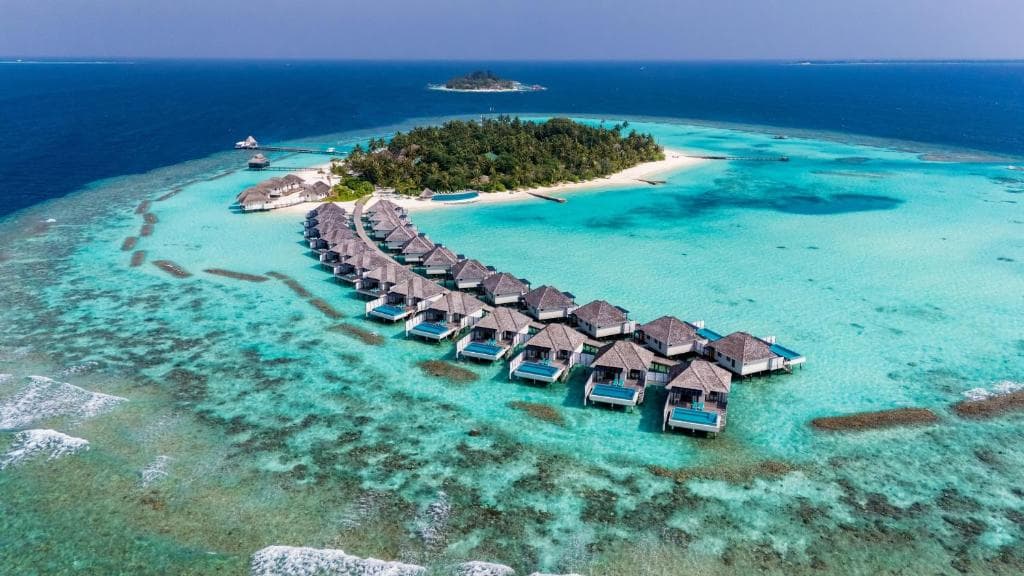
The Maldives has long been associated with overwater villas, private beaches and luxury holidays, but the country's tourism industry is increasingly offering travellers a much broader experience, with local islands, boutique properties, diving, food, culture and longer stays becoming an important part of the destination's appeal.
The country welcomed around 1.23 million tourists during the first seven months of 2026, although arrivals were about 5.2 per cent lower than during the same period a year earlier. Rising travel costs and changes in flight connectivity have been among the factors affecting the market.
Despite the challenges, the Maldives remains one of the world's most recognised island destinations. Its appeal is no longer limited to honeymooners looking for a few nights in an expensive resort. Travellers are increasingly looking for ways to experience different islands, local communities and activities while managing the overall cost of their holiday.
That shift is creating opportunities for guesthouses and small tourism businesses on inhabited islands. Visitors can combine accommodation with diving, fishing, surfing, island excursions, local food and cultural experiences, potentially creating a different type of Maldives holiday from the traditional resort package.
For travellers, one of the country's biggest advantages is the ability to combine different experiences within a single trip. A holiday can begin in Malé or Hulhumalé, continue to a local island and then move to a resort or another atoll. Domestic flights, speedboats and other transport connections are therefore becoming an increasingly important part of the visitor experience.
The changing market is also encouraging tourism businesses to rethink how accommodation is sold. Instead of focusing only on a traditional nightly room rate, hotels and guesthouses can offer packages built around the total value of a stay, combining accommodation with meals, transport, activities and other services.
The growth of digital travel platforms is likely to accelerate this change. Travellers increasingly expect to compare properties, transport and activities online before deciding how to spend their money. Artificial intelligence could further change the process by allowing visitors to describe their budget and interests and receive personalised travel options rather than simply searching through hundreds of hotel listings.
The Maldives is also competing for visitors in an increasingly crowded international tourism market. Global tourism remains resilient, but geopolitical tensions, rising costs and disruptions to air connectivity are influencing where people travel and how much they spend.
For the Maldives, the challenge is therefore not simply to attract more tourists. It is to encourage visitors to stay longer, explore more islands and spend more of their travel budget across local communities and tourism businesses.
China remains an important potential market, with Maldives tourism authorities continuing to promote the destination to Chinese luxury travellers.
At the same time, the future of Maldivian tourism may increasingly depend on giving travellers more choice. Some visitors will continue to choose private-island luxury, while others may prefer affordable guesthouses, local experiences, adventure travel or a combination of several accommodation types.
The Maldives has always sold the dream of an island escape. The next stage of its tourism story may be about selling something more valuable: the freedom to design that escape around the traveller, rather than forcing every visitor into the same traditional holiday model.
With thousands of islands, diverse marine life, local communities and an established luxury tourism industry, the Maldives has the ingredients to offer far more than a short stay in an overwater villa. The opportunity now is to turn that diversity into a more flexible, accessible and connected travel experience for the next generation of visitors.