
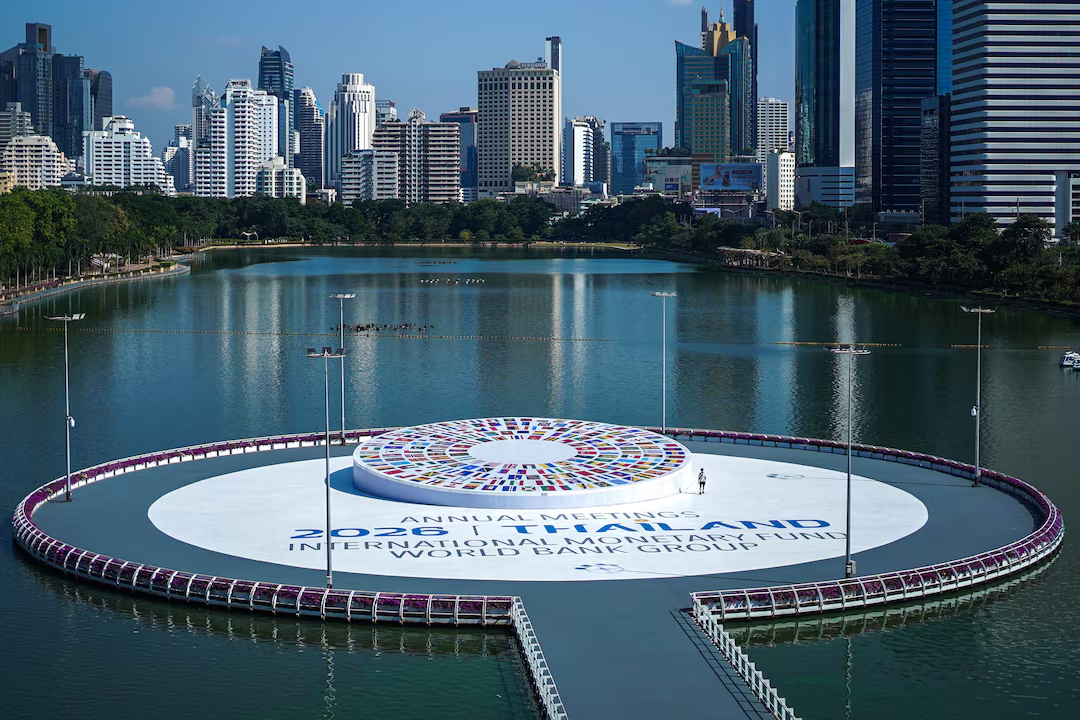
The escalating war in the Middle East, soaring energy costs and mounting government debt are set to dominate discussions as global finance leaders gather in Bangkok for the annual meetings of the International Monetary Fund (IMF) and the World Bank, with growing concerns that the crisis could deepen an already fragile global economy.
The meetings, beginning this week, come as the US-Israeli-led war with Iran enters its eighth month, creating a major shock to global energy supplies and intensifying inflationary pressures. Finance ministers, central bank governors and economic policymakers are expected to confront the consequences of rising fuel prices, expensive fertilisers and higher borrowing costs that are squeezing governments, businesses and households worldwide.
The conflict has placed energy security at the centre of the international economic agenda. Disruptions to oil supplies have increased pressure on fuel markets, while dwindling accessible oil storage has left the global energy system more vulnerable to further interruptions. Any additional supply shock could push prices higher, making it harder for governments to control inflation without slowing economic growth.
World Bank President Ajay Banga has warned that rising diesel and fertiliser costs, combined with the threat of El Niño-related weather disruptions, are adding to existing economic strains. Higher diesel prices increase transport and production costs, while more expensive fertilisers threaten agricultural output and food affordability, particularly in countries heavily dependent on imports.
For developing economies, the combination presents a serious challenge. Many already face substantial debt repayments, limited fiscal resources and pressure on their currencies. If interest rates remain elevated, governments could find it increasingly difficult to finance essential services, invest in infrastructure and support vulnerable households.
The crisis is also expected to produce a more uneven global outlook, with some countries facing possible downgrades to their economic growth forecasts. Higher energy costs can reduce consumer spending, raise business expenses and delay investment, weakening growth at a time when many economies are still struggling to regain momentum.
Debt relief is another major issue facing delegates. Some policymakers have called for renewed measures to give heavily indebted countries temporary breathing space from repayments. However, diplomats say there is limited support among G20 nations for reviving a debt-relief moratorium, leaving vulnerable governments with few immediate options.
The Bangkok gathering is notable because the IMF and World Bank annual meetings are being held outside Washington for the first time in three years. Beyond formal negotiations, the meetings will provide an opportunity for officials to discuss how to protect the most vulnerable economies from the combined effects of conflict, inflation and financial pressure.
The central challenge is clear: policymakers must confront an energy crisis without triggering a deeper economic slowdown, while finding ways to help debt-burdened countries withstand another global shock.
With geopolitical tensions showing little sign of easing, the decisions made in Bangkok could help shape how governments respond to a crisis whose costs are increasingly being felt far beyond the battlefield.