
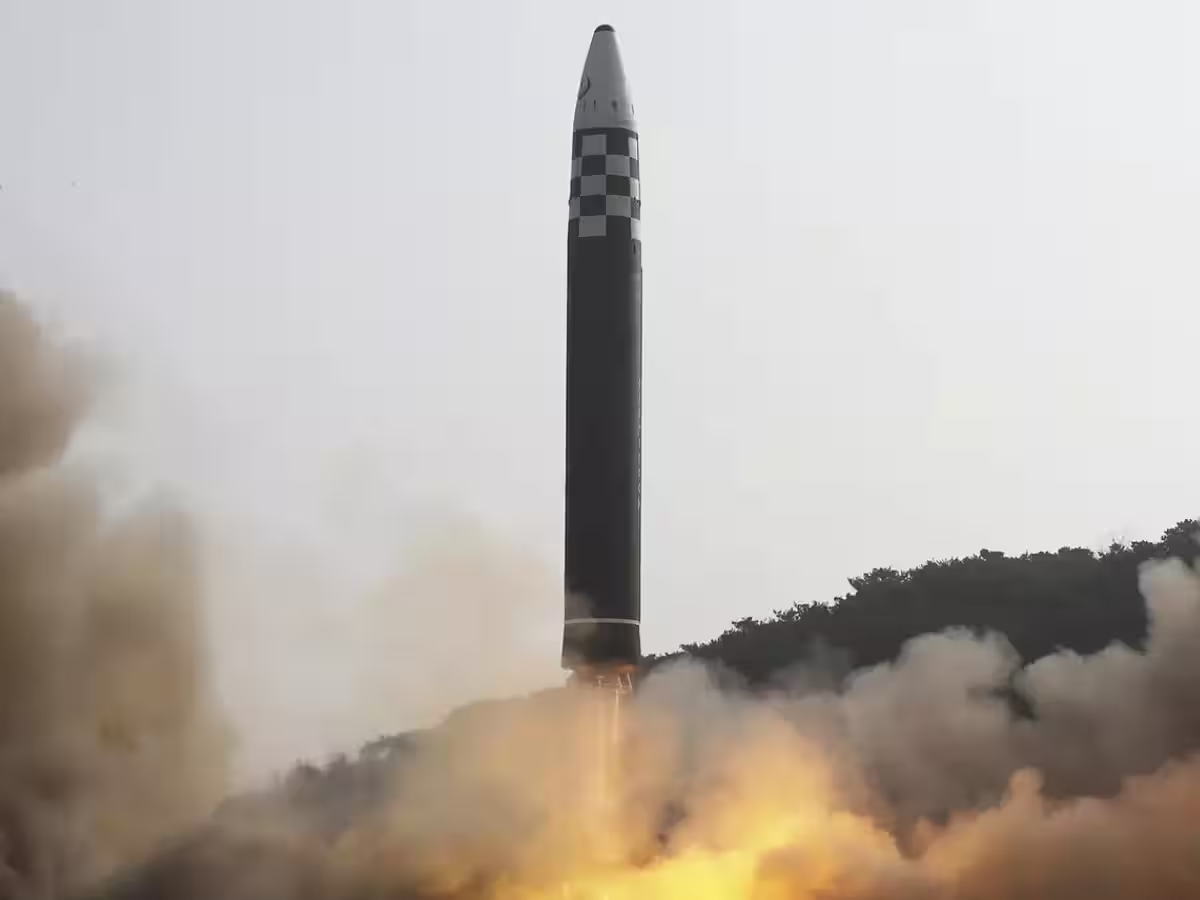
North Korea fired at least one ballistic missile toward the sea on Saturday, October 3, intensifying tensions on the Korean Peninsula just days after a deadly border dispute between Pyongyang and Seoul and amid increasingly hostile exchanges between the two governments.
South Korea’s military said it detected the launch at about 6:30 a.m. from the Wonsan area on North Korea’s eastern coast. The missile travelled more than 700 kilometres before falling into waters to the east of the Korean Peninsula, according to South Korean authorities. Japan also detected the launch and said the missile appeared to have fallen outside its exclusive economic zone.
The launch came at a particularly sensitive moment. South Korea has accused North Korea of planting mines inside the Demilitarized Zone that exploded on September 21, seriously injuring three South Korean soldiers. Seoul has demanded an apology from Pyongyang and called on North Korea to stop its ongoing efforts to reinforce sections of the heavily fortified border.
North Korea has rejected the accusation. Kim Yo Jong, the powerful sister of North Korean leader Kim Jong Un, dismissed Seoul’s findings as groundless and rejected calls for an apology. She also signalled that Pyongyang had little interest in restoring dialogue with the South, describing the possibility of contact between the two sides in deeply hostile terms.
The missile launch came less than two weeks after North Korea fired two short-range ballistic missiles from the Wonsan area on September 20. The country has continued to expand its weapons testing programme while relations with South Korea have deteriorated.
South Korea responded to Saturday’s launch by raising surveillance and readiness levels and increasing information-sharing with the United States and Japan. Seoul’s presidential national security office also convened an emergency meeting to assess the situation.
The United States has also been monitoring the launch. Washington’s regional military command said the incident did not currently pose an immediate threat to U.S. personnel, U.S. territory or its allies, while reaffirming its commitment to regional defence.
The latest escalation comes as North Korea continues to move further away from its previous policy of seeking eventual reconciliation with South Korea. Kim Jong Un has described South Korea as the North’s “primary foe” and abandoned the long-standing goal of reunification.
For South Korea, the challenge is now to strengthen deterrence while avoiding a cycle of military escalation. President Lee Jae Myung has called for dialogue and a reduction in tensions, but Pyongyang has repeatedly rejected recent overtures.
The latest missile launch therefore carries significance beyond the weapons test itself. It highlights the widening gap between Seoul’s calls for communication and Pyongyang’s increasingly confrontational approach.
With the border dispute unresolved and North Korea continuing its missile programme, the Korean Peninsula enters another period of heightened uncertainty, with South Korea, the United States and Japan closely watching for further military activity.