
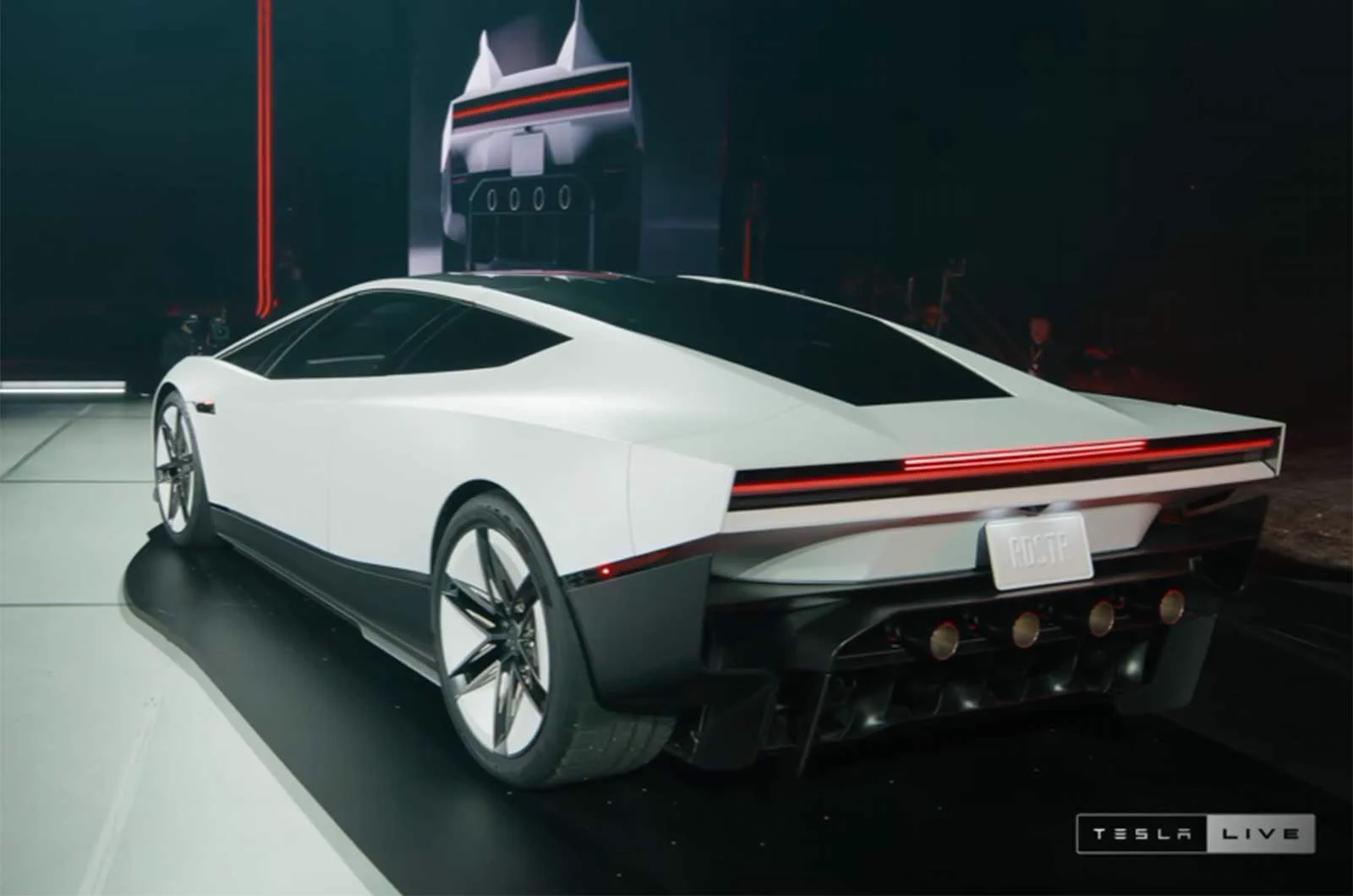
Tesla has offered a glimpse of a future that looks more like science fiction than conventional motoring, unveiling a redesigned Roadster capable of spectacular mid-air manoeuvres with technology developed in collaboration with SpaceX.
The striking white, two-seat electric sports car was presented with a series of dramatic demonstrations designed to showcase its extraordinary ambitions. In one sequence, the vehicle appeared to drive upside down along a ramp using a suction-based system. In others, it leapt over obstacles, twisted through the air and used thruster technology to help control its movement before landing.
The demonstrations highlighted Tesla chief executive Elon Musk’s long-standing vision of pushing electric vehicles beyond the boundaries of traditional automotive engineering. By combining high-performance electric propulsion with technology inspired by SpaceX’s rocket programme, Tesla is positioning the next-generation Roadster as more than a conventional sports car.
The vehicle is expected to deliver remarkable performance on the road, with a claimed top speed exceeding 230 miles per hour and a driving range of more than 300 miles. However, Tesla has yet to disclose the final price, leaving potential buyers waiting for further details about one of the company’s most ambitious products.
Production is currently planned for 2028, extending a development process that began more than a decade ago. Tesla first presented its next-generation Roadster in 2017, but repeated delays have kept the vehicle from reaching customers. The latest unveiling has renewed interest in the project while raising questions about whether its most dramatic features can be translated into a production-ready car.
The involvement of SpaceX has also fuelled speculation about the increasingly interconnected ambitions of Musk’s businesses. Nevertheless, the demonstration itself does not establish any plans for a corporate merger between Tesla and SpaceX.
Despite the excitement surrounding the vehicle, significant challenges remain. Engineering complex aerial manoeuvres into a road-going car would require rigorous testing, while safety standards, regulatory approval, reliability and practical usability could all influence the final design.
For Tesla, the Roadster represents an opportunity to reclaim attention in the high-performance electric-car market at a time when competition is intensifying. Its ultimate success, however, will depend on whether the company can turn spectacular promises into a dependable vehicle that customers can actually buy.
If delivered as envisioned, the Roadster could become one of the most unconventional electric cars ever produced. Until production begins and its capabilities are independently demonstrated, the line between technological breakthrough and ambitious spectacle remains an important one.