
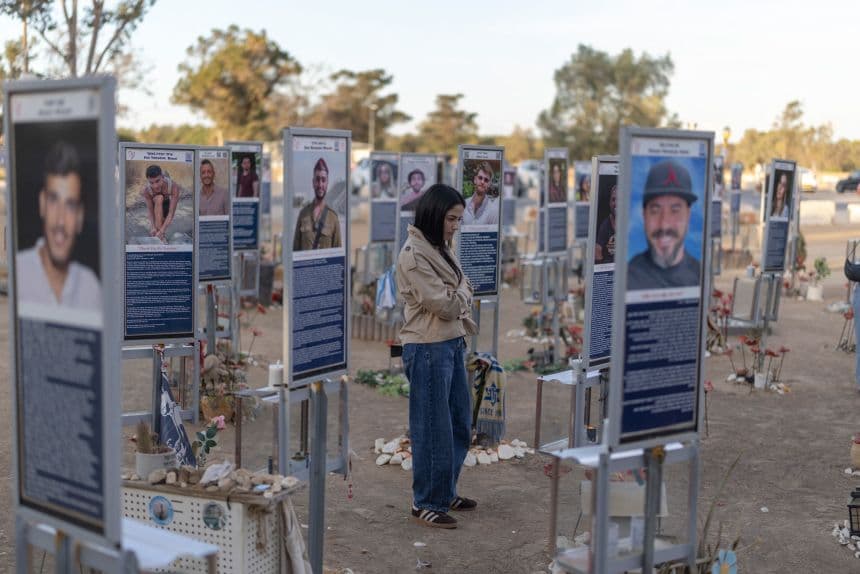
Three years ago, a morning of celebrations and ordinary life in southern Israel turned into one of the darkest days in the country’s history. On October 7, 2023, Hamas-led militants stormed across the Gaza border, attacking communities, military positions and the Nova music festival in a devastating assault that killed about 1,200 people and saw 251 others taken hostage into Gaza.
Today, Israel marks the third anniversary of that attack with memorials, ceremonies and families once again confronting memories that have reshaped an entire generation.
At the Nova festival site, where 348 people were killed, survivors and relatives are gathering to remember those whose lives ended in a matter of hours. In Tel Aviv, Hostage Square has become another centre of remembrance—a place that for years symbolised the desperate campaign to bring those taken into Gaza home.
For many families, the anniversary is not simply a date on the calendar. It is the dividing line between the life they knew before October 7 and the reality that followed.
The tragedy also reached far beyond Israel. Ten Nepali students were among those killed in the attack, turning the massacre into a national tragedy for Nepal as well. Young people who had travelled to Israel as part of an agricultural training programme never returned home, leaving families thousands of kilometres away to mourn their children.
The hostage crisis became another defining wound. Men, women, children, soldiers and foreign nationals were among those dragged into Gaza. Some were released during negotiated exchanges and ceasefires; others died in captivity. The remains of the last Israeli hostage were recovered in January 2026, meaning this year's anniversary is the first since October 7 without any Israeli hostages still being held in Gaza.
But October 7 did not end with the attack. It opened the door to a war that devastated Gaza and transformed the wider Middle East. More than 74,000 Palestinians have been killed since the conflict began, according to Gaza health authorities, while vast areas of the territory have been destroyed and millions have endured displacement and humanitarian hardship.
Three years later, the consequences remain deeply political as well as personal. Israel continues to debate how the attack happened, who should be held responsible for the security failures and what lessons must be learned. The country's coming election has further brought October 7 and the government's handling of the crisis to the centre of national debate.
Yet beyond politics are the families who continue to carry the weight of that morning.
For Israeli families, it is the anniversary of loved ones murdered and communities shattered. For the families of the Nepali students, it is the memory of sons who left home seeking opportunity and never returned. For former hostages, it is a reminder of years stolen from their lives. And for Palestinians, it is inseparable from the war and destruction that followed.
Three years on, October 7 remains more than a date. It is a scar across Israel, Gaza and the wider region a moment that changed countless lives and whose consequences are still unfolding.
The memorials may last for a day. The memories will last a lifetime.