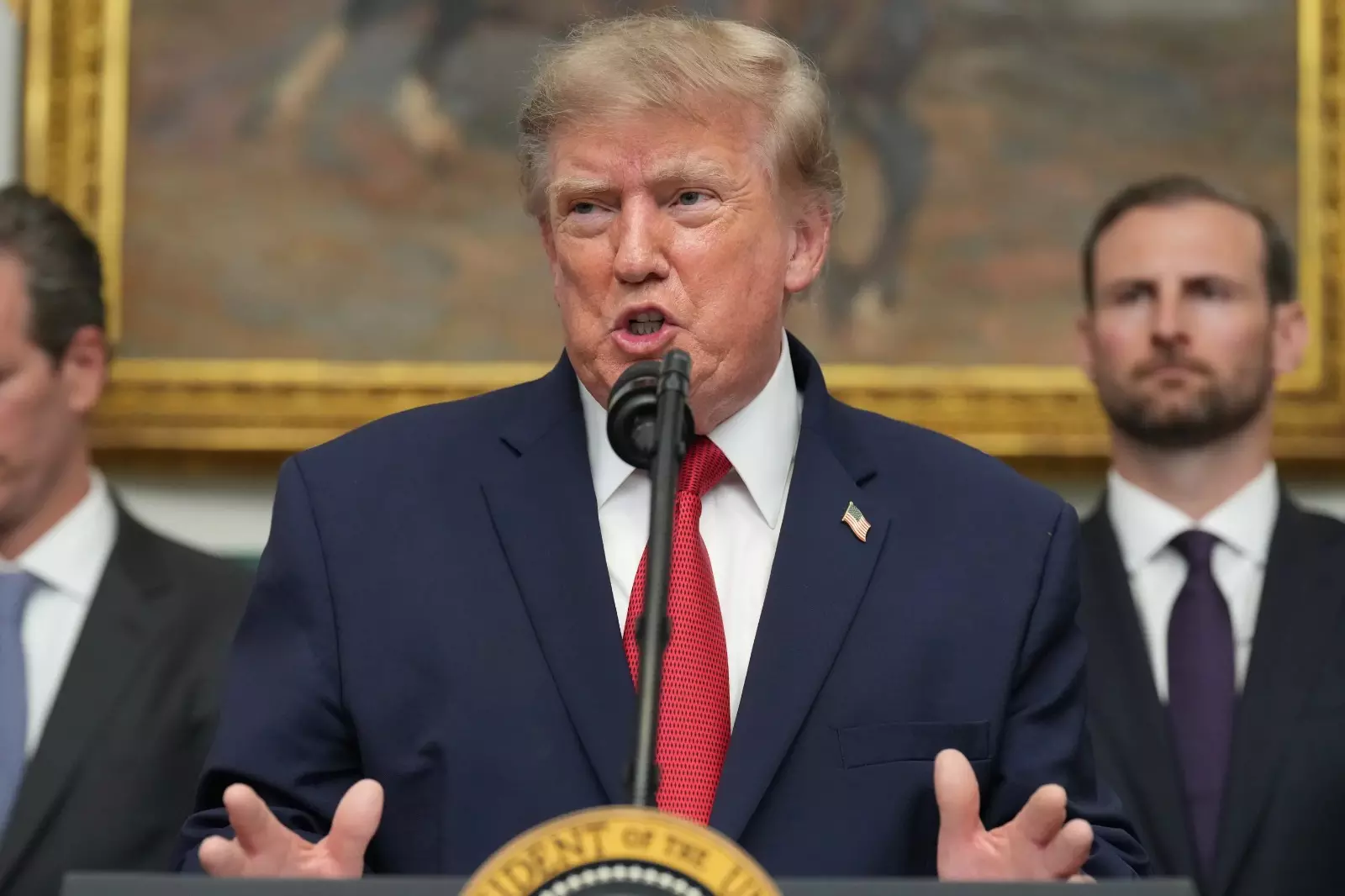
US President Donald Trump has announced an immediate ban on CNN, MS NOW and Politico from the White House, accusing the three news organisations of repeatedly publishing what he described as “fake news” and warning that other media outlets could face the same treatment.
Trump announced the move on September 18 through Truth Social, saying the organisations would no longer be allowed access to the White House because of what he characterised as a pattern of false reporting about his administration. He did not identify specific reports that prompted the decision.
The announcement immediately created uncertainty over what the ban would actually mean. Trump did not initially provide details about whether the restrictions would apply to White House grounds, press briefings, presidential events, journalist credentials or other forms of access.
By Friday afternoon, journalists from CNN, MS NOW and Politico were still present at the White House, with no immediate indication that the announced restrictions had been fully implemented.
Trump later indicated that the restrictions could be broader than the three organisations initially named. Reuters reported that he said other media outlets could also be barred and that he wanted the ban to go as far as possible.
The move has triggered an immediate confrontation over press access and constitutional protections. The First Amendment protects freedom of speech and freedom of the press, and legal experts and press-freedom organisations have raised questions about whether excluding news organisations because of their reporting could withstand constitutional scrutiny.
CNN rejected Trump's accusations and said it stood behind its White House reporting team and its reporting. Politico has also said it intends to defend its First Amendment rights. The Committee to Protect Journalists criticised the decision and argued that government restrictions on news organisations because of their coverage raise serious press-freedom concerns.
The dispute is the latest chapter in Trump's long-running conflict with news organisations whose coverage he considers unfavorable. His administration has previously faced legal and political disputes over media access, including a confrontation involving The Associated Press.
What makes the latest announcement particularly significant is the possibility that it could affect how the White House handles access for journalists across the media industry. If additional organisations are excluded, the dispute could expand into a much wider fight over presidential authority, media access and the constitutional role of the press.
Trump has defended his position by arguing that news organisations should not be allowed to publish what he considers false information about the president and his administration. Critics, however, argue that allowing the government to determine which news organisations receive access based on their coverage could create a dangerous precedent for independent journalism. Those competing claims are now likely to become part of the legal and political debate surrounding the White House's decision.
The immediate question is how the administration will enforce the announcement. The White House has not publicly detailed the full scope of the restrictions, while the targeted organisations and press-freedom groups are preparing to challenge the move.
The confrontation comes just weeks before the US midterm elections, putting renewed attention on the relationship between the administration, the news media and the public's access to information about government decisions.
For now, Trump's announcement has transformed another dispute between the president and the press into a broader constitutional question: how far can a US administration go in controlling access to the White House when it objects to the way news organisations cover the president?
The answer could have consequences well beyond CNN, MS NOW and Politico potentially shaping the relationship between the White House and the American press for years to come.