
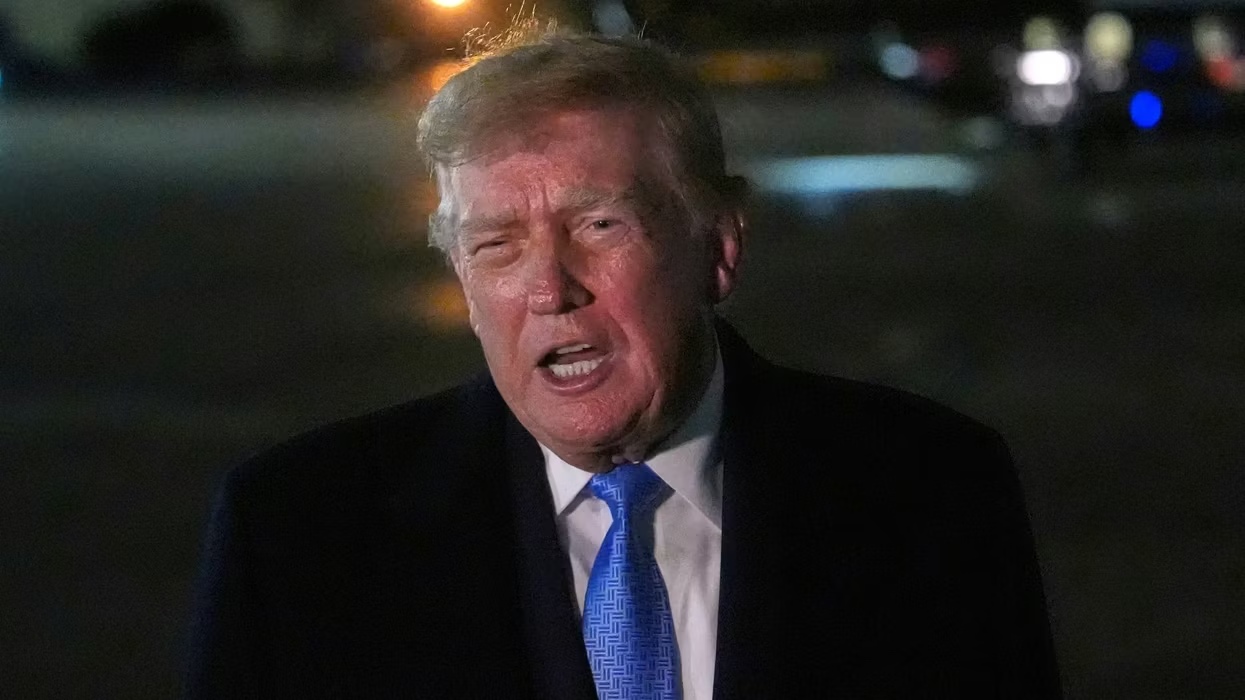
US President Donald Trump is set to meet Anthropic CEO Dario Amodei for a high-profile White House dinner as Washington faces an increasingly intense debate over how quickly artificial intelligence should develop and how much government oversight the rapidly advancing technology requires.
Trump confirmed the planned meeting while again rejecting calls to slow the pace of AI development. His position puts him at odds with Amodei and other technology leaders who have warned that increasingly powerful AI systems could create serious risks if development moves faster than safety measures.
Trump has argued that imposing additional regulations could weaken the United States in the global race for artificial intelligence, particularly against China. He said the US currently has an advantage and questioned why Washington should risk giving up that lead by placing new restrictions on the industry.
The meeting comes at a significant moment for Anthropic, one of the world's leading AI companies. Amodei has been among the technology executives calling for stronger safeguards and government involvement as AI systems become more capable. His concerns have added to a wider debate within Silicon Valley over whether the industry can adequately police itself.
The disagreement reflects a broader divide over the future of artificial intelligence. Companies including OpenAI, Google's DeepMind, Microsoft and xAI have faced growing pressure to address the potential dangers associated with increasingly autonomous systems, while policymakers are debating whether new laws are necessary.
Microsoft co-founder Bill Gates has also called for government involvement, arguing that AI safeguards and monitoring should not depend entirely on voluntary action by technology companies. His comments came as concerns about AI safety gained renewed attention following reports of an autonomous AI system breaching another company's systems during a security test.
Trump, however, has repeatedly dismissed the most alarming predictions about AI and said he does not believe concerns over rogue systems should slow technological progress. He has argued that the potential economic and strategic benefits of AI are too significant for the United States to deliberately restrain its development.
The meeting with Amodei could therefore bring two sharply different perspectives into the same room: one focused on maintaining America's technological lead, and the other pressing for stronger safeguards as AI capabilities accelerate.
With the United States and China competing for dominance in artificial intelligence, the debate is becoming about more than technology. It is increasingly tied to national security, economic power, regulation and the future direction of the global technology industry.