
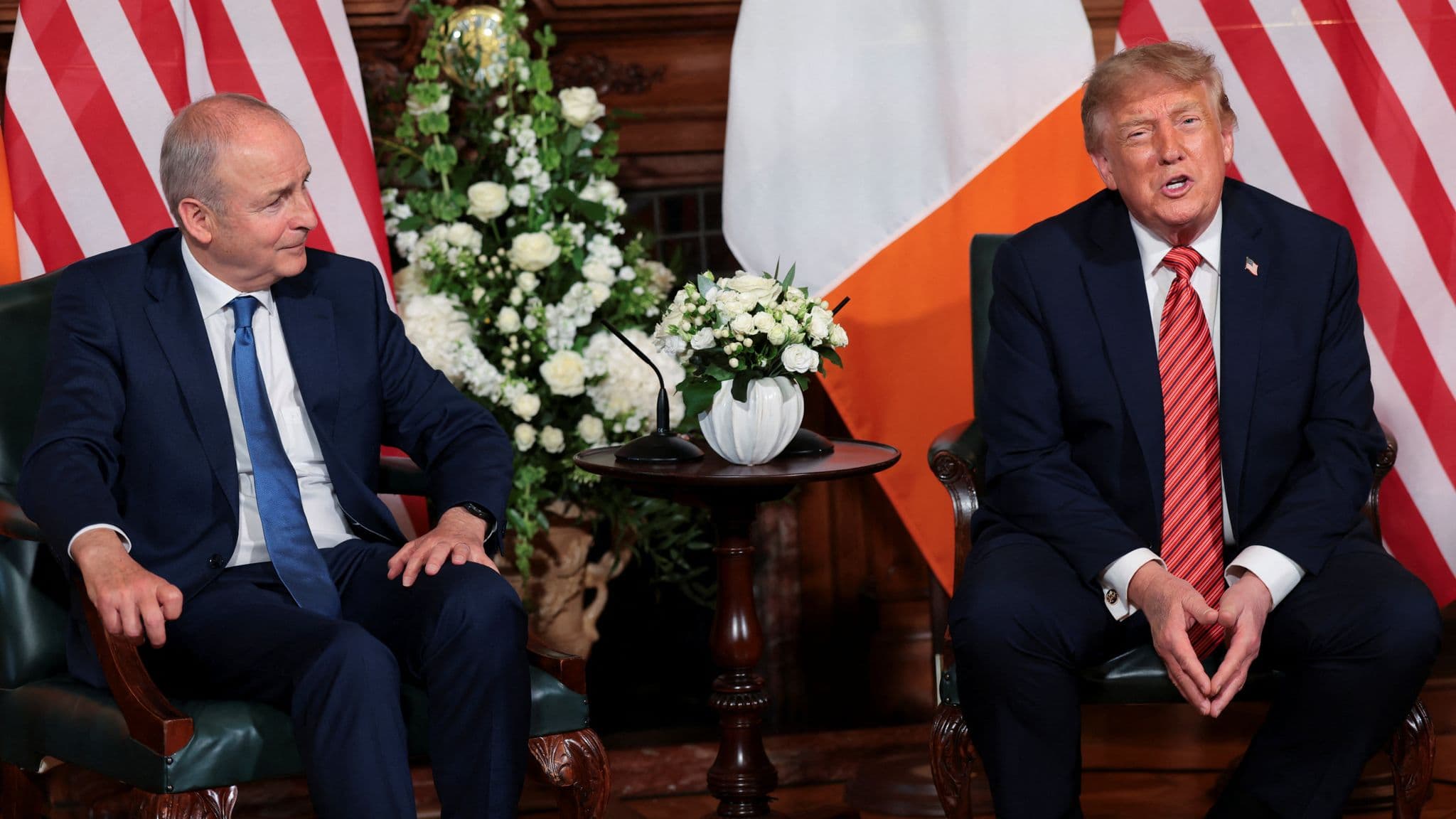
US President Donald Trump has doubled down on his support for a united Ireland, brushing aside opposition to a potential referendum and reigniting debate over the constitutional future of Northern Ireland.
Speaking at the end of a two-day visit to Ireland on Sunday, Trump said he believed unification of Northern Ireland and the Republic of Ireland was a natural outcome, despite British opposition to holding a referendum at the current time.
“Everybody says that. Then things happen,” Trump said when asked about British Prime Minister Andy Burnham’s position. He added that bringing Northern Ireland and the Republic together appeared to him to be “one of the naturals of all time.”
Trump’s remarks have challenged the traditional position of US administrations, which have generally maintained neutrality on Northern Ireland’s constitutional status. His comments have drawn contrasting reactions from political leaders in Britain, Ireland and Northern Ireland.
Downing Street said Burnham continued to believe that the conditions required for a referendum had not been met under the 1998 Good Friday peace agreement. Burnham had previously said that a referendum on Irish unification was “off the table.”
Irish nationalists welcomed Trump’s comments, viewing them as support for the long-standing goal of Irish unity. However, Conservative politicians and Northern Irish unionists criticised the US president’s intervention, arguing that the constitutional future of Northern Ireland should be determined by the people of the region under established democratic procedures.
Trump also used his final day in Ireland to announce a change in US trade policy affecting Irish whiskey. Speaking at his Doonbeg golf resort in County Clare, he said the United States would remove tariffs on Irish whiskey.
A 10% US tariff had placed Irish whiskey at a disadvantage compared with Scotch and whiskey produced in Northern Ireland, which were not facing the same tariff burden.
Trump’s comments on Irish unity and trade came during a visit marked by repeated expressions of affection for Ireland. His support for unification, however, has added a new political dimension to US-Irish relations and could fuel further debate over the future of Northern Ireland.