
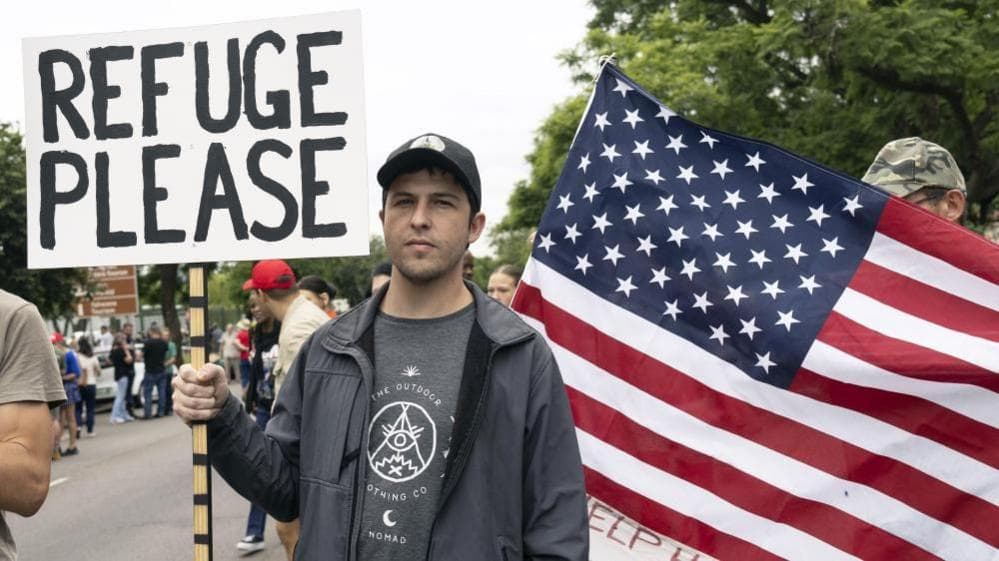
A US refugee programme created under President Donald Trump to resettle white South Africans is facing growing scrutiny as dozens of applicants have reportedly been denied refugee status, leaving some who believed they were escaping persecution confused and disappointed.
Trump announced in February 2025 that the United States would accept Afrikaners from South Africa as refugees, presenting the policy as a response to what he described as discrimination and the threat of a “white genocide” in the country. The claim has been widely disputed, with critics arguing that it misrepresents South Africa’s complex political, economic and racial realities.
The first group of 68 white South Africans arrived in the United States in May 2025 after Trump issued an executive order establishing the resettlement programme. The policy was later expanded to include members of a “racial minority.” At the same time, the administration suspended the broader US refugee programme for people fleeing wars and persecution elsewhere.
Since then, more than 13,000 South Africans have reportedly been admitted to the United States under the programme, according to US State Department figures. The pace of arrivals has also increased, with more than 2,600 people admitted in August alone.
The programme has nevertheless faced controversy, particularly over the US government’s decision to prioritise Afrikaners while restricting refugee admissions from other parts of the world.
Afrikaners are largely descended from Dutch and French settlers who established communities in South Africa during the colonial era. Many later became associated with the apartheid system, which institutionalised racial segregation and political domination by the white minority.
Since apartheid ended more than three decades ago, South Africa has introduced affirmative-action policies designed to address the economic and social inequalities created by decades of racial discrimination. These policies have helped expand the country’s black middle class and professional elite, although unemployment remains significantly higher among black South Africans.
Official data cited in the report shows unemployment at around 38% among black South Africans, compared with about 9% among white South Africans, highlighting the continuing economic disparities between racial groups.
For some Afrikaners who applied to move to the US, however, the refugee programme represented an opportunity to leave behind what they considered an increasingly hostile environment. The rejection of applications has therefore been particularly difficult for applicants who had expected the Trump administration to recognise their concerns.
The growing number of rejected applications could signal a shift in the programme or increased scrutiny of individual claims. It also raises broader questions about how refugee status is being determined and whether applicants can demonstrate the level of persecution required under US refugee law.
As arrivals continue, the programme remains one of the most politically contentious elements of Trump's immigration and foreign policy agenda, placing renewed focus on the competing narratives surrounding race, inequality and persecution in post-apartheid South Africa.