










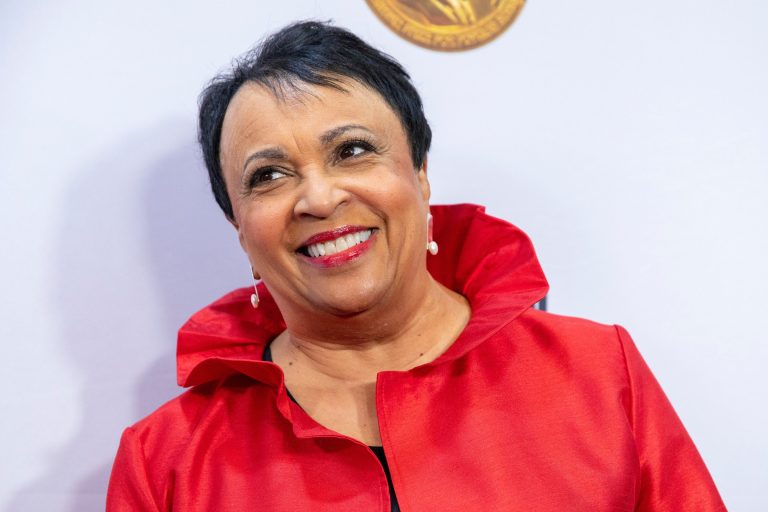
Carla Hayden’s Triumphant Return: After Trump Ousted the First Black Woman Librarian of Congress, She Lands a Powerful New Role Shaping America’s Cultural Future
Washington, D.C. — History has a way of honoring those who serve with integrity — and Dr. Carla Hayden is living proof. Just two months after being controversially removed from her post as the Librarian of Congress by former President Donald Trump, Hayden has made a bold and inspiring return to public life in a new role that could redefine how America preserves its knowledge and history for generations to come.
Carla Hayden made history in 2016 when she was appointed by President Barack Obama as the 14th Librarian of Congress — becoming the first woman and the first African American to ever hold the post since the library’s founding in 1800. A longtime champion of public access, community engagement, and library modernization, Hayden quickly rose to national prominence for her vision of a Library of Congress that was open, inclusive, and digitally connected to all Americans — not just scholars and policymakers in Washington, D.C.
Her tenure was marked by several major accomplishments: digitizing rare manuscripts and archives, expanding access to library resources for underserved communities, improving public transparency, and modernizing outdated systems. She was celebrated for bringing the Library into the 21st century and for her unwavering belief that libraries are the heartbeat of democracy.
But in a surprising and controversial decision made in the final days of Trump’s influence over key appointments, Hayden was quietly forced to resign, ending her historic term early. Many viewed the move as politically motivated, and it drew heavy criticism from librarians, historians, educators, and civil rights leaders alike. Her removal was seen not just as an affront to her leadership, but as an attack on the very ideals of open knowledge and public service.
Though Hayden remained silent at the time, her actions since have spoken louder than any words.
Now, just two months after her exit, she has been appointed as the Founding Executive Director of the National Center for Inclusive Knowledge and Access (NCIKA) — a transformative initiative that seeks to address digital inequality, safeguard marginalized histories, and expand educational access for future generations. This prestigious position, backed by a coalition of federal agencies, top universities, private foundations, and public libraries, represents a stunning comeback for one of America’s most respected knowledge leaders.
The NCIKA will spearhead several ambitious national projects under Hayden’s leadership, including:
- The Digitization of Cultural Archives: A large-scale effort to digitize rare and vulnerable collections from historically Black colleges and universities (HBCUs), Native American tribes, Latinx institutions, and rural communities.
- National Digital Literacy Hubs: A plan to establish 200 new learning centers in underserved communities focused on improving digital literacy, research skills, and educational access.
- Inclusive Education Curriculum Tools: Collaborating with schools and universities to develop culturally inclusive curriculum resources based on newly digitized archival material.
In a statement at the press conference announcing her appointment, Hayden said:
“Libraries have always been about more than books — they’re about access, opportunity, and democracy. With NCIKA, we’re creating a future where everyone has a seat at the table of knowledge, no matter their zip code or background. We’re going to lift up the stories that history tried to forget and build tools that help every community thrive.”
The announcement has sparked renewed praise for Hayden across social media and academic circles. On X (formerly Twitter), hashtags like #CarlaHaydenReturns, #LibraryOfThePeople, and #InformationForAll began trending just hours after the news broke. Prominent historians and educators called her comeback “the justice we needed in 2025,” and “a new chapter for American cultural leadership.”
Many are also noting the symbolic weight of Hayden’s new position. In a time when book bans, digital surveillance, misinformation, and cultural erasure are all rising concerns, her presence at the forefront of national knowledge policy is being seen as both timely and essential.
Hayden’s return is more than a comeback — it’s a powerful message about what true leadership looks like in America today. Quiet, consistent, service-focused leadership. The kind that doesn’t seek headlines but earns them. The kind that builds lasting institutions, gives voice to the voiceless, and stands strong even in the face of political storms.
For young scholars, librarians, and leaders of color across the country, Hayden’s career continues to be a source of inspiration. Her story is one of breaking barriers, staying grounded in service, and never letting setbacks define your legacy.
And as she steps into this next role, one thing is clear: Carla Hayden’s mission was never just about libraries. It was — and still is — about empowering people through access to truth, knowledge, and the right to learn.