




Trump’s ‘Law of the Jungle’ Approach Undermines U.S. Trade Deals, Expert Warns
In a stark warning to global markets and policymakers, a prominent trade expert has sounded the alarm over former President Donald Trump’s unpredictable and aggressive stance on international trade, likening it to a “law of the jungle” that could render U.S. trade agreements meaningless. As Trump campaigns for another term in the White House, his volatile trade policies are once again under the microscope — and experts say the implications could be severe.
“Law of the Jungle” Approach Threatens Trade Stability
According to the expert, Trump’s disregard for multilateral agreements and his willingness to unilaterally impose tariffs undermines the trust and predictability that are critical to international trade. “Under Trump, the United States adopts a law-of-the-jungle mindset — where might makes right and deals are only honored if politically convenient,” the analyst stated. “This kind of approach makes U.S. trade agreements essentially worthless, eroding decades of built-up trust.”
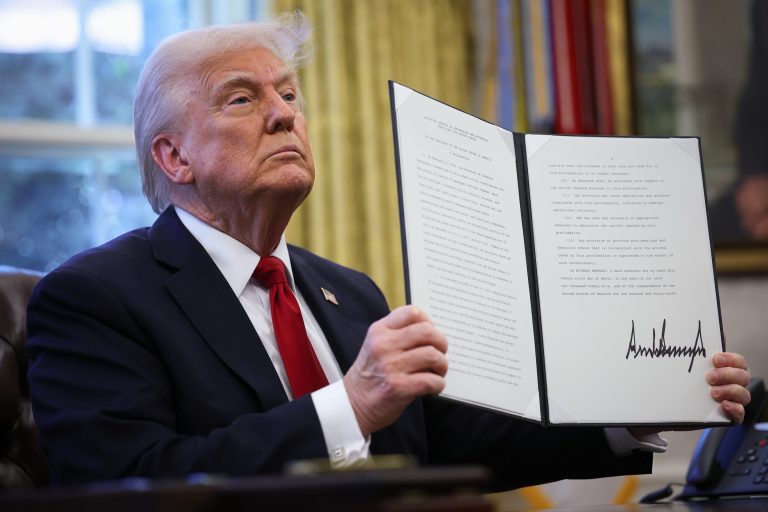
Trump’s America First agenda led to the renegotiation or outright abandonment of several long-standing trade deals during his presidency, including NAFTA (replaced with the USMCA) and the withdrawal from the Trans-Pacific Partnership (TPP). While these moves were hailed by his supporters as bold moves to protect American interests, critics argue they destabilized global supply chains and alienated key allies.
The Impact on Global Trade and U.S. Credibility
One of the most damaging legacies of Trump’s trade policy, according to economists, is the blow to U.S. credibility. Countries that once viewed the U.S. as a reliable trading partner are now cautious, wary of sudden policy shifts based on political rhetoric rather than economic rationale.
“This unpredictability forces other countries to seek alternatives, both in trade partners and in legal frameworks,” the expert added. “They don’t want to risk entering into deals that might be torn apart by a tweet or a political whim.”
Many international firms are now hedging their bets, diversifying supply chains, and looking to blocs like the European Union or emerging economies in Asia to offset the risk of U.S. disengagement.
A Return to Tariffs?
Should Trump return to office, experts predict a renewed wave of tariffs, particularly targeting China, Mexico, and the European Union. Trump has already floated the idea of a 10% across-the-board tariff on all imports, a move that could reignite global trade tensions and push prices higher for American consumers.
“Such blanket policies ignore the complexities of global supply chains,” the expert said. “They might look tough on paper, but they hurt U.S. manufacturers, raise costs for American families, and provoke retaliation from trading partners.”
Why Businesses and Investors Are Watching Closely
For multinational companies, Trump’s potential return represents a major variable. Trade uncertainty affects decisions on manufacturing, investment, and hiring. Markets crave stability — and unpredictability at the top of the world’s largest economy causes ripple effects across the globe.
“Investors are already pricing in trade volatility into their risk models,” the expert pointed out. “Trump’s law-of-the-jungle approach isn’t just political — it’s economic chaos in slow motion.”
Conclusion: The Stakes Are Higher Than Ever
As the 2024 election cycle heats up, global leaders and corporations alike are bracing for what could be another tumultuous period of U.S. trade policy. With Trump hinting at even more aggressive trade actions, the question facing the world is clear: Can the global trade system survive another round of America First — or will the rules-based order collapse under the weight of unpredictability?