










Jeff Bezos Agrees with Sam Altman: We’re in an AI Bubble But the Benefits Will Be “Gigantic”
Introduction
In a striking concurrence, Jeff Bezos — the founder of Amazon — has publicly echoed OpenAI’s Sam Altman in warning that the current wave of enthusiasm and investment in artificial intelligence may be inflating an AI bubble. But Bezos’ take carries an important caveat: while the bubble risks are real, the underlying technology is too profound to dismiss. He predicts that once the froth clears, society will reap gigantic benefits.
This dual perspective — caution mixed with conviction — offers a lens into how some of the world’s most influential tech leaders view the present moment in AI. In this article, we’ll explore what Bezos and Altman have said, evaluate whether we are truly in a bubble, and consider the possible long-term outcomes if AI delivers on its promise.
What Sam Altman Has Said About an AI Bubble
Sam Altman, CEO of OpenAI, has made remarks suggesting that the fervor around AI may be overheated. In past interviews and public appearances, he has conceded the possibility that AI investment and valuation trends are entering bubble territory, even as he underscores his belief that AI remains “the most important thing to happen in a very long time.”
In effect, Altman is saying: yes, the hype may be inflated, but that doesn’t invalidate the core trajectory and significance of AI’s potential.
His view has become somewhat of a lodestar for navigating the balance between realism and optimism in the AI space.
Bezos Speaks: Bubble, but Real Power
The “Industrial Bubble” Framing
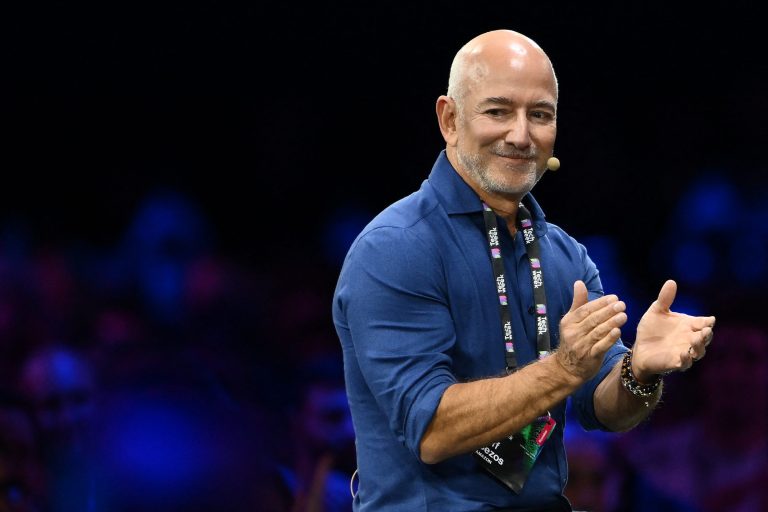
At the Italian Tech Week in Turin, Bezos framed the current run-up in AI as an “industrial bubble,” rather than strictly a financial bubble. He noted classic signs:
- Valuations being disconnected from fundamentals
- Investors pouring capital into ideas with weak foundations
- Difficulty separating promising ventures from those destined to fail
Bezos drew on his own experience: during the dot-com crash, Amazon’s share price tumbled—even while business metrics were improving. He recalled the anxiety in that era: employees’ parents worried, media speculation intensifying, and valuations swinging wildly even as fundamentals improved.
His point: bubbles often mask deeper processes at work.
Optimism Amid Risk
While acknowledging the bubble risks, Bezos strongly affirmed his faith in the transformative power of AI. He stated:
“AI is real, and it is going to change every industry … The benefits to society from AI are going to be gigantic.”
He also argued that industrial bubbles can be “good” in a way — that they can accelerate innovation, spur infrastructure, and help unearth which players are truly durable. He compared the current AI wave to the biotech boom of the 1990s: even though many companies failed, the breakthroughs that emerged had deep value.
When the “dust settles,” Bezos believes, the winners will drive societal gains.
Key Tensions: Bubble Risks vs Long-Term Promise
Bezos’ and Altman’s convergence raises a number of tensions worth examining:
1. Hype vs Substance
Many AI startups—especially in nascent or speculative domains—are receiving massive funding with unproven business models. That’s the textbook sign of hype. But underneath, the demand for AI services, infrastructure, compute, and optimization remains potent.
2. Valuation Volatility
If valuations become decoupled from performance or revenue, reversals are inevitable. Some bets will flop, capital will be wasted, and investor returns may suffer. But that doesn’t mean the entire sector is invalid.
3. Infrastructure Lags
AI’s ambitions demand huge advances in hardware, data, energy efficiency, and models. Some portions of the value chain (e.g., specialized chips, data centers, efficient cooling) may bear the brunt of corrections. The “infrastructure play” might emerge as the long-term backbone.
4. Societal & Ethical Risks
Beyond market risks lies the broader concern: misuse, bias, disinformation, job displacement, and concentration of power. Even if AI succeeds technically, society must manage its consequences.
5. Survivorship & Winner Dynamics
In a bubble boom, many ventures will fail. But winners with strong fundamentals, robust products, and scalable models may dominate. Bezos’ emphasis on “when the dust settles” points to this clearing where durable platforms emerge.
How the Future Might Play Out
Based on the views of Bezos, Altman, and other AI observers, here are a few plausible scenarios:
Scenario A: A Classic Boom-Bust Cycle with Selective Winners
The market overshoots, many projects collapse, and valuations correct sharply. Yet the strongest players endure, leading to a more stable, productive second wave of AI deployment.
Scenario B: Gradual Correction, Not Collapse
Instead of a dramatic crash, AI investments recalibrate. Capital flows shift toward more sustainable ventures. The industry grows steadily rather than explosively.
Scenario C: The Bubble Expands Before Peaking
Momentum continues for a while, driven by breakthroughs or news cycles, before a dramatic correction catches markets off-guard. This is reminiscent of late-stage bubbles in other sectors.
Scenario D: The Upside Surpasses the Risk
Despite corrections, AI breakthroughs (in medicine, climate modeling, materials science, or automation) yield outsized returns for society — validating Bezos’ belief in “gigantic” benefits.
Why This Matters: Stakes Are Monumental
- Capital Allocation — Investors must decide which AI bets to back and which to avoid.
- Policy & Regulation — Governments will need to balance innovation and guardrails.
- Commercial Strategy — Companies must discern whether to build, acquire, or adapt AI technologies.
- Societal Impact — The shape of AI deployment will affect equity, job trends, privacy, and power structures.
The current moment is one of extraordinary consequence. Missteps may lead to wasted capital or social harm; the right moves may unlock generational change.
Conclusion
Jeff Bezos and Sam Altman may speak from different vantage points, but their messages now mingle: yes, we may be in an AI bubble — but the core of AI is real, and its potential is massive. Bezos’ confidence in the promise of AI even through turbulence offers an instructive mix of humility and ambition.
As we move forward, the smart money — intellectual, financial, and institutional — must learn to navigate between the extremes of blind enthusiasm and fearful dismissal. The bubble may burst. But if the technology delivers, the gains could indeed be gigantic.