










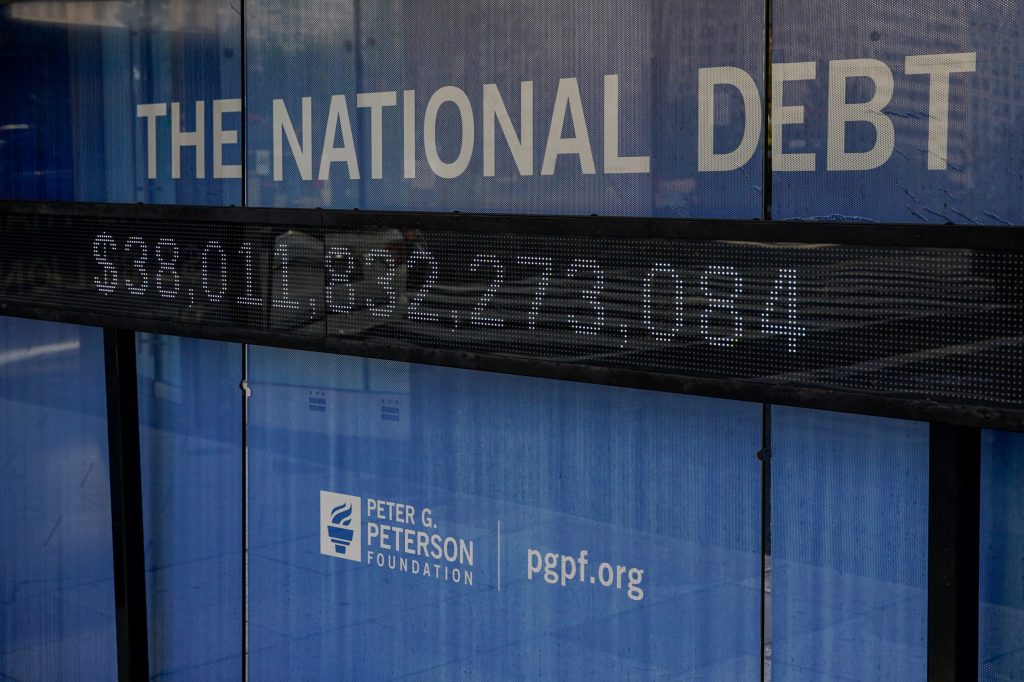
“Severe Austerity” May Be the Most Likely Solution to the U.S. Debt Crisis — Former White House Adviser Warns
As the U.S. national debt climbs toward historic highs, some economists warn that the most probable outcome is “severe fiscal austerity” — but only after a fiscal calamity triggers political and economic pressure for drastic cuts. That is the stark forecast from Jeffrey Frankel, a Harvard professor and former member of the Council of Economic Advisers under Bill Clinton.
📈 Debt at Dangerous Levels
Publicly held U.S. debt currently stands at around 99% of GDP, and projections suggest it could reach 107% by 2029 — a level not seen since immediately after World War II.
Meanwhile, debt-service costs have surged: the federal government spends more than US$11 billion per week simply to service existing debt — roughly 15% of federal spending in the current fiscal year.
With debt growing and interest costs rising, the pressure on government finances is mounting.
Why Other Solutions Seem Unlikely
In a recent op-ed, Frankel considered the range of possible ways the U.S. might address its debt problem — from faster economic growth to inflation — but found none sufficiently plausible.
- Faster economic growth could help — but demographic trends (a shrinking labor force) and limited productivity gains make a growth-driven rescue unlikely.
- Lower interest rates are unlikely to return to prior historic lows, removing a key lever that helped many countries manage high debt.
- Debt default — though extreme — is considered implausible, given persistent demand for U.S. Treasury bonds and their international status.
- Inflation or financial repression (forcing banks to buy bonds at low yields) may reduce real debt levels — but would carry heavy economic and social costs.
With conventional “easy” solutions unlikely to work, Frankel sees only one realistic path left.
The Likely Outcome: Severe Fiscal Austerity
If nothing changes — and sooner or later sentiment shifts — stringent austerity may be how the U.S. brings its debt under control. By “austerity,” Frankel doesn’t mean small budget tweaks: he predicts massive reductions in spending, potentially including deep cuts to defense or the near-elimination of non-defense discretionary spending.
Under such a scenario, many social programs, infrastructure projects, and other public investments could face sharp contraction. And because such cuts impact popular government functions, they are politically difficult — which helps explain why such measures are likely only after a fiscal crisis forces lawmakers’ hands.
Why the “Austerity Reckoning” Could Be Sudden and Severe
Frankel argues that the longer structural imbalances persist, the more dramatic adjustments will ultimately be needed. He suggests the reckoning will come “only after a severe fiscal crisis.”
Analysts at other firms — such as Oxford Economics — echo those warnings. For instance, the projected insolvency of major trust funds (for retirement and health benefits) by the early 2030s could act as a trigger for broad fiscal reforms.
If bond-market confidence collapses — for example, if investors start demanding much higher yields on U.S. debt — the shock could force lawmakers to act swiftly. That may leave little room for incremental reforms and push instead toward sweeping austerity.
What It Means for Americans and the Global Economy
- Public services and investments may shrink: Programs funded by discretionary spending — from infrastructure and education to healthcare support and environmental projects — could be cut deeply.
- Defense spending could be re-examined: The military budget, historically one of the largest items in the U.S. federal budget, may face major reductions if debt service demands escalate.
- Social safety nets may be at risk: Entitlement and welfare expenditures could come under pressure if broader austerity measures extend beyond discretionary spending.
- Economic growth could stall: Reduced government investment and social spending — especially in a high-interest, high-debt environment — could drag on overall economic demand and productivity.
- Global ripple effects: As the world’s largest economy contracts spending, overseas markets, global trade flows, and international investment trends may suffer.
Is There a Way to Avoid Austerity?
Potential alternatives — like structural fiscal reform, tax increases, or a new social consensus — exist. But advocates argue that without political will to raise revenues or reallocate spending, such measures remain unlikely. Meanwhile, population aging, rising interest costs, and increasing social-entitlement payouts continue to erode fiscal flexibility.
Some observers — such as influential investors like Ray Dalio — also warn that reducing fiscal deficits fast enough may require difficult choices, including a mix of spending cuts and revenue increases.
Yet, as things stand, most of these alternatives appear insufficient to restore long-term fiscal stability on their own.
✅ Conclusion — Austerity Looks Like the Default Path
According to Jeffrey Frankel and many economic forecasters, the structural imbalances in U.S. public finances make severe austerity the most probable outcome — likely triggered by a fiscal crisis or bond-market shock.
If so, Americans could be facing a decade of tight budgets, reduced public spending, and re-evaluated social safety nets. The question now is not if, but when — and how painful the adjustment will be.