










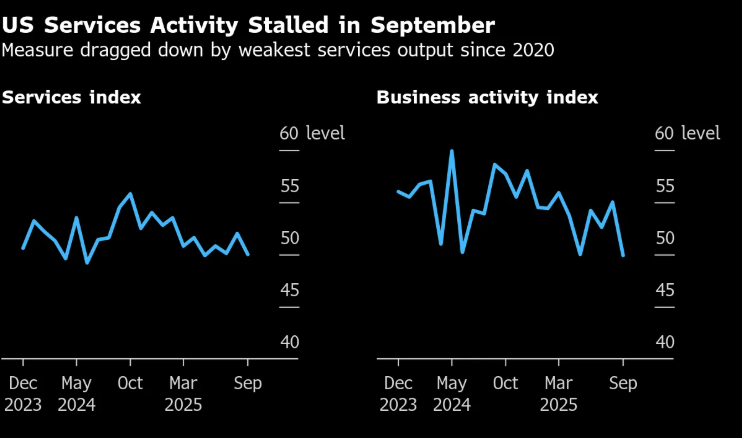
U.S. Business Activity Slows to Six-Month Low as Economic Momentum Weakens
U.S. business activity growth slowed to a six-month low, signaling a loss of momentum in the world’s largest economy and raising concerns about the outlook for the months ahead. Recent surveys of manufacturers and service providers show that new orders, output, and hiring intentions have weakened, reflecting softer demand and growing caution among businesses. Economists say the slowdown highlights the cumulative impact of high interest rates, easing consumer spending, and ongoing global uncertainty.
Data released this week indicate that while the economy continues to expand, it is doing so at a slower pace. Manufacturing activity remained under pressure as higher borrowing costs reduced capital investment and export demand stayed subdued. The services sector, which has been a key driver of U.S. growth, also showed signs of cooling, with companies reporting fewer new contracts and a more cautious customer base.
Business leaders pointed to persistent cost pressures and uncertainty around future monetary policy as key challenges. Although inflation has eased compared with previous peaks, input costs and wages remain elevated for many firms. At the same time, tighter credit conditions have made it more difficult for small and medium-sized businesses to finance expansion, leading many to delay hiring or investment plans.
The slowdown in activity has renewed debate over the Federal Reserve’s next policy steps. With economic growth losing steam, some analysts believe the central bank may face increasing pressure to consider interest rate cuts in the coming months to support demand. Others caution that policymakers will remain focused on ensuring inflation stays under control before making any significant changes.
Financial markets reacted cautiously to the data, with investors reassessing growth expectations for the remainder of the year. Slower business activity could weigh on corporate profits and employment growth, potentially affecting consumer confidence if the trend continues. However, economists note that the labor market remains relatively resilient, providing some support to the broader economy.
Despite the current slowdown, many analysts stress that the U.S. economy is not facing an immediate downturn. Instead, they describe the situation as a period of adjustment after rapid growth in previous years. The coming weeks will be closely watched for further economic data, which will help determine whether the slowdown deepens or stabilizes, shaping both business confidence and policy decisions moving forward.