







Travel Chaos Across Asia as Thousands Stranded by Flight Delays
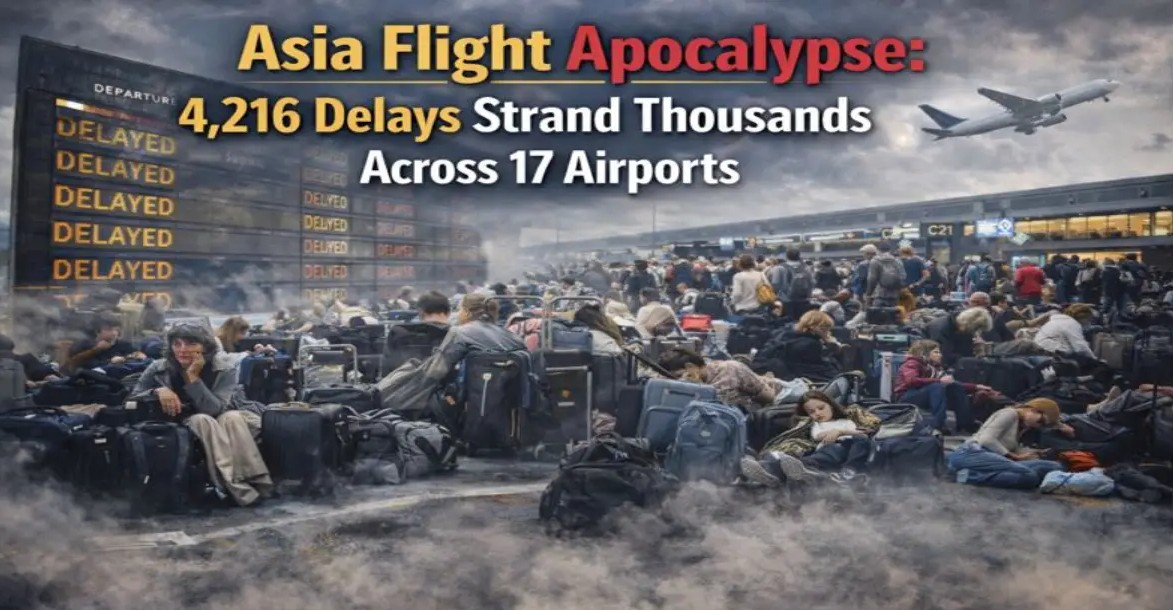
Asia’s air travel network is facing unprecedented disruption, leaving thousands of passengers stranded across major hubs in China, Thailand, India, the UAE, Singapore, Indonesia, Malaysia, and the Philippines. Airlines including AirAsia, IndiGo, Emirates, Malaysia Airlines, Lion Air, and several others have reported massive flight cancellations and delays, affecting cities from Bangkok and Dubai to Bengaluru and Manila.
According to airline authorities, a combination of operational challenges, weather-related issues, and scheduling bottlenecks has led to the cancellation of 83 flights and delays affecting more than 1,700 flights across the region. Passengers have faced long queues at airport terminals, extended waiting times for customer support, and uncertainty over travel plans. Social media platforms are flooded with reports of frustrated travelers struggling to find alternative connections or accommodations.
Airline officials have emphasized that they are working to minimize disruption, rebooking passengers on alternative flights and offering compensation where applicable. However, experts warn that ongoing regional congestion, high demand during the current travel season, and limited airport capacity may prolong the impact in the coming days.
The delays have particularly affected connecting flights, leaving international travelers in limbo and impacting business and tourism schedules. Many airports have ramped up staffing and support services to manage the surge in passengers, but logistical challenges continue to strain resources. Travel agencies and tour operators have also reported widespread cancellations, adding pressure on travelers and the wider travel industry.
Industry analysts suggest that such large-scale disruptions highlight the fragility of the region’s interconnected air travel system. They emphasize the need for better contingency planning, improved infrastructure, and enhanced coordination among airlines and regulatory authorities to prevent future incidents. Travelers are advised to check flight statuses regularly, contact airlines promptly for rebooking options, and allow extra time for transfers and airport procedures.
Despite the chaos, some passengers have shared stories of resilience and assistance from airport staff and airline crews who are working tirelessly to manage the situation. Many travelers continue to remain patient as airlines coordinate alternative travel arrangements, highlighting the human element in the midst of large-scale operational disruption.
As Asia’s skies gradually recover, authorities and industry leaders are under pressure to review operational practices and invest in more robust systems to ensure passengers can travel safely and reliably in the future. For now, the region faces a critical reminder of the challenges of managing air travel in one of the world’s busiest and most complex aviation networks.