


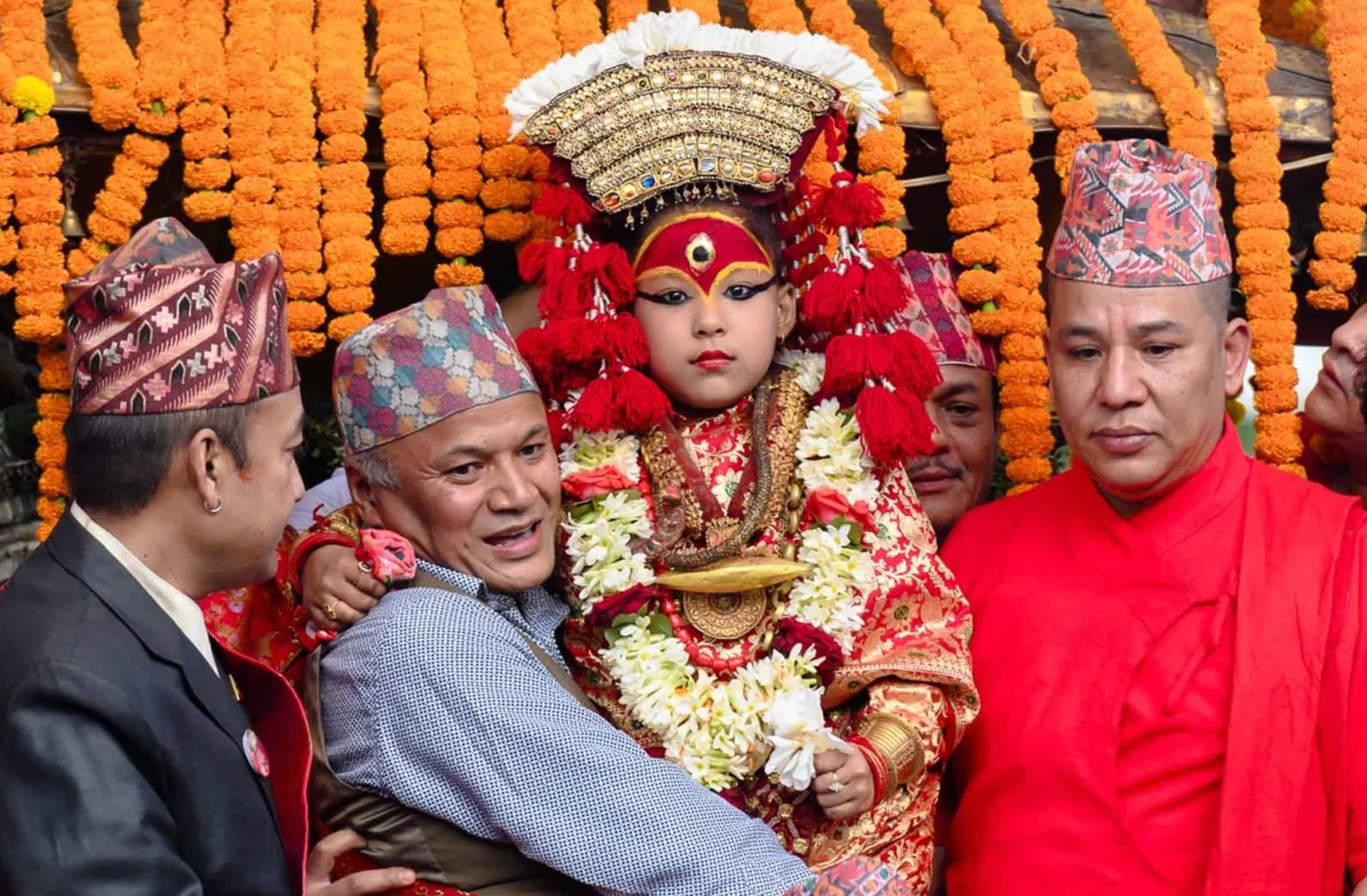







Living Goddess of Nepal: The Sacred Kumari Tradition That Continues to Shape Kathmandu’s Spiritual Identity
In the heart of Kathmandu, Nepal, an ancient tradition continues to captivate both locals and visitors alike the worship of the Kumari, a young prepubescent girl believed to be the living embodiment of the goddess Taleju. This centuries-old practice, deeply rooted in both Hindu and Buddhist traditions, remains one of the most unique cultural and spiritual customs in Asia.
The Kumari is carefully selected from the Newar community, traditionally through a rigorous process that evaluates physical perfection, calm temperament, and symbolic spiritual signs. Once chosen, the girl leaves her family home and moves into the Kumari Ghar, a palace in Kathmandu’s Durbar Square, where she lives in relative isolation and is revered as a divine figure. Devotees visit her to receive blessings, believing her presence brings protection, prosperity, and good fortune.
Despite her divine status, the Kumari’s role is not permanent. She serves until puberty or until she experiences a significant injury or loss of ritual purity, after which she returns to normal life and a new Kumari is selected. This transition is considered both sacred and emotionally challenging, as it marks the end of a highly unusual childhood spent in worship and seclusion.
While the tradition is widely respected as an important part of Nepal’s cultural heritage, it has also sparked discussions in modern times about children’s rights and the psychological impact of living as a deity. Supporters emphasize its deep spiritual meaning and cultural identity, while critics call for reforms that balance tradition with the well-being and education of the child.
Despite these debates, the Kumari culture continues to draw global attention, symbolizing Nepal’s rich blend of mythology, faith, and living heritage. For many Nepalese, the Kumari is not just a tradition but a sacred link between the human and divine worlds, preserving a belief system that has endured for centuries.
In a rapidly modernizing world, the Kumari tradition stands as a powerful reminder of how ancient customs still shape identity, spirituality, and community life in South Asia.